
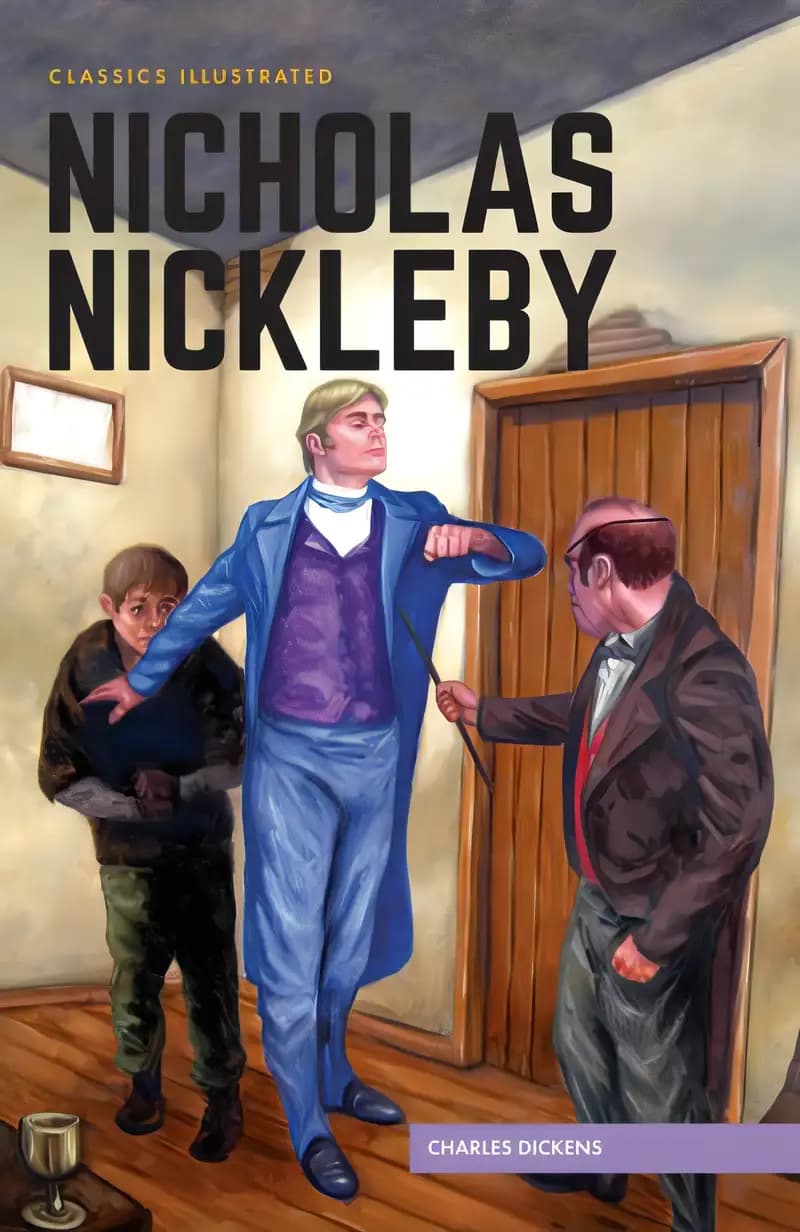
Nicholas Nickleby
Classics illustrated Series
What’s inside...
Fully illustrated comic-strip version provides excellent introduction to this classic work of literature. Nicholas Nickleby; or, The Life and Adventures of Nicholas Nickleby is a novel by Charles Dickens. Originally published as a serial from 1838 to 1839, it was Dickens's third novel. The novel centres on the life and adventures of Nicholas Nickleby, a young man who must support his mother and sister after his father dies. Though only the third novel Dickens wrote, 'Nicholas Nickleby' is a well-crafted and significant precursor to his other great works. The tale follows the fortunes of the young man Nicholas, the son of an imprudent gentleman who leaves his family without resources. Fiercely devoted to his mother and sisters, as well as his true friends, Nicholas is occasionally emotional and even violent, yet always idealistic. He seeks the aid of his villainous uncle, Ralph Nickleby, who comes to hate his nephew and wish him serious harm. Nicholas goes through more than one attempt at employment, being first disgusted by the abuse of the schoolmaster Squeers, later surprised by the acting and antics of Vincent Crummles, and finally assisted by the merchant Cheeryble brothers. Dickens employs a cast of characters, both good and unsavory, in this adventurous story of Nicholas Nickleby, who helps those in need, despises wickedness, grows in self-awareness, and even experiences falling in love in a plot that is by turns melodramatic and comedic. An uplifting tale full of poignant indictments on Victorian society, Dickens' work has all the best characteristics of his classics.
Series reading
Non-Sequential
Age
12-15
Length
52 pages
Text complexity
Character compass
Nicholas Nickleby
Mrs. Nickleby
Kate Nickleby
John Browdie
Smike
Newman Noggs
Sir Mulberry Hawk
Wackford Squeers
Ralph Nickleby
Fanny Squeers
Godfrey Nickleby
Vincent Crummles
Discussion points
How do you think Nicholas felt when he had to stand up to injustice, and what would you do in a similar situation?
What does the story of 'Nicholas Nickleby' teach us about compassion and helping others?
Why is it important for Nicholas to maintain his integrity throughout the story, despite the challenges he faces?
How do the different characters in the book influence Nicholas’s journey? Which character do you admire the most and why?
Tip: Role play these questions
As you read 'Nicholas Nickleby' together, pause at pivotal moments in the story to ask your child how they feel about the characters’ decisions.
Discuss the historical context of the story with your child. Explain how social and economic factors influence characters' lives, which can lead to a better understanding of the plot and character motivations.
Encourage your child to draw parallels between the challenges faced by the characters and any personal challenges they may encounter, fostering empathy and insight.
After reading, ask your child to summarize the story from the perspective of different characters. This can deepen their understanding and promote critical thinking.
Key lessons
Example Lesson: Compassion and Empathy
Explanation: Nicholas Nickleby showcases compassion through the protagonist's actions towards others, especially in his efforts to protect his sister and help the impoverished Smike.
Real-World Application: Children can learn the importance of caring for others and understanding their feelings, which can help them build stronger relationships with friends and family.
Example Lesson: Resilience in Adversity
Explanation: Nicholas faces numerous challenges, from poverty to injustices at the cruel school where he teaches, yet he remains determined and optimistic.
Real-World Application: This teaches children not to be discouraged by setbacks and to persist in achieving their goals despite difficulties.
Example Lesson: Importance of Education
Explanation: The stark contrast between the abusive conditions of the school run by Wackford Squeers and the positive atmosphere of the school later established by Nicholas highlights the importance of a nurturing educational environment.
Real-World Application: Encourages children to value their education and to recognize the impact of a supportive learning environment.
Example Lesson: Justice and Moral Integrity
Explanation: Nicholas often stands up against social injustices and corrupt characters like Ralph Nickleby and Wackford Squeers, showing moral fortitude.
Real-World Application: Teaches children the importance of standing up for what is right and striving to be ethical individuals in their own lives.
Example Lesson: The Power of Kindness
Explanation: Throughout the book, acts of kindness, both big and small, have a profound impact on the characters' lives, forming a recurring theme that kindness can be transformative.
Real-World Application: Children learn that their actions can positively affect others, and that kindness is a powerful tool for change.