
Not So Normal Norbert
What’s inside...
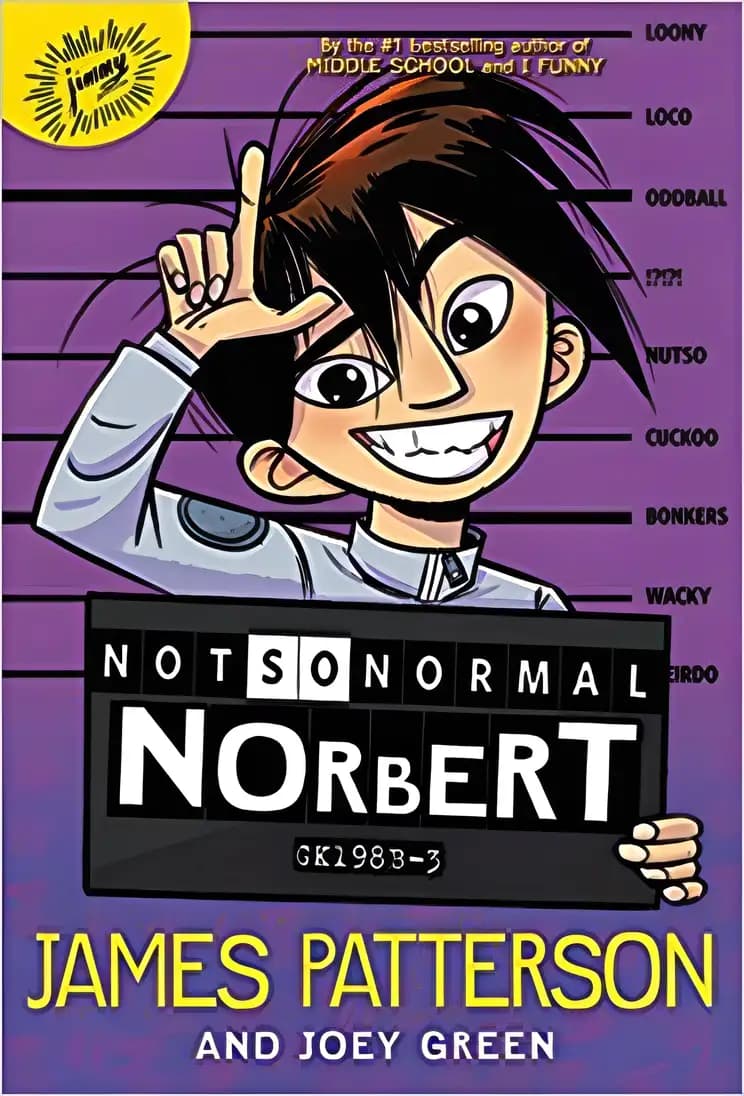
James Patterson's new middle grade novel follows Norbert Riddle, a boy who lives in the United State of Earth where conformity is enforced and being different is dangerous. After doing a funny impression of the dictator and getting caught, Norbert is banished to planet Zorquat 3 in the Orion Nebula. There, he is sent to Astronuts camp, where rule-defying kids are free to be creative and insane. Initially wanting to return to Earth, Norbert soon realizes that being different might be better and that he might belong at Astronuts after all.
Age
8-14
Length
368 pages
Text complexity
Character compass
Norbert Riddle
Supreme Leader
Discussion points
What would you do if you lived in a world like Norbert's where everyone had to act the same? How would you feel?
Norbert dares to be different in his society. Can you think of a time when you felt different? How did it make you feel?
How do you think Norbert's life changes after he meets the people on Astronuts? What lessons does he learn about being himself?
Why is it important to have friends who support and understand you, like Norbert finds on Astronuts?
If you could change one rule from Norbert’s world to make it a better place, what would it be and why?
Tip: Role play these questions
Start by sharing a personal story of a time you felt different or stood up for something you believed in, creating a safe space for open discussion. Utilize the questions to delve deeper into your child’s thoughts and feelings about individuality and conforming to social norms. Throughout the conversation, affirm their feelings and encourage their notions of creativity and uniqueness. Finally, highlight the importance of having supportive friends, drawing parallels to the relationships in the book.
Key lessons
Example Lesson: The value of individuality
Explanation: In 'Not So Normal Norbert', Norbert stands out because of his uniqueness in a society that demands conformity. His story illustrates the importance of being true to oneself despite external pressures.
Real-World Application: Children can learn to embrace their unique qualities and express themselves authentically, fostering self-esteem and creativity in their everyday interactions.
Example Lesson: The power of questioning and curiosity
Explanation: Norbert's journey is propelled by his curious nature and willingness to question the rigid rules of his world, ultimately leading to significant self-discovery and change.
Real-World Application: Encourages children to ask questions and seek understanding in their learning environments and personal lives, enhancing their critical thinking skills.
Example Lesson: The importance of friendship and collaboration
Explanation: Throughout the book, Norbert's friendships play a crucial role in overcoming challenges and finding solutions. These relationships demonstrate the strength found in teamwork and mutual support.
Real-World Application: Children can learn to value and nurture friendships, understanding that collaboration can often lead to achieving goals that might seem impossible alone.
Example Lesson: Courage to stand up against injustice
Explanation: Norbert confronts and challenges the injustices in his society, showing bravery and moral fortitude.
Real-World Application: This lesson teaches children the importance of advocating for fairness and justice, inspiring them to act with courage when faced with moral challenges.
Example Lesson: Creativity as a tool for problem-solving
Explanation: In the story, Norbert uses his creativity to navigate through difficulties and find unconventional solutions to problems.
Real-World Application: This lesson underscores the significance of creative thinking in solving problems, encouraging children to think outside the box in various situations.