
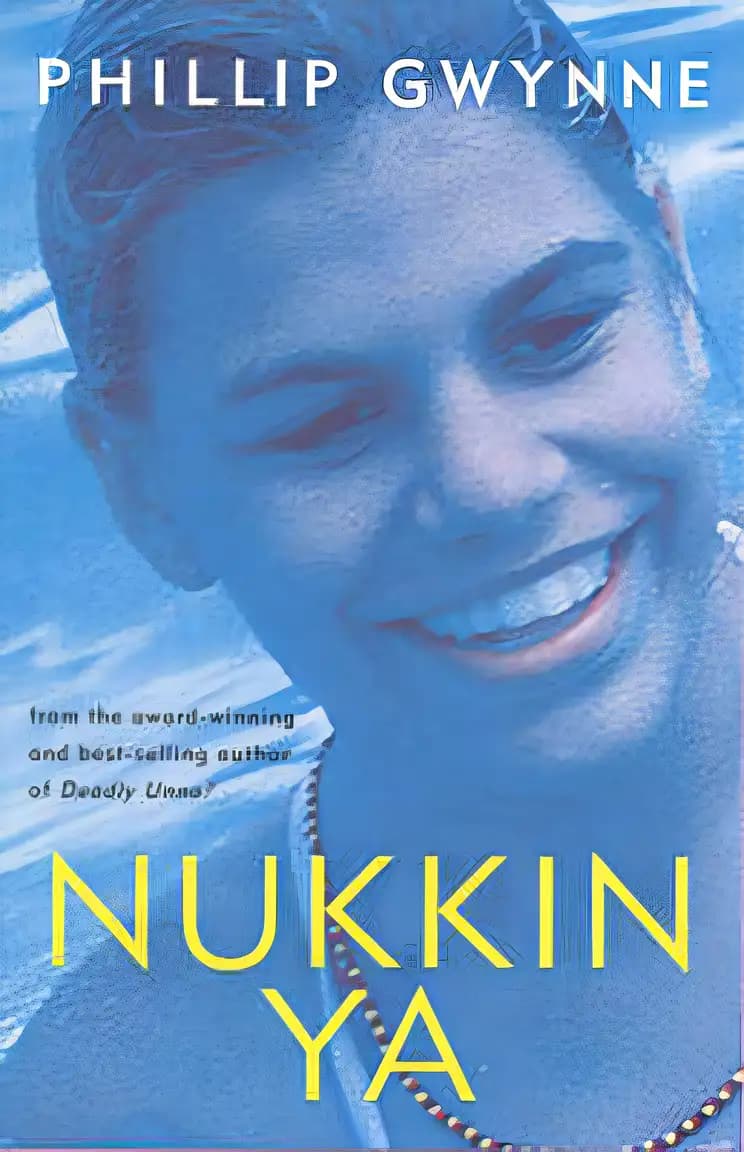
Nukkin Ya
#2 in Deadly, Unna? Series
on Goodreads (279)
What’s inside...
Nukkin Ya is the sequel to Phillip Gwynne's novel 'Deadly, Unna?' and continues the story of the protagonist, Gary 'Blacky' Black, a young man living in a small Australian town. In this follow-up, Blacky is dealing with the aftermath of his friend Dumby Red's death and the racial tensions that escalate between the white and Aboriginal communities. The title 'Nukkin Ya' is an Aboriginal phrase meaning 'see you later,' reflecting the themes of departure and change throughout the book. Blacky confronts issues of racism, love, and family as he matures and tries to find his place in a divided society. The novel explores themes of identity, belonging, and the challenges of standing up for what is right, even when it means going against the grain of one's community.
Character compass
Gary 'Blacky' Black
Clarence
Discussion points
What do you think Nukkin Ya teaches us about friendship and loyalty?
How do you feel about the conflicts between the characters? What would you have done differently?
Why is it important to stand up for what you believe in? Can you share an example from your own life?
How do the characters in the book change from the beginning to the end? What causes these changes?
Tip: Role play these questions
Begin the discussion by sharing your own thoughts on the book's themes and ask your child to add their perspective.
Encourage your child to relate the situations in the book to their own experiences, fostering a deeper personal connection.
Highlight the moral dilemmas faced by the characters and ask your child what they would do in similar situations, reinforcing critical thinking.
Praise your child for their insights and encourage them to think critically about how the story's messages apply to their everyday life.
Key lessons
Example Lesson: Respect for cultural diversity
Explanation: Through the interactions between the protagonist, Blacky, and his indigenous friend, Dumby, the story highlights the importance of understanding and respecting cultural differences.
Real-World Application: Children can learn to appreciate diverse cultures in their community, promoting inclusivity and mutual respect among peers.
Example Lesson: Value of friendship
Explanation: The strong friendship between Blacky and Dumby, despite societal pressures and racial divides, illustrates the enduring power of friendship.
Real-World Application: This lesson can encourage children to form and maintain meaningful friendships, regardless of background or differences.
Example Lesson: Consequences of actions
Explanation: Blacky's decisions throughout the book, particularly his stance against racism, show that actions have consequences and it's important to stand up for what is right.
Real-World Application: Children can learn to consider the consequences of their actions and be encouraged to act responsibly and ethically.
Example Lesson: Overcoming adversity
Explanation: The challenges faced by the characters in dealing with racism and cultural acceptance demonstrate resilience and the ability to overcome adversity.
Real-World Application: This lesson helps children understand that obstacles can be overcome with determination and courage, valuable traits in all areas of life.
Example Lesson: Importance of personal integrity
Explanation: Blacky's moral growth and his choices to do what’s right, rather than what’s easy, emphasize the importance of personal integrity.
Real-World Application: Promotes the development of a strong moral compass in children, encouraging them to make principled decisions throughout their lives.