
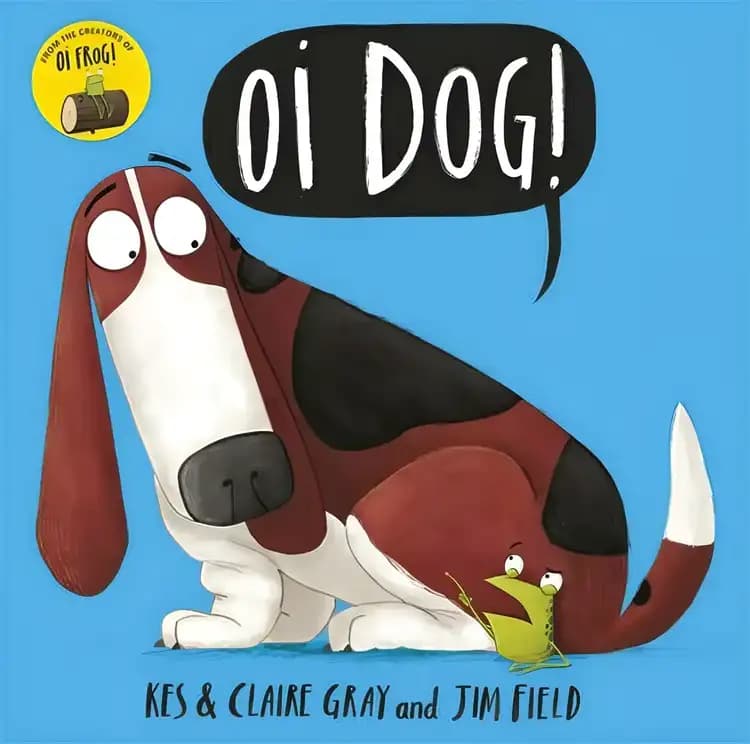
Oi Dog!
Oi Frog and Friends Series
on Goodreads (1,574)
What’s inside...
In 'Oi Dog!', the sequel to the picture book 'Oi Frog!', the rules of where animals sit are reversed. Frog declares that dogs will no longer sit on frogs but on logs instead. This leads to a series of whimsical and absurd rhymes that dictate the seating arrangements for various animals.
Series reading
Non-Sequential
Age
2-6
Length
32 pages
Text complexity
Character compass
Frog
Dog
The Cat
Discussion points
What do you think would happen if the frog didn't decide where animals sat? How would that change the story?
If you could choose a new rule for where an animal sits, which animal would you choose and where would they sit?
How do the different seating arrangements affect the animals? Do you think they are happy with the frog's decisions?
Can you think of a funny seating arrangement that wasn’t in the book? What makes it funny?
Why do you think the author chose a frog to make the rules? What qualities do frogs have that might help them make decisions?
Tip: Role play these questions
Before reading, ask your child to predict what the book might be about based on the cover and title.
While reading, pause to let your child guess what might happen next or how an animal might react to sitting in an unusual place.
Encourage your child to think creatively by asking them to come up with their own silly seating arrangements for different animals.
Discuss the characters’ reactions and feelings about where they are sitting to help your child develop empathy and understanding of different perspectives.
After reading, connect the story to your child's experiences by discussing any rules they follow in school or at home and how those rules affect them.
Key lessons
Example Lesson: Creativity and Innovation
Explanation: In 'Oi Dog!', the story revolves around animals sitting on items that rhyme with them, prompting imaginative and unexpected pairings. This demonstrates inventive thinking beyond traditional norms.
Real-World Application: Children can learn to think outside the box in their everyday problem solving and play, using creativity to view situations from different angles.
Example Lesson: Language Skills
Explanation: The book uses rhyme extensively, which helps children in recognizing phonetic patterns and enhancing their reading abilities.
Real-World Application: This skill can be applied in academic settings to improve literacy and also aids in the development of verbal and written communication skills.
Example Lesson: Rule Following and Adaptability
Explanation: The characters in the book must adapt to new rules about where they can sit, teaching flexibility and the ability to follow guidelines.
Real-World Application: Children can apply this lesson by understanding and adapting to new rules at home, in school, or in other social settings, fostering a sense of order and respect.
Example Lesson: Humor and Joy
Explanation: The quirky and humorous scenarios in 'Oi Dog!' bring laughter and enjoyment, showing the importance of joy in learning.
Real-World Application: Encourages children to find fun in everyday situations and use humor as a way to connect with others and enhance their social interactions.