
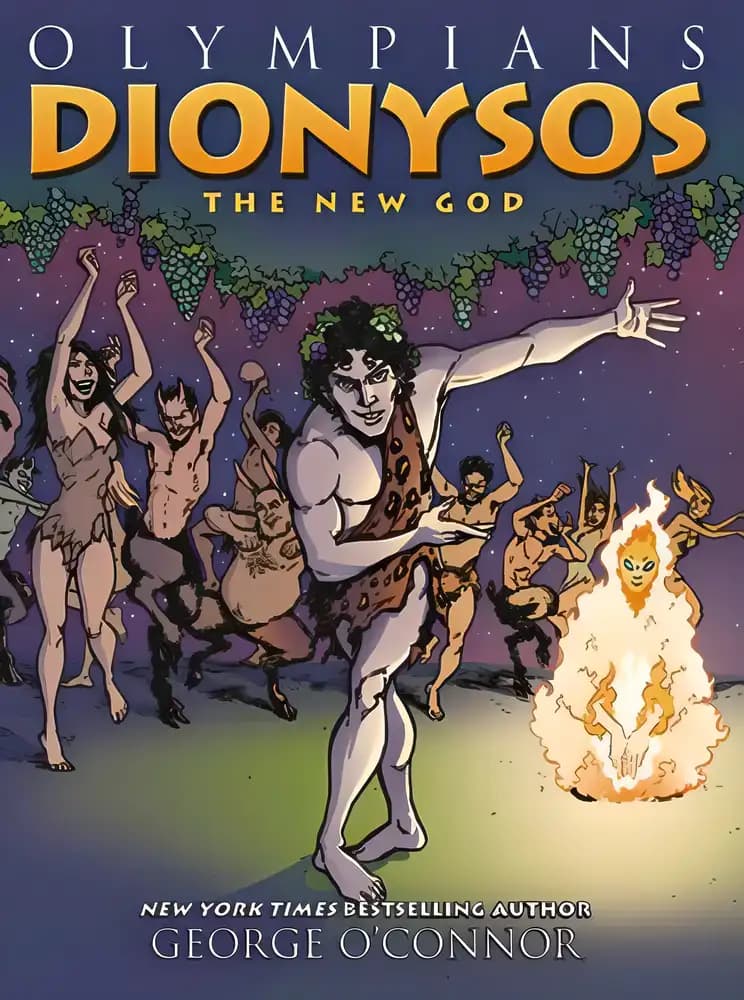
Olympians: Dionysos
#12 of 12 in Olympians Series
on Goodreads (575)
What’s inside...
In the final volume of the New York Times–bestselling Olympians graphic novel series, author/artist George O’Connor focuses on Dionysos, the god of wine and madness. The Olympians saga draws to a close with the tale of Dionysos, the last Olympian, and maybe, just maybe, the first of a new type of God. His story is told by the first Olympian herself, Hestia, Goddess of the hearth and home. From her seat in the center of Mt. Olympus, Hestia relates the rise of Dionysos, from his birth to a mortal mother, to his discovery of wine, his battles with madness and his conquering of death itself, culminating, finally, in his ascent to Olympus and Godhood. George O’Connor’s vibrant, kinetic art brings ancient tales to life.
Character compass
Dionysos
Zeus
Hera
Discussion points
What do you think makes Dionysos different from other gods you know about?
How do Dionysos' adventures show both his power and his kindness?
What lessons can we learn from the way Dionysos interacts with other characters in the story?
Why do you think Dionysos is called the god of wine and festivity? How does this influence the events in the book?
Tip: Role play these questions
Encourage your child to express their opinions and feelings about Dionysos’ actions and decisions throughout the story.
Draw parallels between Dionysos' adventures and everyday situations your child might encounter, enhancing their understanding and connection to the story.
Ask your child to imagine alternative scenarios in certain parts of the book, fostering creative thinking and deeper engagement with the content.
Highlight the cultural and historical aspects of the Greek mythology presented in the book, sparking curiosity about history and different cultures.
Key lessons
Example Lesson: Empathy
Explanation: In 'Olympians: Dionysos,' Dionysos shows empathy as he understands and shares the feelings of others. His interactions illuminate the power of recognizing emotions in those around him.
Real-World Application: Children can learn to be attentive to the feelings of friends and family, promoting harmonious relationships and emotional intelligence.
Example Lesson: Resilience
Explanation: The story depicts Dionysos overcoming various challenges and adversaries, embodying the trait of resilience.
Real-World Application: This can inspire children to persevere through difficulties they face in school or social interactions, understanding that overcoming challenges is part of growth.
Example Lesson: Creativity
Explanation: Dionysos is often associated with creativity and the arts in mythology. This aspect is explored in the book, highlighting the importance of creative expression.
Real-World Application: Encourages children to engage in creative activities such as drawing, writing, or playing music, which aids in mental development and personal expression.
Example Lesson: Understanding diverse cultures
Explanation: The book provides insight into ancient Greek culture and mythology, offering a glimpse into the beliefs and traditions of another civilization.
Real-World Application: This can help children appreciate and respect cultural diversity, fostering a more inclusive attitude towards people from different backgrounds.
Example Lesson: Importance of Nature
Explanation: As the god of wine, agriculture, and fertility of nature, Dionysos' story helps children understand the significance of nature and its preservation.
Real-World Application: Instills a sense of responsibility in children to care for the environment and appreciate the natural world around them.