
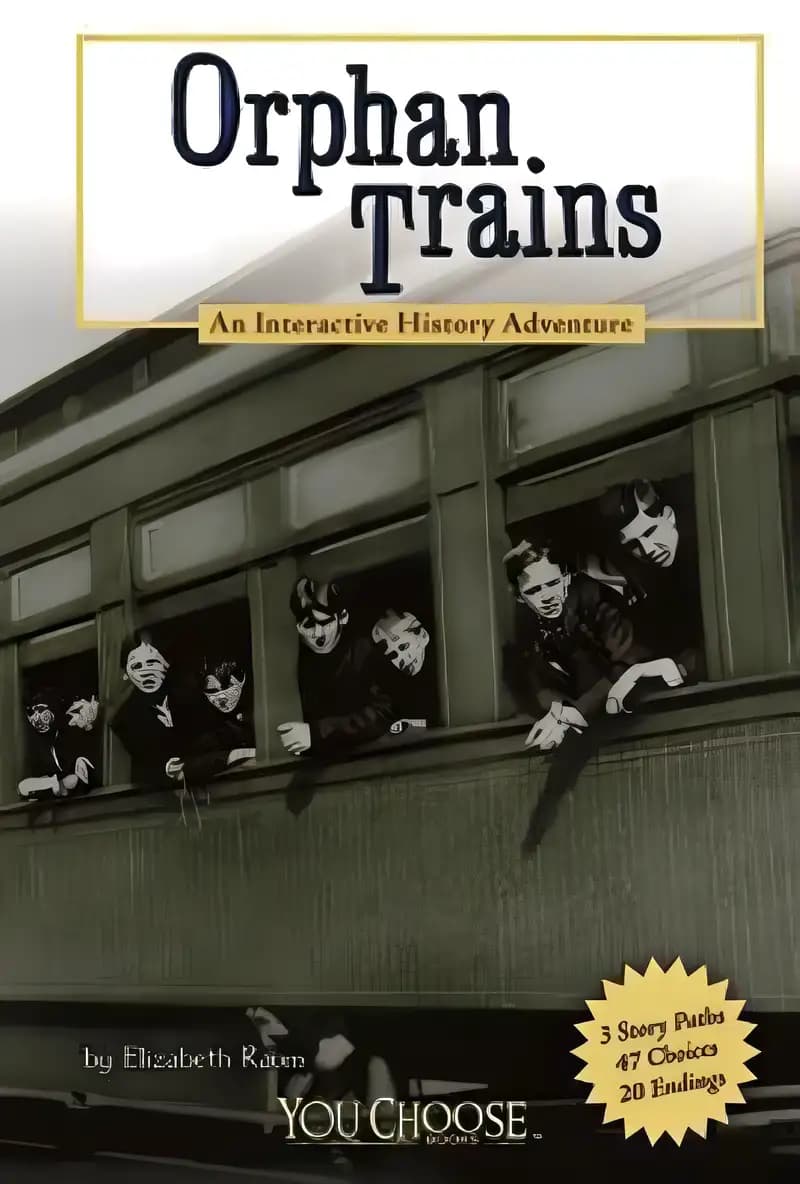
Orphan Trains: An Interactive History Adventure (You Choose History)
You Choose: Modern History Series
on Goodreads (78)
What’s inside...
This book describes the historical events and individuals involved in the orphan trains, a movement in the early 1900s aimed at finding homes for homeless city children by sending them west on trains. The reader gets to explore various perspectives including a New York City newsboy, a child attempting to keep his siblings together, and a child on the baby trains, making choices that reveal different historical details provided by the publisher.
Series reading
Non-Sequential
Age
9-12
Length
112 pages
Text complexity
Discussion points
How do you think the children felt when they were boarding the orphan trains?
What are some differences and similarities between the lives of children today and the children on the orphan trains?
Why do you think it was important for these children to find new homes?
What would you have done if you were given the choice the children in the book had to make?
How do you think the journey on the orphan trains changed the course of the children's lives?
Tip: Role play these questions
Begin the conversation by reviewing the main events in the book to ensure your child comprehends the storyline.
Encourage empathy by asking your child how they would feel in various scenarios described in the book.
Discuss the historical context of the orphan trains and relate it to current events or situations to make it relevant.
Praise your child for insightful comments or connections they make during the discussion to motivate deeper thinking.
Propose creating a family tree or researching more about the time period together to extend the learning experience.
Key lessons
Example Lesson: Empathy and Understanding
Explanation: The book provides insight into the hardships and choices faced by orphaned children on the orphan trains, enabling readers to put themselves in the shoes of these historical figures.
Real-World Application: Children can apply empathy towards peers who may come from different backgrounds or who may be going through difficult situations, promoting inclusiveness.
Example Lesson: Importance of Decision Making
Explanation: As an interactive history adventure, the book allows readers to make choices for the characters, teaching them the consequences of different decisions.
Real-World Application: This helps children understand the importance of making thoughtful decisions in their daily lives and consider the potential outcomes before acting.
Example Lesson: Resilience in the Face of Adversity
Explanation: The stories depict how orphaned children endured and often overcame challenging circumstances through resilience.
Real-World Application: Children learn to persevere through their own challenges, whether it’s at school or in personal growth, fostering a resilient mindset.
Example Lesson: Historical Awareness
Explanation: By exploring an often-overlooked aspect of American history, the book educates about the past ways of life and the social issues of the time.
Real-World Application: This broadens a child's perspective on history and encourages them to learn more about different historical events and their impacts on modern society.