
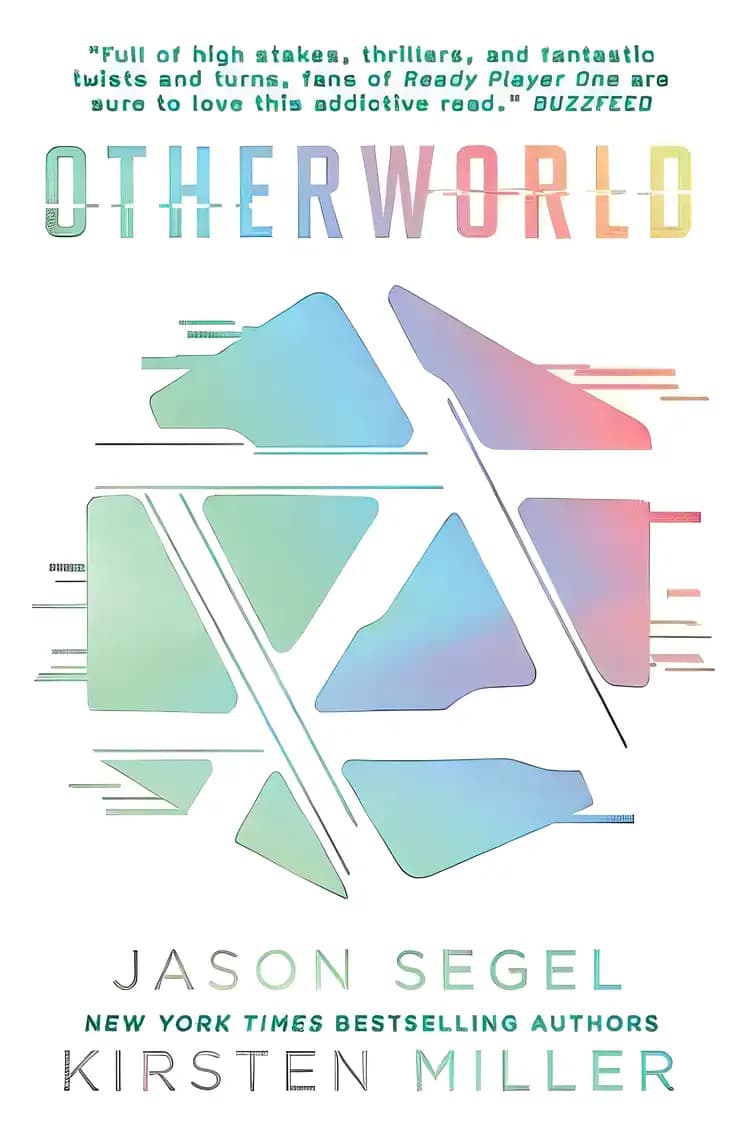
Otherworld: Last Reality Series
#1 of 3 in Last Reality Series
on Goodreads (9,779)
What’s inside...
Otherworld is a gripping and immersive virtual reality game that becomes frighteningly real for teenage gamer Simon. When his best friend Kat goes missing in the game, Simon must enter the dangerous and deceptive virtual landscape to save her, unveiling dark secrets along the way. Welcome to real life 2.0, a game so addictive you'll never want it to end, until you realize that you're the one being played. Step into Otherworld and leave your body behind. The frightening future imagined by Jason Segel and Kirsten Miller is not far away, raising the question: if technology can deliver everything we want, how much are we willing to pay?
Character compass
Simon
Kat
Discussion points
How would you feel if you were transported into a virtual reality world like the characters in 'Otherworld'? What would you do first?
What do you think are the pros and cons of immersing yourself in a virtual reality, as depicted in the book?
How do the relationships between the characters change throughout their journey in 'Otherworld'? Can you relate to any of these dynamics in your own friendships?
The story explores choices and their consequences. Can you think of a time when you had to make a tough decision? What did you learn from it?
If you had the power to change one thing in the 'Otherworld', what would it be and why?
Tip: Role play these questions
Encourage your child to imagine and describe their own version of a perfect virtual reality world, fostering creativity and personal expression.
Discuss the moral dilemmas faced by the characters to help your child develop empathy and ethical reasoning.
Relate the virtual challenges in the book to real-life challenges to help your child see the relevance of the story to their own experiences.
Use the book as a gateway to discuss the impact of technology on society, prompting critical thinking about the digital world.
Ask your child to predict what might happen next if the book continued, or what they would write in a sequel, to enhance their narrative skills and imagination.
Key lessons
Example Lesson: The importance of teamwork
Explanation: In 'Otherworld: Last Reality Series,' characters must work together to navigate challenges in the virtual world, showcasing how cooperation can lead to success.
Real-World Application: Children learn the value of collaborating with others, whether in school projects or in sports, enhancing their social and problem-solving skills.
Example Lesson: The consequences of escapism
Explanation: The book explores the idea of using virtual reality as an escape from real-world problems, highlighting the potential negative impacts of avoiding reality.
Real-World Application: This lesson teaches children the importance of facing challenges head-on and dealing with their problems rather than avoiding them, fostering resilience and problem-solving abilities.
Example Lesson: Understanding the impact of technology
Explanation: The narrative delves into the influence of immersive technology on human behavior and relationships, prompting a reflection on ethical technology use.
Real-World Application: Children can apply this understanding by using technology responsibly, balancing screen time with real-life interactions, and discussing technology’s role in their lives with family and educators.
Example Lesson: The power of perseverance
Explanation: Characters in the book often face difficult obstacles in the virtual world, but their determination helps them overcome these challenges.
Real-World Application: This encourages children to persist through difficulties in their own lives, such as learning new skills or solving complex problems, teaching them the value of resilience.