
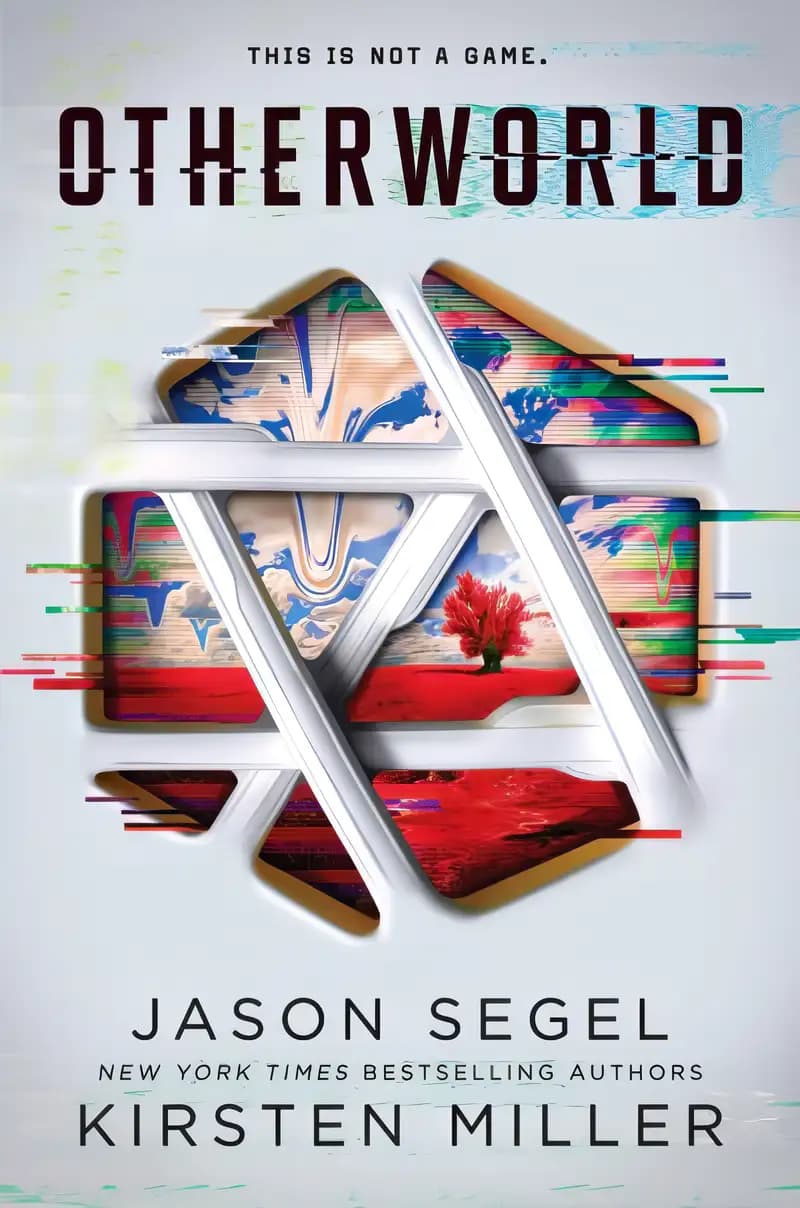
Otherworld
#1 of 3 in Last Reality Series
on Goodreads (9,819)
What’s inside...
"Full of high stakes, thrillers, and fantastic twists and turns, fans of Ready Player One are sure to love this addictive read." -Buzzfeed"A potent commentary on how much we're willing to give up to the lure of technology." -EW "A fantastic journey from start to finish." -Hypable New York Times bestselling authors Jason Segel and Kirsten Miller imagine a world in which you can leave your body behind and give into your greatest desires in the first book in a fast-paced trilogy perfect for fans of the hit HBO show Westworld and anyone interested in the terrifying possibilities of the future of technology.That's how Otherworld traps you. It introduces you to sensations you'd never be able to feel in real life. You discover what's been missing-because it's taboo or illegal or because you lack the guts to do it for real. And when you find out what's missing it's almost impossible to let it go again.There are no screens. There are no controls. You don't just see and hear it-you taste, smell, and touch it too. In this new reality, there are no laws to break or rules to obey. You can live your best life. Indulge every desire.This is Otherworld-a virtual reality game so addictive you'll never want it to end. And Simon has just discovered that for some, it might not.The frightening future that Jason Segel and Kirsten Miller have imagined is not far away. Otherworld asks the question we'll all soon be asking: if technology can deliver everything we want, how much are we willing to pay?"An engaging VR cautionary tale." -The A.V. Club"[A] fast-paced adventure." -Publishers Weekly"Authors Jason Segel and Kirsten Miller keep the action nonstop." -Shelf Awareness
Character compass
Simon
Kat
Busara
Discussion points
What did you think about the world Simon and Kat created in Otherworld? How would you design your own virtual world?
Simon faces many challenges in Otherworld. Which challenge was the most difficult for him, and how do you think you would handle it?
The idea of real vs. virtual is central in Otherworld. What are some differences you notice between interacting with people online and in person?
Simon and Kat have a complex friendship. How do their experiences in Otherworld affect their relationship? Have you ever had a friendship that was tested by difficult circumstances?
What do you think about the ethical questions raised by the technology in Otherworld? What responsibilities do you think creators of such technologies should have?
Tip: Role play these questions
Use open-ended questions to allow your child to express their thoughts and feelings about the book freely.
Relate discussions to your child’s experiences, asking if they’ve ever faced similar situations to those in the book and how they dealt with them.
Discuss the characters’ decisions and actions in the book and ask your child what they might have done differently.
Encourage your child to think critically about the moral and ethical aspects of the technology presented in the book.
Highlight the importance of empathy by discussing how the characters might feel at various points in the story.
Key lessons
Example Lesson: The importance of teamwork
Explanation: In 'Otherworld', characters must collaborate to navigate the virtual world and solve challenges, reflecting the power of cooperative effort.
Real-World Application: Children learn the value of working with others to achieve common goals, enhancing their ability to cooperate with peers in school projects or sports.
Example Lesson: Resilience in the face of adversity
Explanation: The protagonist's journey through difficult trials in 'Otherworld' highlights the importance of persistence and courage.
Real-World Application: This lesson encourages children to remain determined and optimistic, even when they encounter obstacles in their learning or personal growth.
Example Lesson: The impact of choices and consequences
Explanation: As characters make decisions in 'Otherworld', they experience direct consequences, teaching readers about the impact of their choices.
Real-World Application: Helps children understand that their actions have consequences, promoting thoughtful decision-making in their day-to-day interactions.
Example Lesson: Empathy and understanding others
Explanation: Interactions between characters with different backgrounds in 'Otherworld' serve as a basis for messages about empathy.
Real-World Application: Teaches children to consider perspectives different from their own, fostering a more inclusive attitude towards peers from diverse backgrounds.
Example Lesson: The dangers of escapism
Explanation: The book explores the theme of escaping into virtual reality, cautioning about the balance between digital and real-world interactions.
Real-World Application: Encourages children to find a healthy balance between screen time and engaging in real-life activities and relationships.