
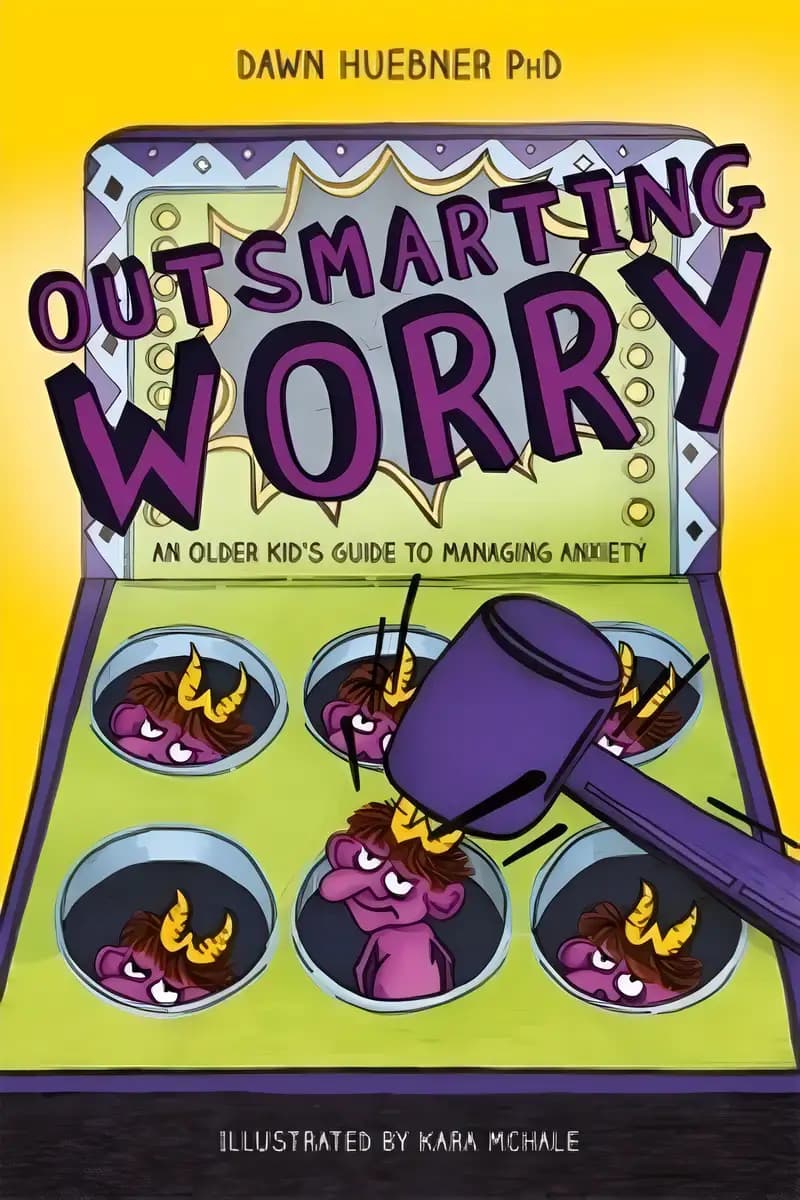
Outsmarting Worry (An Older Kid's Guide to Managing Anxiety)
What to Do Guides for Kids Series
What’s inside...
Worry has a way of growing, shifting from not-a-big-deal to a VERY BIG DEAL in the blink of an eye. This big-deal Worry is tricky, luring children into behaviours that keep the anxiety cycle going. Children often find it hard to fight back against Worry, but not anymore. Outsmarting Worry teaches 9-13 year olds and the adults who care about them a specific set of skills that makes it easier to face - and overcome - worries and fears. Smart, practical, proven techniques are presented in language immediately accessible to children with an emphasis on shifting from knowing to doing, from worried to happy and free.
Series reading
Non-Sequential
Age
9-13
Length
112 pages
Text complexity
Discussion points
What are some of the strategies that the book suggests to handle worry? How do you think you could use them in your life?
Can you think of a time when you felt worried like the characters in the book? What helped you feel better?
How does it make you feel to know that everyone experiences worry sometimes?
What does the book teach us about the importance of talking about our worries?
What is one thing you learned from reading this book that you think will help you manage anxiety in the future?
Tip: Role play these questions
Start the conversation by sharing a personal story about a time you felt anxious, to create a safe and open environment for your child to share.
Praise your child for any efforts to express their feelings and thoughts, reinforcing that it is safe and beneficial to talk about emotions.
After discussing each question, ask your child if they have any questions of their own about anxiety or the topics covered in the book.
Relate the strategies from the book to real-life situations that your child might encounter, to help them see practical applications.
Encourage your child to draw or write about their own experiences with worry after the conversation, to reinforce the strategies discussed.
Key lessons
Example Lesson: Understanding anxiety
Explanation: The book educates children about what anxiety is, how it affects the mind and body, and why it happens.
Real-World Application: Kids can recognize signs of anxiety in themselves and understand it’s a normal response, promoting self-awareness and emotional regulation.
Example Lesson: Strategies to manage anxiety
Explanation: Techniques such as deep breathing, journaling, and cognitive reframing are illustrated through scenarios that children can relate to.
Real-World Application: Children can apply these strategies in real life whenever they feel overwhelmed, helping them regain control and calmness.
Example Lesson: Building resilience
Explanation: The book conveys the importance of facing fears and the role of resilience in overcoming anxiety.
Real-World Application: This encourages children to face challenging situations rather than avoid them, enhancing their ability to cope with stress in the future.
Example Lesson: Seeking support
Explanation: It highlights the importance of talking to trusted adults or friends when feeling anxious.
Real-World Application: Children learn the value of sharing their feelings and seeking advice, fostering a support system that they can rely on.
Example Lesson: Normalizing mental health discussions
Explanation: By discussing anxiety openly, the book helps to destigmatize mental health issues among children.
Real-World Application: Promotes an open dialogue about mental health from a young age, encouraging empathy and understanding in peer interactions.