
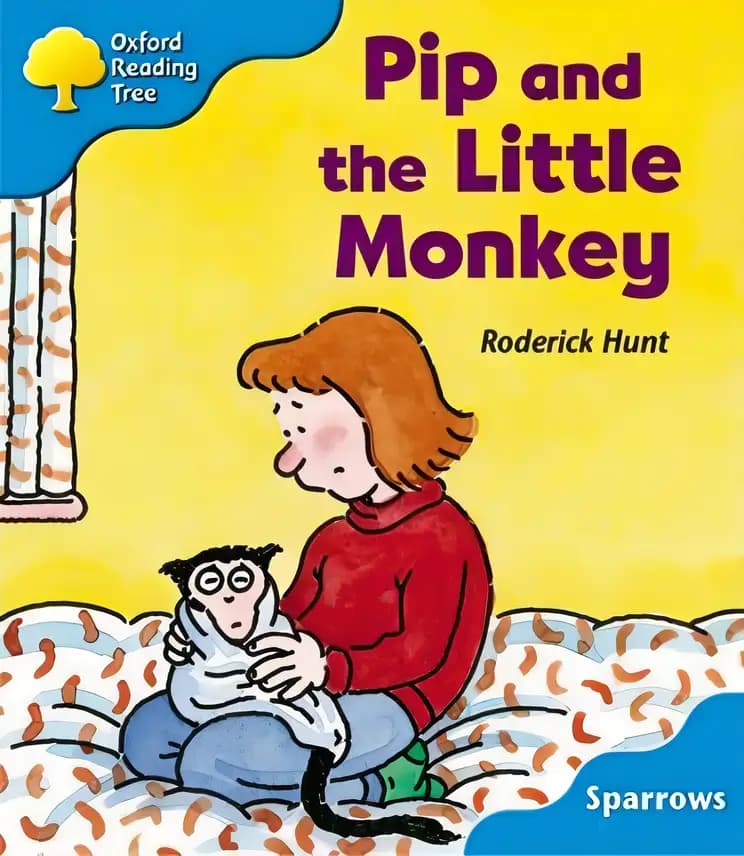
Oxford Reading Tree: Stage 3: Sparrows: Pip and the Little Monkey
Oxford Reading Tree: Storybooks Series
on Goodreads (11)
What’s inside...
Oxford Reading Tree Sparrows are designed to provide consolidation and breadth for children requiring ample reading practice before advancing to the next level. Authored by Roderick Hunt, these stories introduce various characters, families, and settings to expand children's reading base. The stories are coded according to the Book Bands system and are available in mixed or class packs. Additional reading development resources are available at www.oxfordowl.co.uk. The Stage 3 Sparrows include 6 familiar stories with new covers and text adjusted to match Stage 3 of the Oxford Reading Tree New Edition. Two original Stage 4 stories have been adapted for Stage 3. Each pack includes a 24-page Teaching Notes booklet with vocabulary charts, curriculum coverage charts, and activity suggestions aligned with the National Literacy Strategy Objectives for classroom management and pupil progress observation.
Series reading
Non-Sequential
Age
5-7
Length
16 pages
Text complexity
Discussion points
Why do you think Pip wanted to help the little monkey?
How do you think the monkey felt when Pip found him?
What would you have done if you were in Pip's place?
What did Pip learn from his adventure with the monkey?
Can you think of a time when you helped someone? How did it make you feel?
Tip: Role play these questions
Encourage your child to put themselves in Pip’s shoes, fostering empathy and understanding. Highlight the importance of helping others and ask them to share related personal experiences. Discuss the feelings of the characters to enhance emotional intelligence. Use expressive reading to make the story more engaging and help your child connect with the characters’ emotions.
Key lessons
Example Lesson: Empathy and Understanding
Explanation: In the story, Pip shows kindness and understanding towards the little monkey who is in a new and unfamiliar situation. This demonstrates empathy.
Real-World Application: Children can apply this lesson by learning to recognize when someone else is feeling uncomfortable or scared and offering them support and kindness.
Example Lesson: Problem-Solving Skills
Explanation: Pip encounters various challenges while trying to help the little monkey. This encourages young readers to think critically and solve problems creatively.
Real-World Application: Kids can use problem-solving skills learned from the story to navigate their own challenges at school or in social settings, like finding ways to include everyone in a game.
Example Lesson: Responsibility
Explanation: Taking care of the little monkey teaches Pip about the responsibilities involved in caring for someone else.
Real-World Application: Children can relate this to taking on small tasks at home, such as feeding a pet or helping with chores, understanding the importance of responsibility.
Example Lesson: Courage
Explanation: Pip shows bravery in helping a friend in need, despite the uncertainties that lie ahead.
Real-World Application: This can inspire children to face their own fears and stand up for what they believe is right, whether it’s trying something new or standing up for a friend.