
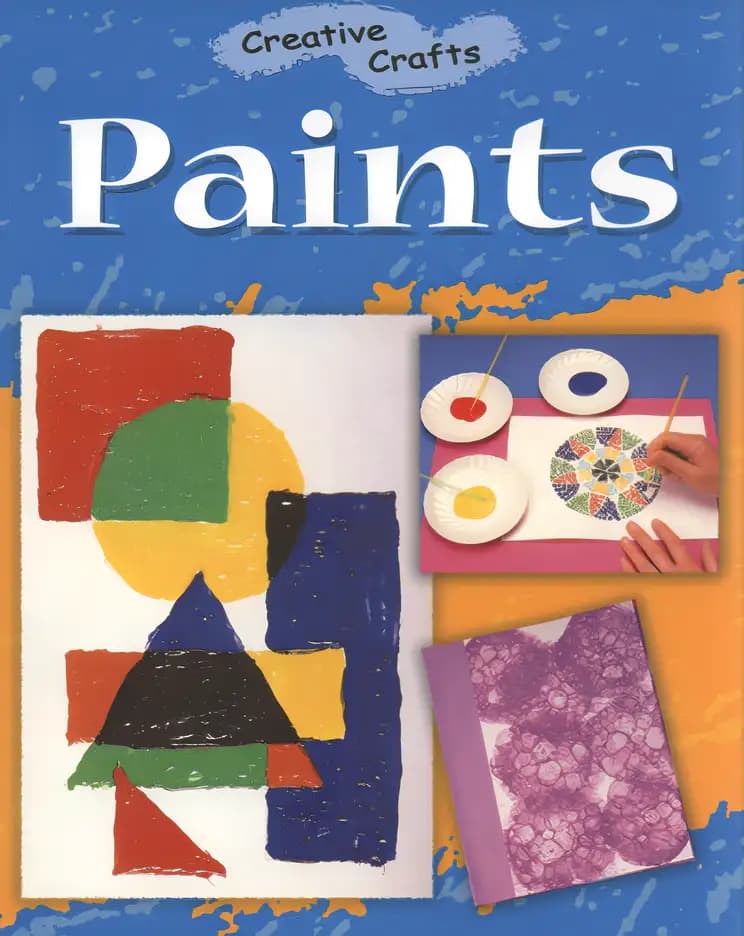
Paint (Creative Crafts)
What’s inside...
Part of a series of books which show how to succeed with a wide range of fascinating arts and crafts. It includes simple instructions to skills and techniques, and guidance on where to obtain materials and how to find out more about the subject.
Why read this book
- Enhances creativity through engaging craft ideas.
- Develops fine motor skills with hands-on activities.
- Encourages self-expression and color exploration.
- Ideal for parent-child interactive learning sessions.
Age
5-8
Length
48 pages
Text complexity
Discussion points
What colors would you use to paint your favorite scene from the book?
How do you think the characters felt when they created their artwork?
If you could add a new craft to the book, what would it be and why?
Which craft in the book would you like to try first and how would you make it your own?
How do you think painting and creating crafts can help us express our feelings?
Tip: Role play these questions
Encourage your child to describe their emotions and thoughts about the paintings and crafts in the book.
Discuss the importance of colors and ask your child why certain colors might have been chosen for different crafts.
Relate the crafts to real-life experiences, asking your child if they have seen or felt something similar before.
Invite your child to plan a crafting day where they can create some of the items seen in the book.
Praise your child’s creative thoughts and link them to the themes of expression and imagination shown in the book.
Key lessons
Example Lesson: Creativity and Self-Expression
Explanation: Henry Pluckrose's 'Paint (Creative Crafts)' encourages children to explore their creative impulses through the medium of paint. By presenting various painting techniques and projects, the book demonstrates that art is an enjoyable and accessible form of expression.
Real-World Application: Children can apply the creativity fostered by this book in their everyday activities such as school projects, crafting personal gifts, or even when solving problems by thinking outside the box.
Example Lesson: Understanding Colors
Explanation: The book educates young readers about primary and secondary colors, and how they can mix these to create new hues. This foundational knowledge in color theory is explained in a child-friendly manner.
Real-World Application: This lesson helps children in activities such as dressing themselves by matching colors appropriately, and in understanding the natural world around them which is full of color.
Example Lesson: Patience and Focus
Explanation: Throughout 'Paint (Creative Crafts)', children are guided through projects that require concentration and patience, such as waiting for paint to dry before adding a new coat or detail.
Real-World Application: The patience and focus learned can aid children in academic settings, such as when they need to concentrate during tests or while listening to instructions from teachers.
Example Lesson: Sense of Achievement
Explanation: Completing a painting project from the book provides a sense of accomplishment. Children are encouraged to follow through with their crafts which builds their confidence in their abilities.
Real-World Application: This sense of achievement can translate into other areas of a child’s life, encouraging them to take on new challenges and persist despite difficulties, whether in academics, sports, or personal hobbies.
Example Lesson: Appreciation for Art
Explanation: By exposing children to the work of different artists and styles featured in the book, 'Paint (Creative Crafts)' fosters an appreciation for art and its cultural significance.
Real-World Application: This appreciation can enhance cultural awareness and encourage children to explore other art forms and cultural expressions, broadening their horizons and fostering inclusivity.