
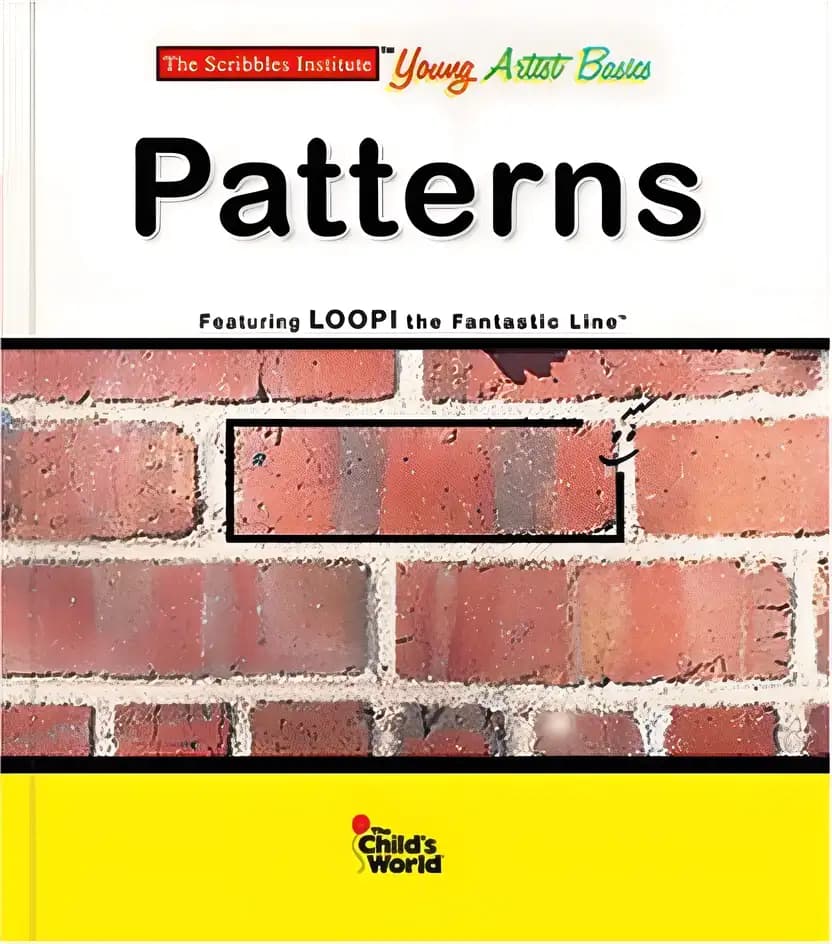
Patterns
Young artist basics Series
illustrations by
What’s inside...
Simple text and 'Loopi the Fantastic Line' describe the concept of patterns, how they differ, and their role in art and architecture. Simple text and cartoon characters introduce basic patterns and their application and importance in artwork and architecture.
Series reading
Non-Sequential
Age
8-10
Length
32 pages
Text complexity
Discussion points
What patterns did you notice in the pictures?
How do you think recognizing patterns helps us in daily life?
Can you think of any patterns you saw today?
Tip: Role play these questions
Encourage your child to explore patterns in their environment, whether in nature or in the home. After reading, you might go on a 'pattern hunt' around your house or during a walk. Discuss how patterns help us predict and organize information, making daily tasks easier.
Key lessons
Example Lesson: Recognizing and understanding patterns
Explanation: In 'Patterns,' Rob Court masterfully illustrates various patterns through engaging visuals and simple, rhythmic text. This helps children identify and predict sequences which are crucial in early math skills development.
Real-World Application: Children start noticing and predicting patterns in their daily routines and natural environment, aiding their cognitive development and problem-solving skills.
Example Lesson: Critical thinking
Explanation: The book encourages children to not only observe but also think about what comes next in a pattern, boosting their analytical skills.
Real-World Application: This skill is transferable to other areas such as solving puzzles, organizing tasks, and even planning their day.
Example Lesson: Creativity and art appreciation
Explanation: Rob Court uses a variety of artistic styles to showcase patterns, fostering an appreciation for art and encouraging creative expression among young readers.
Real-World Application: Children learn to express themselves creatively by drawing, crafting or even arranging objects at home in patterned sequences.
Example Lesson: Attention to detail
Explanation: The book's interactive nature requires children to pay close attention to the details of each pattern, enhancing their concentration and focus.
Real-World Application: Better focus and attention to detail can help children in academic settings, especially in tasks that require precision such as writing and mathematics.
Example Lesson: Patience and perseverance
Explanation: As children attempt to predict and replicate patterns, they learn the values of patience and perseverance when they encounter challenging sequences.
Real-World Application: These qualities are beneficial in all aspects of learning and personal development, helping children to steadily achieve goals and overcome obstacles.