
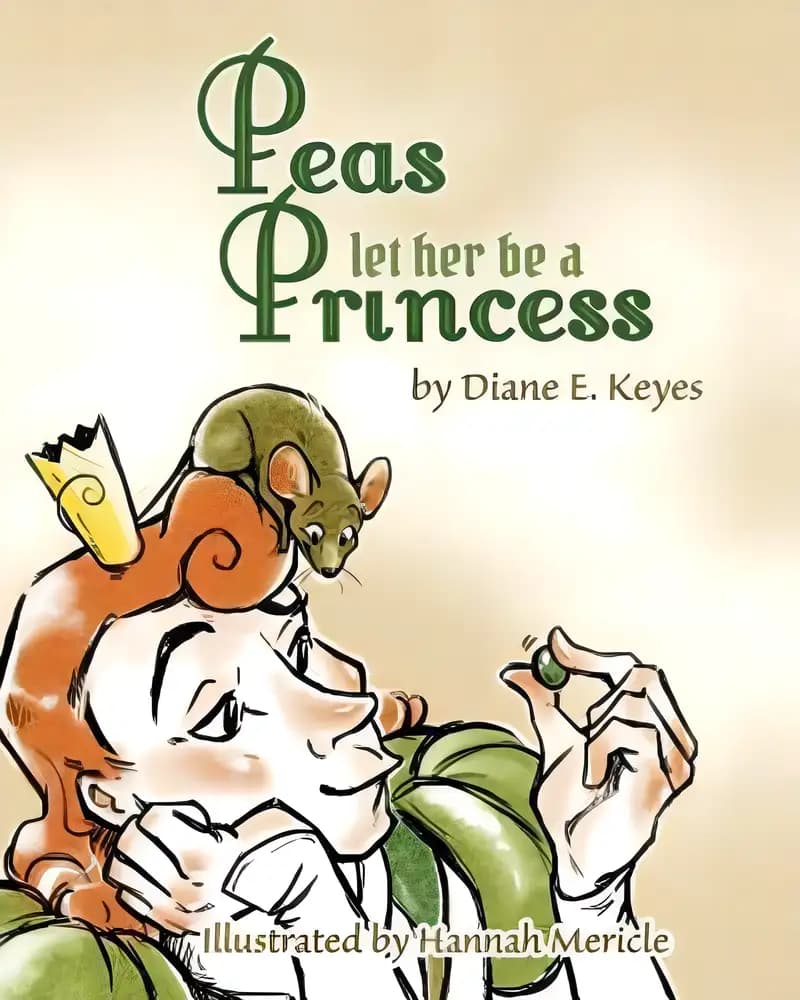
Peas let her be a Princess
on Goodreads (24)
What’s inside...
Once upon a castle bed, lay a maiden's dainty head...So begins this new twist on Hans Christian Andersen's fairy tale, The Princess and the Pea. The prince is in love with a beautiful red haired maiden. But is she a genuine princess? Can she pass the princess test? Will she feel the pea through the mattresses piled high? With the help of a friendly mouse and a faithful knight, can the prince be sure his love will wake? Leaving nothing to chance, this prince is willing to go to new heights for love! Rhyming text by Diane E. Keyes and whimsical illustrations by Hannah Mericle bring this classic fairy tale to life with hysterical and surprising results.
Why read this book
- Empowers young girls through a relatable, inspiring protagonist.
- Fosters imagination with enchanting, magical elements.
- Encourages self-acceptance and individuality.
- Ideal for shared reading, strengthens parent-child bonds.
Age
3-12
Length
34 pages
Text complexity
Discussion points
Why do you think Pea wants to be a princess? What qualities do you think make a good princess?
How did Pea's friends and family help her in her journey? Can you think of a time when someone helped you achieve a goal?
What challenges did Pea face, and how did she overcome them? How do you handle challenges in your own life?
How did Pea's idea of being a princess change from the beginning to the end of the story? How have your ideas about certain things changed as you've grown?
What does this story teach us about dreams and working hard to achieve them?
Tip: Role play these questions
Before reading, ask your child what they know about princesses and discuss their perceptions.
While reading, pause to discuss Pea’s feelings and decisions, asking your child how they might feel or act in similar situations.
Encourage your child to imagine their own ending to the story before finishing the book, fostering creativity and prediction skills.
After reading, connect the themes of the book to real-life events or challenges your child might be facing, making the story more relatable and impactful.
Celebrate the completion of the book by having your child draw their favorite scene, deepening their connection to the story and its characters.
Key lessons
Example Lesson: Self-acceptance
Explanation: The protagonist, Pea, embraces her unique qualities and learns to love herself as she is, rather than trying to fit into a typical princess mold.
Real-World Application: Children can learn to appreciate their own uniqueness and feel confident in who they are, boosting self-esteem and reducing peer pressure.
Example Lesson: Creativity and imagination
Explanation: Pea uses her imagination to redefine what it means to be a princess, engaging in unconventional activities that defy stereotypical roles.
Real-World Application: Encourages children to think creatively and express themselves freely, fostering problem-solving skills and innovative thinking in real-life situations.
Example Lesson: Perseverance
Explanation: Despite facing challenges and doubts from others, Pea persists in pursuing what she believes in, ultimately succeeding in her own way.
Real-World Application: Teaches children the value of perseverance and hard work in achieving personal goals, which applies to academic, social, and extracurricular pursuits.
Example Lesson: Acceptance of others
Explanation: Through her interactions, Pea learns to accept and appreciate the differences in others around her.
Real-World Application: Promotes inclusivity and respect for diversity among children, preparing them for cooperative work and social harmony in diverse environments.