
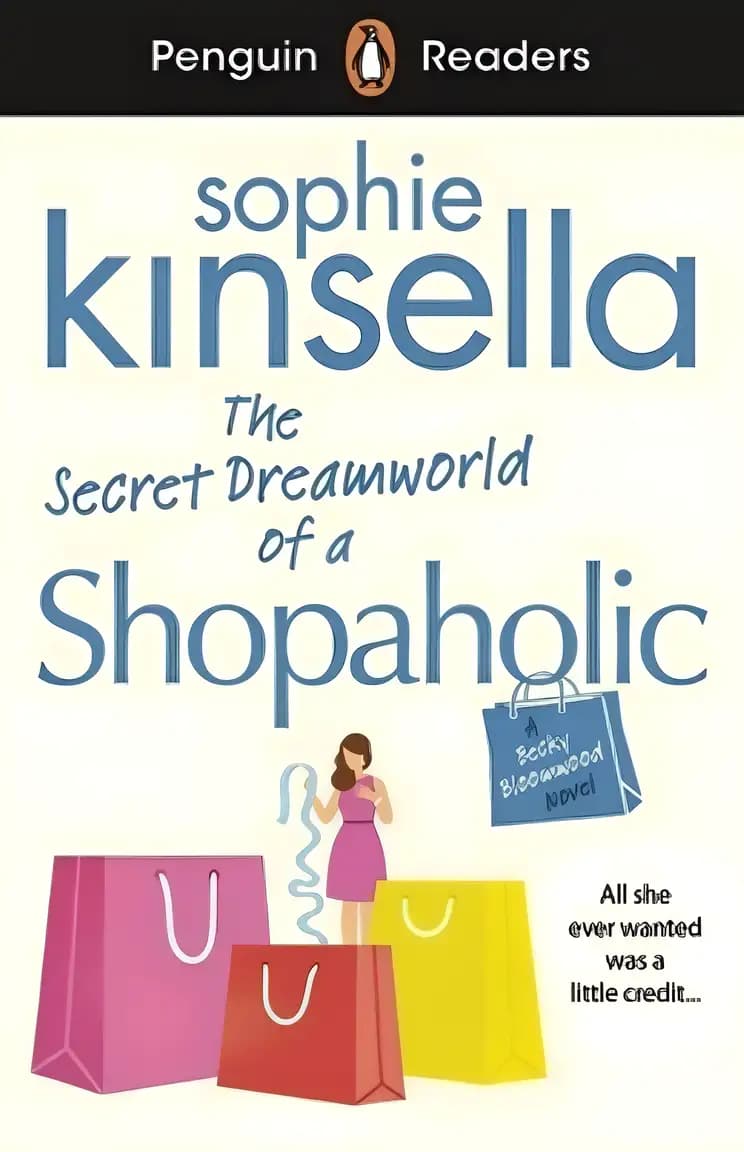
Penguin Readers Level 3: The Secret Dreamworld Of A Shopaholic (ELT Graded Reader)
Shopaholic Series
on Goodreads (50)
What’s inside...
Penguin Readers is an ELT graded reader series designed for learners of English as a foreign language. The series features carefully adapted text, new illustrations, and language learning exercises. Each print edition includes access to additional online resources such as a digital book, audio edition, lesson plans, and answer keys. The series covers a range of genres including popular classics, contemporary fiction, and non-fiction, and is structured across eight levels that align with the Common European Framework of Reference for language learning (CEFR). Exercises are provided at the end of each book to help learners practice grammar, vocabulary, and key exam skills, along with comprehension questions to enhance understanding and vocabulary development.
Series reading
Non-Sequential
Age
12-17
Length
80 pages
Text complexity
Character compass
Rebecca Bloomwood
Suze Cleath-Stuart
Luke Brandon
Alicia Billington
Discussion points
What do you think motivates Becky's shopping habits? How do her choices affect her life?
How do the people around Becky respond to her shopping? What does this tell us about friendships and relationships?
Can you think of a time when you wanted something really badly like Becky? How did you feel, and what did you do?
What lessons can we learn about money management from Becky's experiences?
If you were in Becky’s shoes, how would you handle the situations she faces in the story?
Tip: Role play these questions
Use empathetic listening. Show genuine interest in their thoughts and feelings about the story.
Encourage them to relate the story to their own experiences, fostering personal connections with the characters and scenarios.
Discuss the consequences of Becky's actions to highlight cause and effect, which can lead to a deeper understanding of personal responsibility.
Praise their insights and contributions to the discussion to boost their confidence and encourage more open sharing.
Ask follow-up questions based on your child's responses to keep the conversation flowing and to delve deeper into the themes.
Key lessons
Example Lesson: The importance of responsible spending
Explanation: The protagonist of the story, Becky, struggles with managing her finances due to impulsive shopping habits.
Real-World Application: Children can learn to think critically about their needs versus wants, helping them make prudent financial decisions from a young age.
Example Lesson: Understanding consequences
Explanation: Becky faces various challenges that stem directly from her inability to control her spending, providing a clear cause-and-effect scenario.
Real-World Application: This lesson can help children understand that their actions have consequences, encouraging them to think before they act.
Example Lesson: The value of honesty
Explanation: Throughout the book, Becky learns that hiding her shopping habits causes more problems, highlighting the importance of honesty.
Real-World Application: Children can apply this lesson by being truthful in their dealings with family and friends, fostering trust and strong relationships.
Example Lesson: Self-control and discipline
Explanation: As the story progresses, Becky begins to take control of her financial situation, demonstrating self-control and discipline.
Real-World Application: Kids can learn to apply these traits in their academic and personal lives, leading to better outcomes and fulfillment of their responsibilities.