
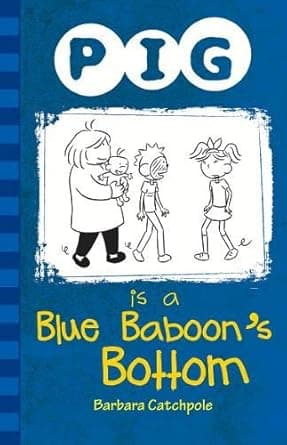
Pig is a Blue Baboon's Bottom
Elephant & Piggie Series
on Goodreads (5)
What’s inside...
In 'Pig is a Blue Baboon's Bottom,' Barbara Catchpole crafts a comical and engaging story centered around Pig and his school experiences. Pig's class is tasked with bringing in items they no longer use, which leads to a series of mishaps that threaten his friendship with Raj. Through humorous adventures and misadventures, the book highlights themes of friendship, resilience, and the joys of childhood, making it an ideal read for young readers to develop literacy skills while enjoying an entertaining story.
Series reading
Non-Sequential
Age
9-12
Length
48 pages
Text complexity
Character compass
Pig
Discussion points
Why do you think the characters reacted the way they did when Pig was called a blue baboon's bottom?
How would you feel if someone called you a funny name? How would you handle it?
What do you think this story teaches us about friendship and understanding?
Can you think of a time when you helped someone feel better after they were teased or felt sad?
What are some ways we can show kindness to others, even if they are different from us?
Tip: Role play these questions
Encourage your child to relate the situations in the book to their own experiences to foster empathy and understanding. Use the characters' reactions to explore feelings and actions in social scenarios. Emphasize the importance of kindness and respect in all interactions, mirroring the book's themes.
Key lessons
Example Lesson: Acceptance of differences
Explanation: The story portrays various unusual animal characteristics, emphasizing uniqueness.
Real-World Application: Children learn to appreciate diverse traits in others and accept their own unique qualities.
Example Lesson: Creativity and imagination
Explanation: The imaginative title and creative scenarios can inspire children to think creatively.
Real-World Application: Encourages children to engage in creative play and storytelling, enhancing cognitive development.
Example Lesson: Humor as a tool for learning
Explanation: The book uses humor through its characters and situations to engage children.
Real-World Application: Teaches children to use humor to connect with others and make learning more enjoyable.
Example Lesson: Language skills development
Explanation: The playful use of language and rhymes helps in the development of literacy skills.
Real-World Application: Improves vocabulary and comprehension, essential for academic success and effective communication.