
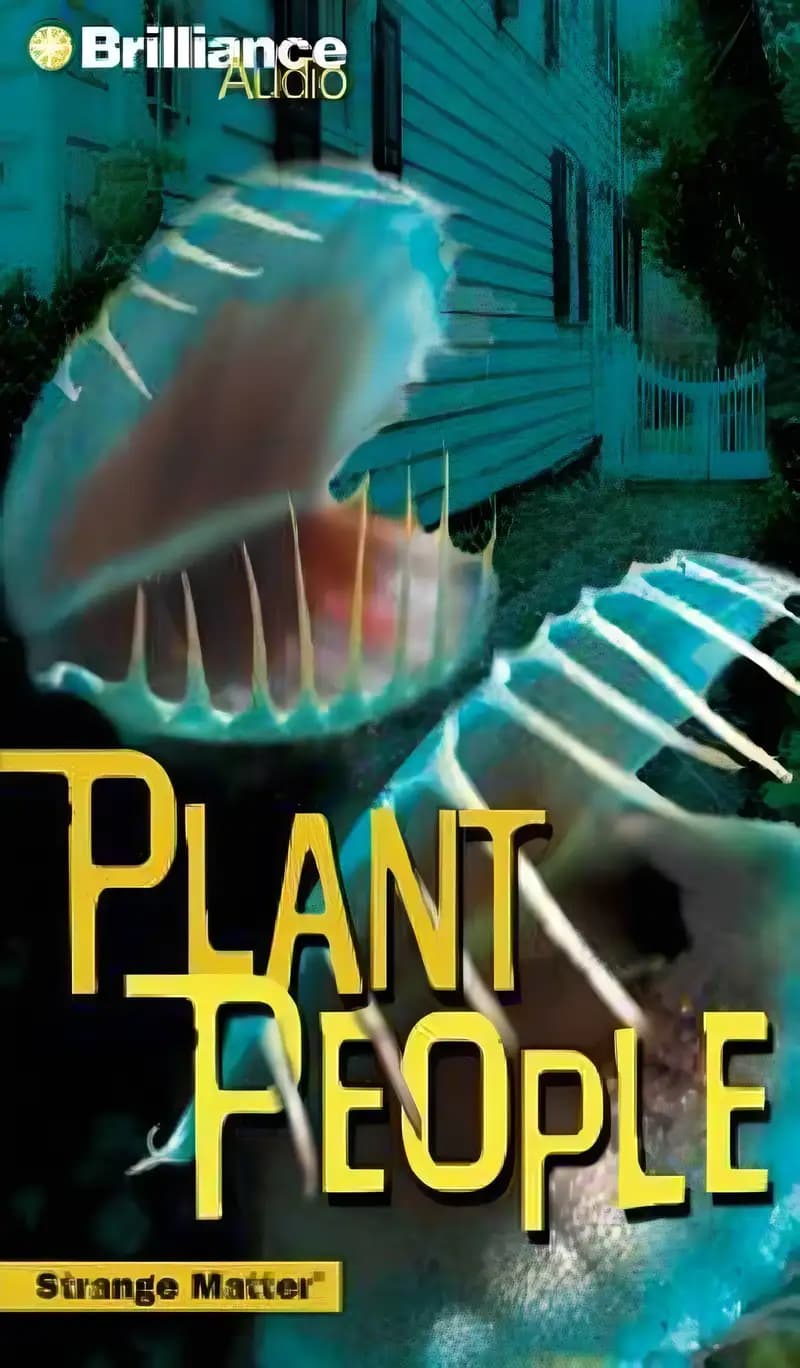
Plant People (Strange Matter, 14)
#14 in Strange Matter Series
illustrations by
on Goodreads (36)
What’s inside...
Something strange is moving into the house behind Rachel Pearson's - and only she knows it. While exploring the vacant house, Rachel comes across some weird looking plants. They are large, green shells that have blossomed, letting whatever was inside them out. Then, two months later, the Smith family moves into the empty house. They're very odd people. Not only do Mr. and Mrs. Smith and their two weird children, Jane and Richard, look unsettling, they act strange as well. Jane seems to have a taste for bugs, while Richard disappears late at night with a shovel in hand, only to return early the next morning. It's made Rachel very suspicious. But soon that suspicion turns to fear when strange things happen to those who come into contact with the Smiths. Kids get sick. Parents disappear. And plants come to life. Now no one's left to believe Rachel, except for the Smiths...
Discussion points
What similarities do you see between how plants grow and how people grow?
If you were a plant person, what kind of plant would you be and why?
What did you learn about the importance of taking care of the environment from the book?
How do you think the plant people felt in the story, and what would you do if you met one?
Tip: Role play these questions
Encourage your child to imagine their own version of a plant person, drawing it out or describing it in detail to foster creativity.
Discuss the lifecycle of a plant before reading to provide context that enhances comprehension of the book’s themes.
Connect themes from the book to real-world activities, such as gardening, to make the story more relatable and tangible.
After reading, encourage your child to think about how they can help take care of the plants and environment around them.
Key lessons
Example Lesson: Teamwork and Collaboration
Explanation: The characters in 'Plant People' work together to solve the mystery of the transforming plants, demonstrating the importance of collaborating to overcome challenges.
Real-World Application: Children can apply this lesson by participating in group activities at school or in sports, learning to cooperate and value each other's contributions to achieve common goals.
Example Lesson: Responsibility towards Nature
Explanation: The book highlights the characters' efforts to understand and protect their local environment, which underscores the responsibility we all share in caring for our planet.
Real-World Application: Kids can learn to be more conscious of their environment, engaging in activities like recycling, conserving water, and planting trees to foster a sustainable future.
Example Lesson: Curiosity and Learning
Explanation: As the protagonists explore strange occurrences related to plants, their journey fuels curiosity and emphasizes the joy of learning and discovery.
Real-World Application: This lesson encourages children to ask questions and seek out answers, enhancing their educational experience and promoting a lifelong love of learning.
Example Lesson: Dealing with Fear
Explanation: When faced with the unknown, the characters learn to manage their fear and approach situations with courage, showing that fear can be a catalyst for growth rather than an obstacle.
Real-World Application: Children can use this lesson to face their own fears, be it trying something new or facing academic challenges, understanding that courage can lead to personal development and empowerment.