
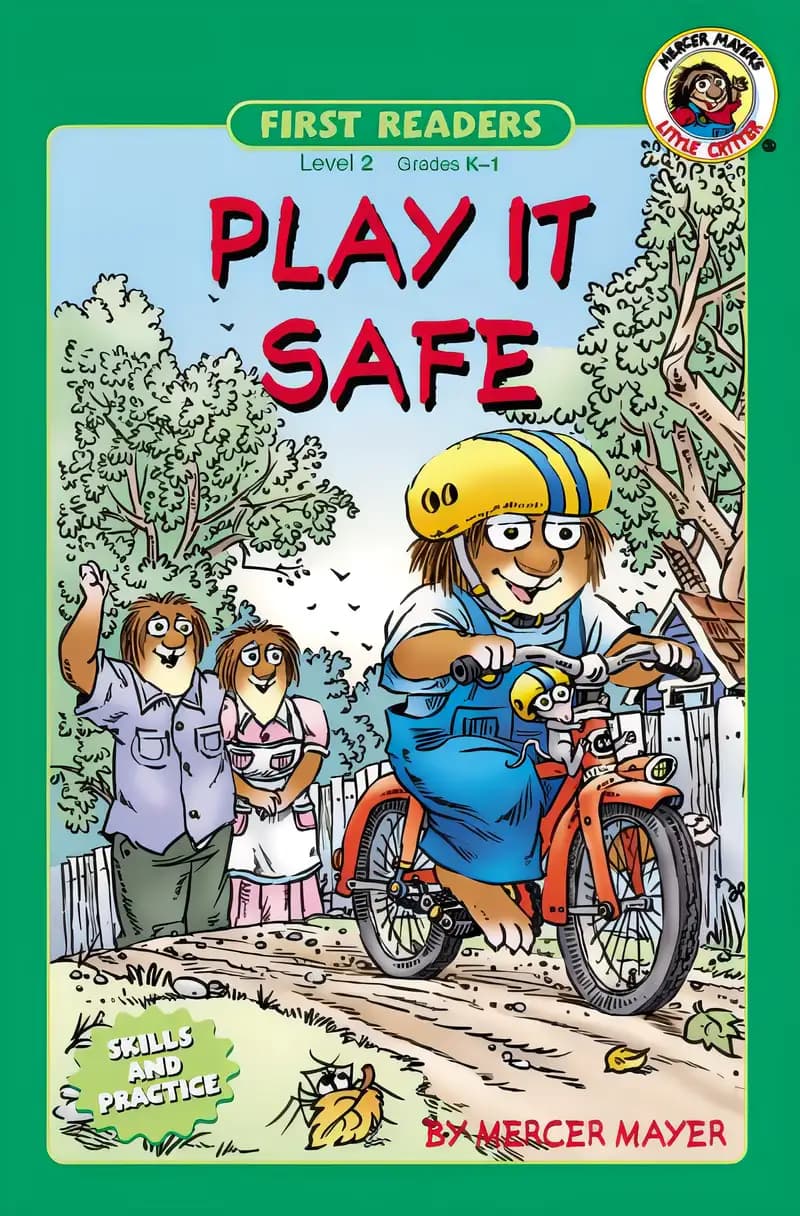
Play It Safe (Mercer Mayer's Little Critter (Pb))
The new adventures of Mercer Mayer's little critter Series
What’s inside...
Let Little Critter(R) take your child on a reading adventure! Little Critter and Gabby spend the day at Bike Safety Camp, learning how to play it safe! Play it Safe is the original Little Critter First Reader for children ages 5 to 7. This charming level is specifically formatted for emergent readers, featuring simple text and illustrations that make it easy to understand and enjoy the story. The book encourages kids to learn important safety lessons while having fun.
Series reading
Non-Sequential
Age
0-8
Length
24 pages
Text complexity
Character compass
Little Critter
Discussion points
How do you think Little Critter felt when he was trying to play it safe? Can you describe a time you felt the same?
What are some ways Little Critter tried to stay safe in the book? Why do you think those are important?
Can you think of some rules we follow at home to keep us safe? How do they help us?
What would you do if you were in a situation like Little Critter’s? How would you handle it?
How do you think the story would change if Little Critter didn't play it safe? What might happen differently?
Tip: Role play these questions
Encourage your child to express their thoughts and feelings about safety by relating it to their personal experiences.
Praise your child for sharing their ideas, making them feel valued and more open to discussing further.
Utilize the book’s illustrations to guide the conversation, pointing out how Little Critter’s expressions and actions relate to the theme of safety.
Make connections between the safety rules in the book and the ones followed at home, school, or elsewhere to emphasize their importance.
Finish the discussion by asking your child to come up with one new safety rule they think would be good to follow, fostering creative thinking and a sense of responsibility.
Key lessons
Example Lesson: Importance of Safety Rules
Explanation: Throughout 'Play It Safe', Little Critter navigates various situations where he learns about following safety rules, such as wearing a helmet while biking.
Real-World Application: Children are taught to understand and adhere to safety guidelines in daily activities, which helps prevent accidents and promotes a safer environment.
Example Lesson: Responsibility
Explanation: Little Critter is shown taking care of his belongings and being responsible for his own safety during his daily routine.
Real-World Application: This encourages children to take charge of their personal items and actions, fostering accountability from a young age.
Example Lesson: Problem Solving
Explanation: In the book, Little Critter faces minor setbacks and uses critical thinking to resolve them, demonstrating problem-solving skills.
Real-World Application: It prepares children to tackle challenges they encounter in school or at play by thinking critically and making sensible decisions.
Example Lesson: Learning from Mistakes
Explanation: When things don’t go as planned, Little Critter evaluates the situations and learns from his mistakes.
Real-World Application: This lesson instills the value of learning from errors and understanding that mistakes are a part of learning and growing.