
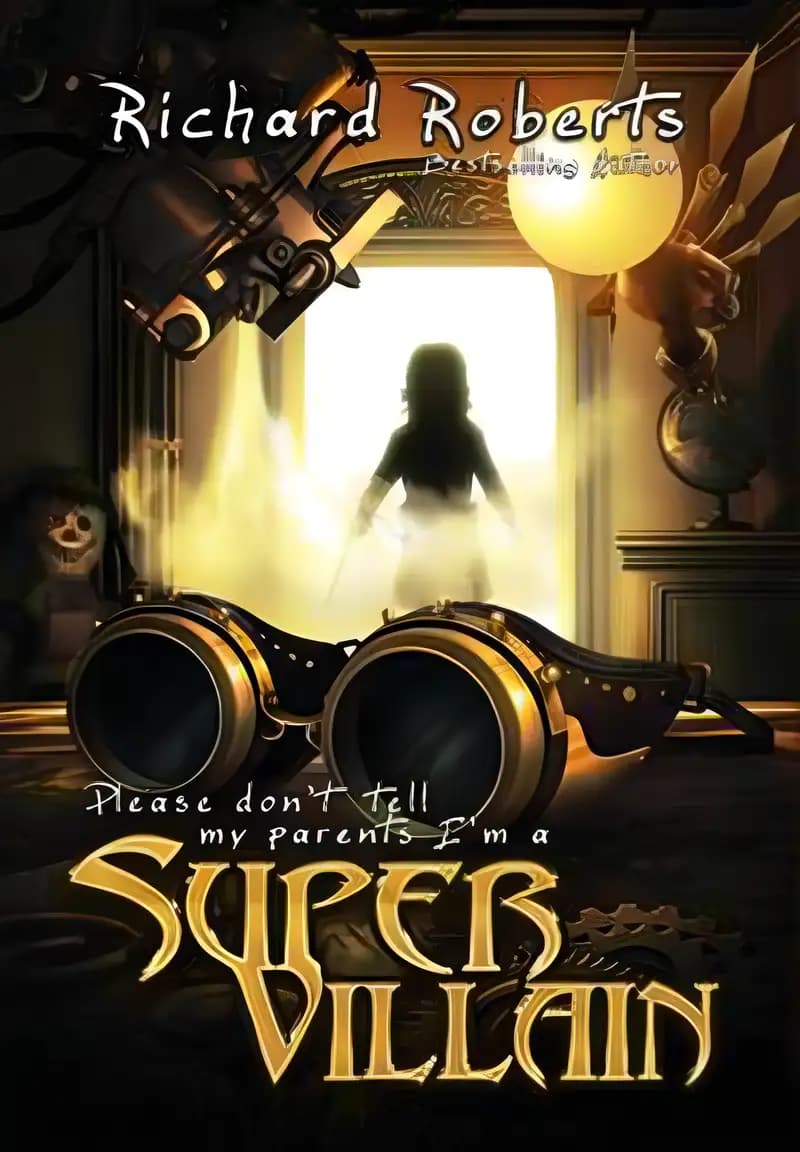
Please Don't Tell My Parents I'm a Supervillain
#1 of 9 in Please Don'T Tell My Parents Series
on Goodreads (3,746)
What’s inside...
Penelope Akk wants to be a superhero. She's got superhero parents. She's got the ultimate mad science power, filling her life with crazy gadgets even she doesn't understand. She has two super-powered best friends. In middle school, the line between good and evil looks clear. In real life, nothing is that clear. All it takes is one hero's sidekick picking a fight, and Penny and her friends are labeled supervillains. In the process, Penny learns a hard lesson about villainy: She's good at it. Criminal masterminds, heroes in power armor, bottles of dragon blood, alien war drones, shapeshifters and ghosts, no matter what the super-powered world throws at her, Penny and her friends come out on top. They have to. If she can keep winning, maybe she can clear her name before her mom and dad find out.
Character compass
Penelope "Penny" Akk
Claire
Ray
Sarah Akk
Brian Akk
Discussion points
How do you think Penny feels when she discovers her supervillain powers? Can you relate to any emotions she's experiencing?
What choices would you have made if you were in Penny's shoes and why?
Penny's parents are superheroes. How do you think this impacts her actions and decisions in the story?
What do you think about the idea of 'good' and 'evil' as depicted in the book? Are these concepts always black and white?
If you could have any superpower, what would it be and what would you use it for?
Tip: Role play these questions
Begin by exploring themes of identity and ethics presented in the book. Discuss how sometimes we might have different aspects to our personality, much like Penny.
Encourage your child to express what they find exciting or intriguing about the plot or characters, fostering an open and engaging conversation.
Address the importance of choices and consequences through Penny's experiences to enhance your child's critical thinking about right and wrong.
Reflect together on the relationship between parents and children, as seen in the book, to deepen the understanding of family dynamics.
Link discussions to real-life scenarios, asking your child how they would use superpowers for good or handle tricky situations, to make the conversation relevant and meaningful.
Key lessons
Example Lesson: Responsibility
Explanation: The protagonist, despite her antics as a supervillain, learns to handle the consequences of her actions responsibly.
Real-World Application: Children can understand the importance of taking responsibility for their actions, whether it’s admitting to mistakes or handling tasks without being told.
Example Lesson: Friendship
Explanation: Throughout the story, the importance of strong, trustworthy friendships is highlighted, reflecting how the protagonist relies on her friends for support and vice versa.
Real-World Application: This can encourage children to nurture and value their friendships, understanding the role of trust and support in healthy relationships.
Example Lesson: Creativity
Explanation: The protagonist uses her intellect and creativity to develop her supervillain persona and gadgets, showing resourcefulness and innovation.
Real-World Application: Children can be inspired to think creatively in solving problems and expressing themselves, discovering unique methods to approach their tasks.
Example Lesson: Understanding consequences
Explanation: The book portrays the repercussions of the protagonist’s actions as a supervillain, teaching that every action has a consequence.
Real-World Application: This lesson can help children grasp the cause and effect relationship in real-life scenarios, promoting thoughtful decision-making.