
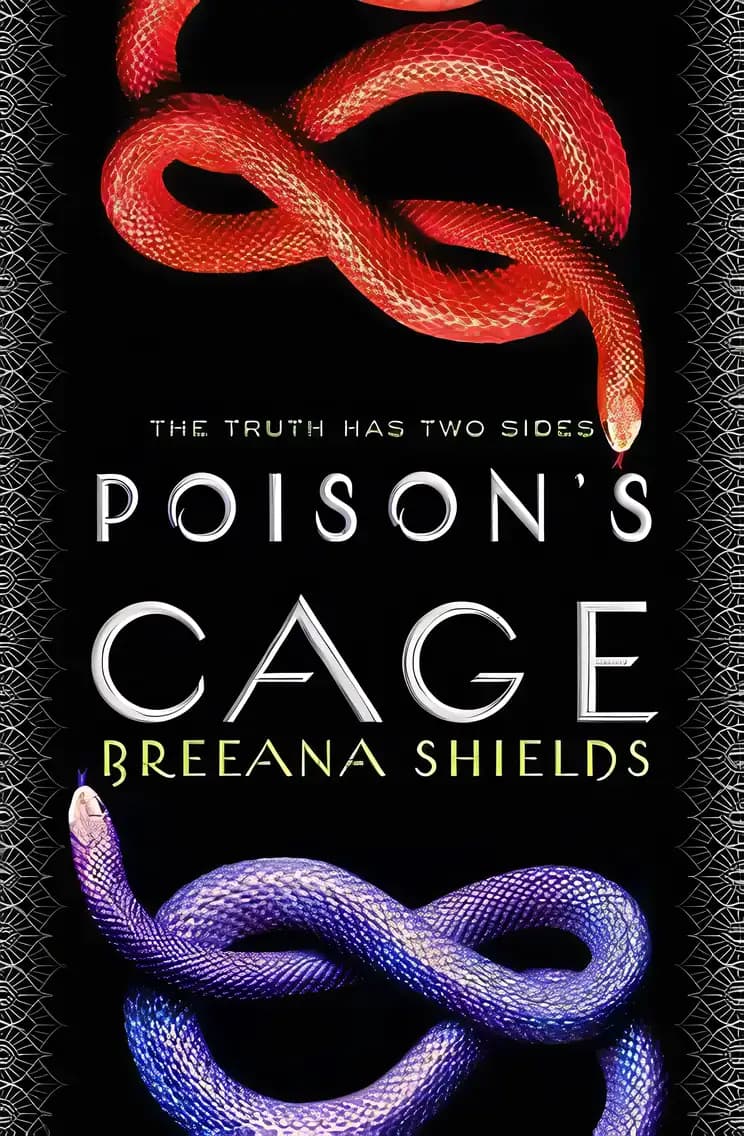
Poison's Cage (Poison's Kiss)
#2 of 2 in Poison'S Kiss Series
on Goodreads (582)
What’s inside...
An assassin becomes a spy in this heart-pounding sequel to Poison's Kiss. Readers who love the assassin angle in Throne of Glass, the lethal touch in Shatter Me, or the high stakes of The Wrath and the Dawn will want to follow this story to the end. A single kiss could kill. A single secret could save the kingdom. Iyla and Marinda have killed many men together: Iyla as the seductress, Marinda as the final, poisonous kiss. Now they understand who the real enemy is--the Snake King--and together they can take him down. Both girls have felt as though they were living a lie in the past, so moving into the king's palace and pretending to serve him isn't as difficult as it sounds. But when you're a spy, even secrets between friends are dangerous. And each girl has something--or someone--to lose. Does every secret, every lie, bring them closer to the truth . . . or to a trap? In Poison's Kiss, Marinda pulled a dangerous thread. In this sequel, it unravels to a heart-pounding conclusion.
Character compass
Marinda
Mani
Deven
Indra
Discussion points
How do you think Iyla felt when faced with difficult decisions regarding her loyalty and duty? What would you have done in her place?
Why do you think trust and betrayal are important themes in the story? How do these themes affect the characters’ interactions?
The idea of self-forgiveness is presented in the book. Can you discuss a time when you had to forgive yourself? How did it make you feel afterwards?
Iyla faces many challenges. Which challenge do you think was the hardest for her, and why?
How do the characters in 'Poison's Cage' change by the end of the story? What do you think caused those changes?
Tip: Role play these questions
Encourage your child to put themselves in the characters' shoes, which can help them to discuss their feelings and thoughts about the situations presented in the book.
Use the discussion to connect themes in the book with real-life scenarios your child may encounter, enhancing their empathy and decision-making skills.
Ask your child if anything surprised them about the story or the characters’ actions to stimulate critical thinking.
Highlight the importance of character development and ask your child to predict what might happen next if the story continued beyond the book.
Remind your child that it’s okay to express both positive and negative feelings towards the book’s events or characters, fostering a supportive environment for honest communication.
Key lessons
Example Lesson: The importance of trust and friendship
Explanation: In 'Poison's Cage', the protagonists rely on each other's strengths and build a bond of trust to overcome obstacles. This theme is pivotal as they navigate through complex situations that test their loyalty and trust.
Real-World Application: Children learn the value of trusting and supporting friends in challenging times, which is crucial for developing healthy, supportive friendships in real life.
Example Lesson: Moral courage and standing up for what is right
Explanation: The characters in the book often face moral dilemmas where they have to decide between easy wrongs and difficult rights. Their decisions to choose the latter demonstrate moral courage.
Real-World Application: This encourages children to act with integrity and stand up for their beliefs, even when it's not the easiest path.
Example Lesson: The consequences of choices
Explanation: Throughout 'Poison's Cage,' characters make choices that lead to significant consequences, showing the importance of considering potential outcomes before acting.
Real-World Application: This teaches children to think critically about the consequences of their actions, fostering responsible decision-making skills.
Example Lesson: Resilience in adversity
Explanation: As the characters face physical and emotional challenges, their resilience shines through, teaching them and the reader that perseverance is key to overcoming difficulties.
Real-World Application: Children learn the importance of resilience and perseverance when facing personal challenges in their lives.
Example Lesson: Empathy and understanding
Explanation: Characters in the story learn to understand and empathize with others' feelings and perspectives, which is crucial in resolving conflicts and forming deep connections.
Real-World Application: Promotes emotional intelligence in children, helping them to better understand and relate to others' emotions, aiding in social interactions.