
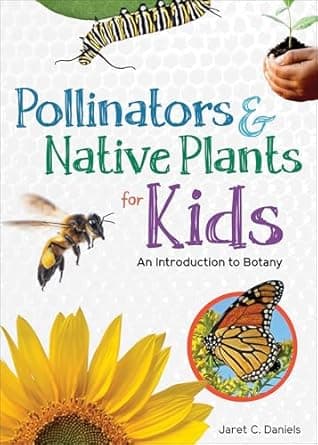
Pollinators & Native Plants for Kids: An Introduction to Botany (Simple Introductions to Science)
Simple Introductions to Science Series
What’s inside...
Written by entomologist and educator Jaret C. Daniels, this richly illustrated guide introduces children to the vital partnership between pollinators—such as bees, butterflies, moths, bats, and birds—and the native plants that sustain them. Through photographs, kid-friendly explanations, and simple hands-on activities, readers discover why pollination matters, how native plants support healthy ecosystems, and practical steps they can take in their own backyards or schoolyards to help wildlife thrive.
Series reading
Non-Sequential
Age
6-12
Length
144 pages
Text complexity
Discussion points
Why do native plants support more wildlife than exotic ones?
How might our meals change without pollinators?
What small changes can we make at home to help bees?
Which pollinator surprised you the most and why?
Tip: Role play these questions
Create a weekly garden journal together to track visiting insects.
Role-play as different pollinators to reinforce concepts playfully.
Key lessons
Example Lesson: Interdependence in Nature
Explanation: Plants and animals rely on each other to survive.
Real-World Application: Kids notice connections, such as birds eating berry seeds.
Example Lesson: Small Actions Matter
Explanation: Planting a few native flowers can aid local ecosystems.
Real-World Application: Children grow pollinator-friendly pots on balconies.
Example Lesson: Observation Is a Scientific Tool
Explanation: Field journals and data sheets mirror real science methods.
Real-World Application: Students record insect visits during recess.
Example Lesson: Responsibility Toward the Environment
Explanation: Human choices affect wildlife health.
Real-World Application: Families reduce pesticide use in yards.