
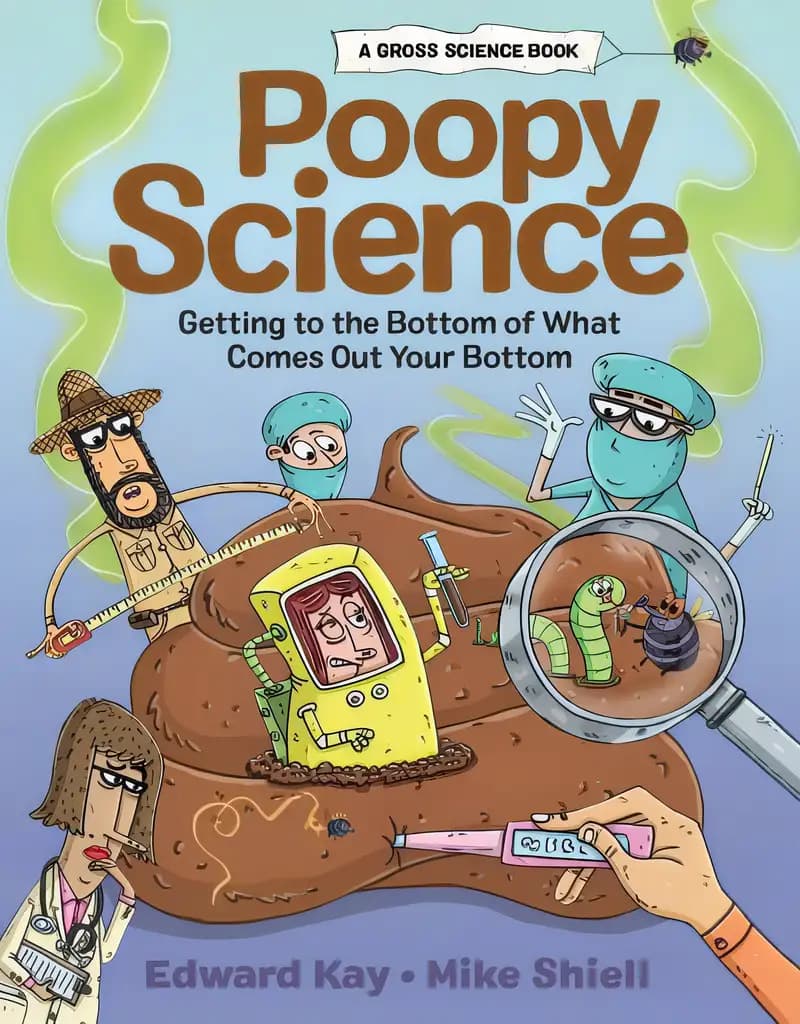
Poopy Science: Getting to the Bottom of What Comes Out Your Bottom (Gross Science)
What’s inside...
This book, part of the Gross Science series, delves into the science and history of poop and pee, covering everything kids ever wanted to know. It starts with human waste, discussing what's in our poop, how our digestive system functions, and the history of sanitation. The book then explores other intriguing topics such as why some animals eat poop, poop's potential use as fuel, and how astronauts manage waste in space. Packed with engaging facts, silly puns, and kid-friendly comic-style art, this informative and hilarious book is perfect for young readers interested in the quirky side of science.
Age
8-12
Length
48 pages
Text complexity
Discussion points
What did you find most surprising about how our bodies process food?
Can you explain why it's important for our bodies to get rid of waste?
How do you think scientists use the study of poop to help people stay healthy?
What are some ways we can keep our digestive system healthy according to the book?
Tip: Role play these questions
Encourage curiosity by asking your child to think of other bodily functions that they want to learn about. Validate their feelings if they initially react with disgust, and explain that it's a natural process. Relate the scientific aspects of the book to daily activities they are familiar with, like eating and using the bathroom, to make the information more relatable.
Key lessons
Example Lesson: Understanding natural biological processes
Explanation: The book explains the science behind human digestion and waste elimination in a kid-friendly manner.
Real-World Application: Children learn about their bodies, promoting awareness and curiosity about how living organisms function.
Example Lesson: Appreciating cleanliness and hygiene
Explanation: The story underscores the importance of sanitation and personal hygiene associated with the process of elimination.
Real-World Application: Kids are motivated to practice good hygiene habits like washing hands after using the restroom, helping them stay healthy.
Example Lesson: Fostering a sense of humor about uncomfortable topics
Explanation: Using humor, the book addresses potentially embarrassing subjects in an engaging and light-hearted way.
Real-World Application: Children can learn to communicate more openly about uncomfortable subjects without feeling embarrassed or ashamed.
Example Lesson: Promoting scientific curiosity
Explanation: ‘Poopy Science’ encourages questioning and exploring scientific concepts through the fun topic of poop.
Real-World Application: This engagement can lead children to pursue further knowledge in science, enhancing their understanding and interest in the subject.