
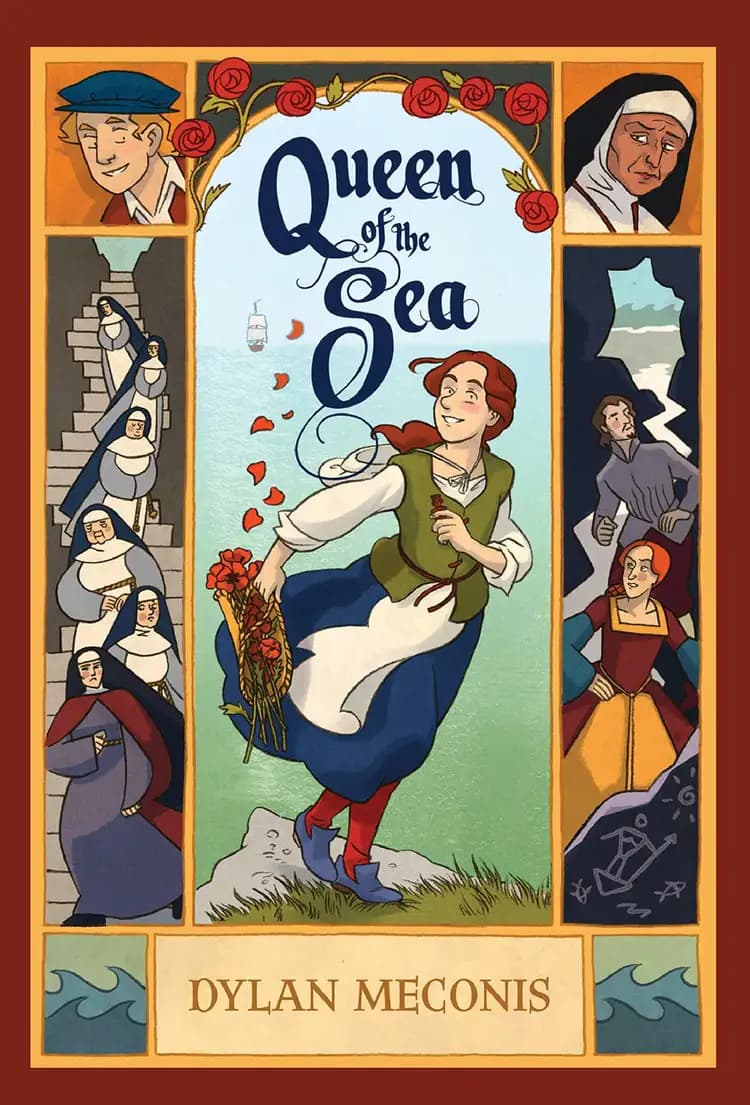
Queen of the Sea
What’s inside...
Cult graphic novelist Dylan Meconis offers a rich reimagining of history in this hybrid novel loosely based on the exile of Queen Elizabeth I by her sister, Queen Mary. When her sister seizes the throne, Queen Eleanor of Albion is banished to a tiny island off the coast of her kingdom, where the nuns of the convent spend their days peacefully praying, sewing, and gardening. But the island is also home to Margaret, a mysterious young orphan girl whose life is upturned when the cold, regal stranger arrives. As Margaret grows closer to Eleanor, she grapples with the revelation of the island’s sinister true purpose as well as the truth of her own past. When Eleanor’s life is threatened, Margaret is faced with a perilous choice between helping Eleanor and protecting herself. Queen of the Sea stands out as one of the most accomplished, even beautiful, comics of the year, according to the School Library Journal. In a graphic novel of fictionalized history, Dylan Meconis paints Margaret’s world in soft greens, grays, and reds, transporting readers to a quiet, windswept island at the heart of a treasonous royal plot.
Age
10-14
Length
400 pages
Text complexity
Character compass
Margaret
Sister Agnes
Queen Eleanor
Discussion points
What do you think life would be like living on an island like Margaret in 'Queen of the Sea'?
How did the characters' relationships change throughout the story?
What qualities do you admire in Margaret and why?
How do the historical elements in the book add to the story? Can you imagine living in that time period?
What lessons did you learn from the events and choices Margaret faced?
Tip: Role play these questions
Encourage your child to relate the story to their own experiences by asking how they would feel in Margaret’s situation.
Highlight the historical context by discussing the differences and similarities between life then and now, enhancing their understanding of the time period.
Praise your child’s insights and encourage deeper thinking by asking follow-up questions about their responses to the key questions.
Connect discussions to the illustrations, asking your child how the artwork helps tell the story and convey emotions or settings.
Use the book’s themes, such as courage and friendship, as a starting point for discussing these important values in everyday life.
Key lessons
Example Lesson: Understanding historical contexts
Explanation: Set in a pseudo-historical world reminiscent of Elizabethan England, 'Queen of the Sea' delves into monarchical and religious history. Children can grasp an understanding of historical settings and political dynamics.
Real-World Application: This lesson encourages children to appreciate and explore the complexities of history and its impact on modern society, promoting curiosity about past civilizations and governance.
Example Lesson: Empathy and Friendship
Explanation: 'Queen of the Sea' portrays the development of deep, empathetic relationships between characters from diverse backgrounds and circumstances. The protagonist learns to understand and empathize with the island's inhabitants and exiled queen.
Real-World Application: It teaches children the importance of empathy, understanding, and building friendships despite differences, which is crucial in fostering inclusive and supportive relationships in their daily interactions.
Example Lesson: Resilience in adversity
Explanation: The protagonist faces numerous challenges, including displacement and dealing with the unknown. Her ability to adapt and persevere is a central theme.
Real-World Application: This lesson prepares children to handle challenges and uncertainties, encouraging them to remain resilient and proactive in solving problems they may encounter in their lives.
Example Lesson: Critical thinking and decision making
Explanation: The book showcases characters making tough decisions, often requiring critical thinking about complex situations involving morality and personal values.
Real-World Application: Children learn the importance of critical thinking in decision-making processes, helping them to make thoughtful choices and understand the consequences of their actions at school or home.
Example Lesson: Identity and self-discovery
Explanation: Through interactions and revelations, the main character explores and discovers more about her own identity and history, contributing to her personal growth.
Real-World Application: This encourages children to be open to self-discovery and to be confident in their own developing identities, aiding in their emotional and psychological growth.