
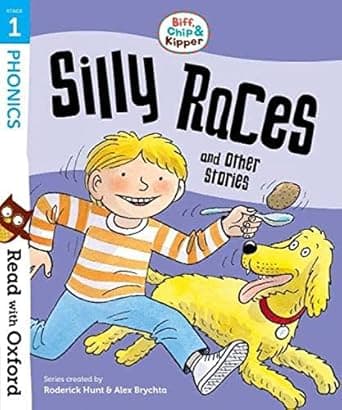
Read with Oxford: Stage 1: Biff, Chip and Kipper: Silly Races and Other Stories
Read With Oxford Series
on Goodreads (3)
What’s inside...
This collection features the beloved characters Biff, Chip, Kipper, and Floppy the dog, who are central to the Oxford Reading Tree program used in 80% of primary schools. The set includes two Phonics books and three Stories for Wider Reading, perfect for children beginning their reading journey. With engaging storylines, humorous illustrations, and integrated activities, these books not only enhance reading skills but also offer tips for parents and fun activities to do together. The series also provides resources like practical advice and free eBooks available on Oxford Owl, ensuring a comprehensive support system for young readers.
Series reading
Non-Sequential
Age
4-7
Length
96 pages
Text complexity
Character compass
Kipper
Chip
Biff
Mum
Dad
Discussion points
What do you think made the races silly in the story?
How did Biff, Chip, and Kipper work together to solve problems they encountered?
Why do you think teamwork was important in the races?
How would you feel if you were part of the silly races, and what role would you choose?
What lesson do you think we can learn from Biff, Chip, and Kipper's experiences?
Tip: Role play these questions
Encourage your child to describe their favorite part of the story, allowing them to express their thoughts and feelings freely.
Discuss the importance of teamwork as showcased in the book, relating it to real-life scenarios like school projects or family tasks.
Ask your child how they might feel in situations similar to those encountered by the characters to help them connect emotionally with the story.
Pose hypothetical scenarios based on the book’s events to encourage creative thinking and problem-solving skills.
After reading, consider role-playing a silly race, using imagination to recreate scenes or invent new ones, which reinforces the story's themes and characters.
Key lessons
Example Lesson: Teamwork and Cooperation
Explanation: In the story 'Silly Races', children are introduced to the importance of working together during the race. The characters learn that cooperation can make activities more enjoyable and they achieve better outcomes by supporting each other.
Real-World Application: Children can apply this lesson in group activities at school or during play, learning that teamwork can lead to success and enhance social interactions.
Example Lesson: Handling Disappointment
Explanation: When some characters do not win the races, they show resilience and good sportsmanship. This teaches children that it's okay to not always be the winner and that participating and having fun is more valuable.
Real-World Application: This encourages children to handle losses or disappointments gracefully in sports or other competitive settings in school, helping build emotional strength.
Example Lesson: Creativity and Imagination
Explanation: The various imaginative races in the book, like hopping backwards, encourage children to think creatively and enjoy playful scenarios outside conventional games.
Real-World Application: Children learn to use their imagination to create fun and engaging games with peers, fostering creativity that translates to other aspects of life like problem-solving and artistic expression.