
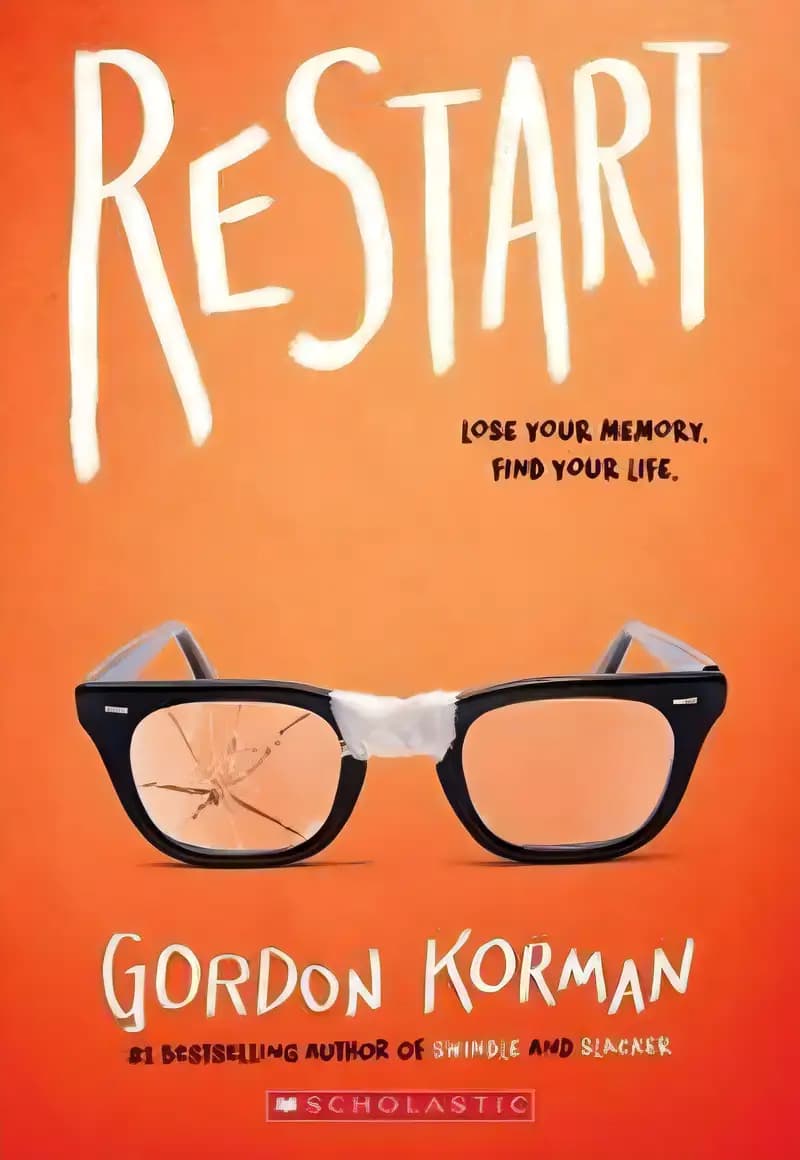
Restart
The Swindle Series
on Goodreads (45,573)
What’s inside...
The amazing New York Times bestseller 'Restart' is about what you can do when life gives you a second chance. Chase's memory just went out the window. He doesn't remember falling off the roof, hitting his head, or anything at all. He wakes up in a hospital room and has to relearn his entire life, starting with his own name. As he returns to school, he discovers different reactions from his peers - some see him as a hero, others are afraid, and one angry girl douses him with frozen yogurt. As Chase navigates his return, he grapples with understanding who he was before the accident and who he wants to become. Written by the #1 bestselling author of 'Swindle' and 'Slacker', 'Restart' offers a thought-provoking glimpse into the challenges and opportunities of starting over.
Series reading
Non-Sequential
Age
10-12
Length
256 pages
Text complexity
Character compass
Chase Ambrose
Shoshanna Weber
Joel Weber
Brendan Espinoza
Ms. Deleo
Bear Bratsky
Aaron Hakimian
Discussion points
How did Chase's memory loss impact his choices and relationships with others?
What changes do you think occurred within Chase throughout the story? How did they affect those around him?
Can people truly change who they are? What factors influence this change based on Chase's experiences?
How do the actions of the characters show the importance of forgiveness and second chances?
What would you have done if you were in Chase's shoes when he regained his memory?
Tip: Role play these questions
Start by summarizing the book together with your child, focusing on the main characters and plot to ensure understanding.
Ask your child to relate personally with the characters, perhaps drawing parallels between the book's themes and their own experiences.
Highlight the concept of empathy by discussing how different characters might have felt in various situations throughout the book.
Encourage your child to express their opinions on the characters' decisions and the book's outcome, fostering critical thinking.
Link discussions about the book’s morals and themes to real-life applications and your child's own life to deepen the understanding.
Key lessons
Example Lesson: The power of redemption and second chances
Explanation: In 'Restart', the protagonist, Chase, suffers from amnesia and is given a chance to redefine himself away from his previous bully persona. This transformation shows that people can change and grow.
Real-World Application: Children can learn that everyone deserves a second chance and that past mistakes don't define the future. They can practice forgiveness and openness in their interactions with peers.
Example Lesson: The impact of actions on others
Explanation: Through the book, Chase begins to see the effects his former self had on his classmates and strives to make amends. This storyline illustrates the consequences of one's actions on others.
Real-World Application: This can encourage children to consider how their behavior affects others and to act with kindness and responsibility towards classmates and friends.
Example Lesson: Building empathy and understanding
Explanation: As Chase interacts with the different groups in his school, he develops a deeper understanding of people he previously judged or mistreated. This change highlights the importance of empathy.
Real-World Application: Children can learn to engage with and understand people who are different from them, fostering a more inclusive and empathetic outlook in their daily school life.
Example Lesson: The value of true friendships
Explanation: Chase's journey allows him to differentiate between superficial relationships based on fear and deeper, more meaningful connections based on mutual respect and caring.
Real-World Application: This lesson teaches children to seek out and cherish relationships that are founded on trust and respect, rather than popularity or power.
Example Lesson: Courage to confront the past
Explanation: Chase's decision to face his past actions and the people he hurt exemplifies courage and responsibility.
Real-World Application: It encourages children to own up to their mistakes and learn from them, promoting personal growth and integrity.