
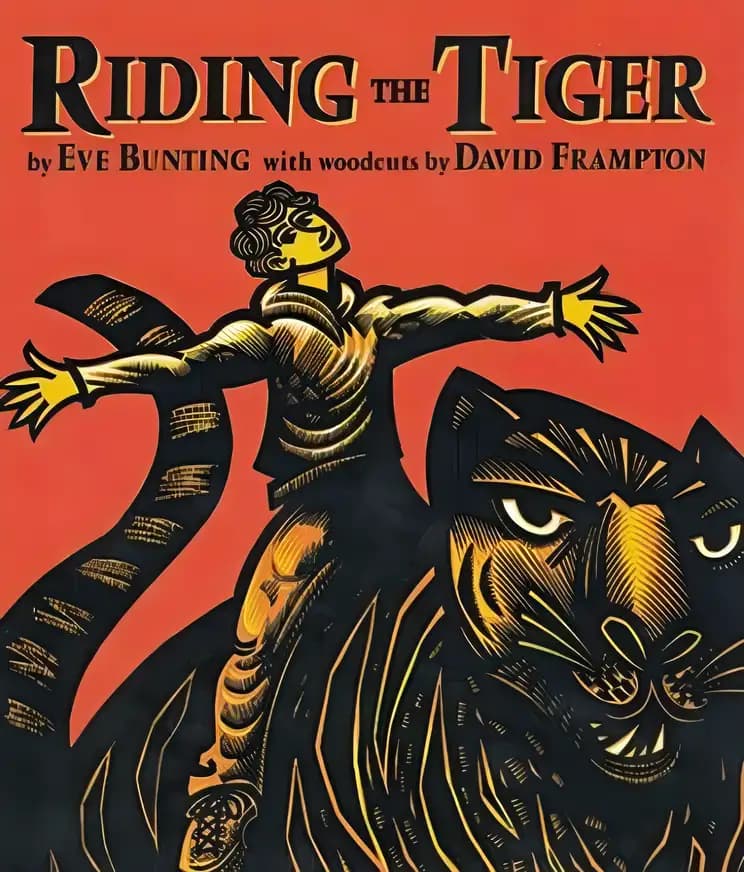
Riding the Tiger
What’s inside...
Esteemed author Eve Bunting brings all her insight, empathy, and storytelling skill to this powerful allegorical tale, set in the streets of an unnamed city and illustrated with striking woodcuts. Danny, new to town, is proud when a glittery-eyed tiger invites him for a ride. He climbs up onto the tiger's massive back, and together they cruise the neighborhood. Everyone gives them respect—shopkeepers and passersby, even other kids. Danny feels powerful and much older than ten. Soon, though, he realizes it isn’t respect people feel for him and the tiger—it’s fear. And when he decides to get down off the tiger’s back, he discovers it’s a lot harder than climbing on. Whether the tiger is interpreted to represent gangs, drugs, or something else altogether, this poetically told, dramatically illustrated book is sure to provoke discussions about temptation, peer pressure, and conformity.
Age
10-12
Length
32 pages
Text complexity
Character compass
Danny
Tiger
Discussion points
How did you feel about the character riding the tiger? What do you think it symbolizes?
What would you do if you were in a similar situation as the protagonist? Why?
How do the other characters react to the tiger? What does this tell us about their personalities?
What lessons can we learn about courage and responsibility from this story?
How does the story end, and what do you think it teaches us about making choices?
Tip: Role play these questions
Encourage your child to put themselves in the protagonist’s shoes, fostering empathy and deeper understanding of the character’s decisions.
Highlight the moral dilemmas and choices characters face in the story to discuss the importance of values and ethics.
Use the symbolism of the tiger to discuss with your child about challenges and fears they might face in their own lives.
After reading, ask your child to draw a scene from the book, focusing on how they perceive the emotions and themes visually.
Key lessons
Example Lesson: The importance of making wise choices
Explanation: In 'Riding the Tiger', the young boy's decision to ride the tiger puts him in various challenging situations, illustrating the consequences of impulsive decisions.
Real-World Application: Children can learn to think decisions through and consider potential outcomes before acting, which is crucial in real-life situations.
Example Lesson: Understanding the influence of peer pressure
Explanation: The protagonist feels the allure and excitement of riding the tiger, akin to giving in to peer pressure, showing the risks associated with following others blindly.
Real-World Application: This story can help children understand the importance of staying true to their values and making independent choices, despite external influences.
Example Lesson: Learning about responsibility and accountability
Explanation: As the story progresses, the boy realizes the consequences of his choices, highlighting the themes of responsibility and accountability.
Real-World Application: Children can apply this by acknowledging their actions and understanding their impact on themselves and others.