
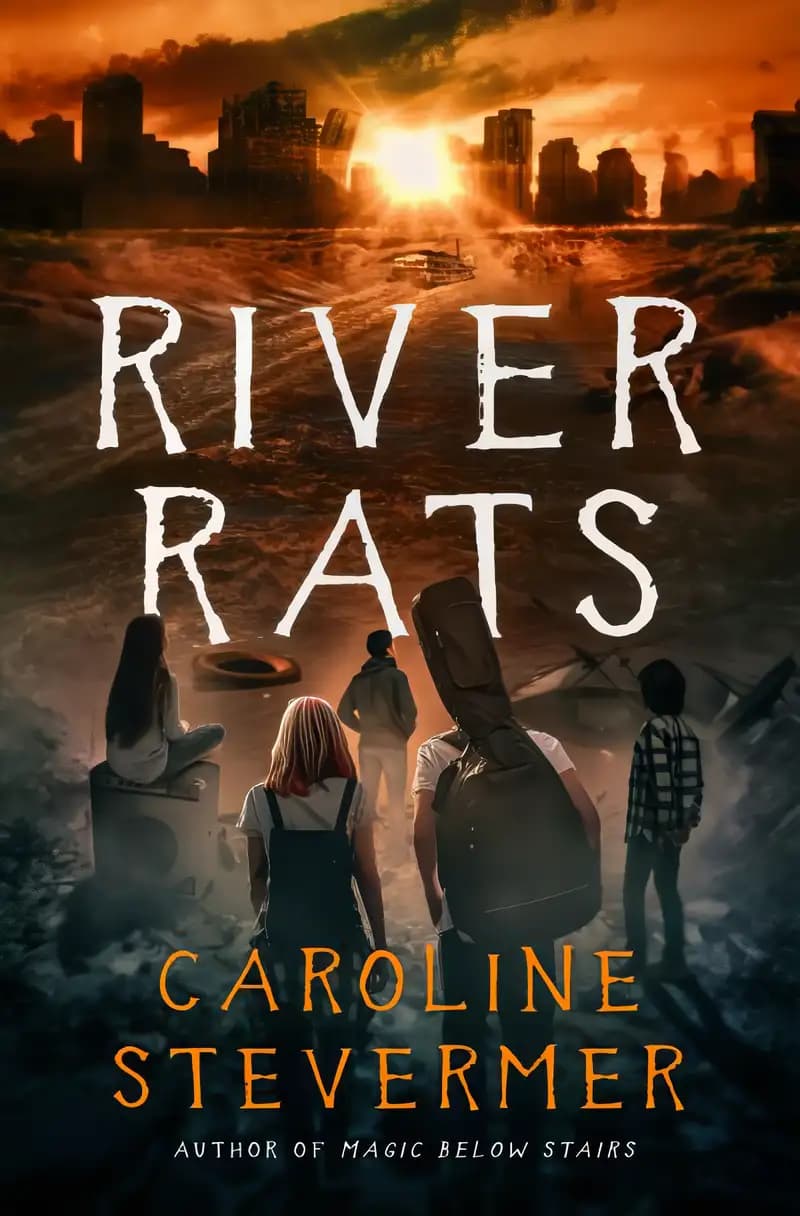
River Rats
Hardy Boys Series
on Goodreads (292)
What’s inside...
The award-winning author of the Scholarly Magic series delivers a thrilling adventure of a crew of young kids navigating a post-apocalyptic world on a steamboat they call home. The children, known as the River Rats, survived the Flash, a nuclear holocaust, and transformed the paddleboat River Rat into their own sanctuary. As they travel the Mississippi River, they face threats from savage gangs and the mysterious man they rescued, whose secrets could end their journey forever. The novel is recognized for its compelling narrative and has received accolades such as being an ALA Best Book for Young Adults and a New York Public Library Book for the Teen Age.
Series reading
Non-Sequential
Age
11-12
Length
312 pages
Text complexity
Discussion points
What do you think motivates the characters to go on their adventure? How would you feel in their situation?
How do the characters grow and change throughout the story? Can you relate to any of their experiences?
What role does the setting of the river play in the story? How might the story change if it was set somewhere else?
What are some challenges the characters face and how do they overcome them? What would you do if you faced similar challenges?
How do the friendships in the book impact the characters' adventures? Why do you think teamwork is important?
Tip: Role play these questions
Encourage your child to express their opinions about the characters' decisions, fostering a deeper understanding of moral and ethical dilemmas.
Discuss the importance of setting and how it influences the story, enhancing their awareness of context in storytelling.
Relate the challenges faced by the characters to real-life situations your child might encounter to help them apply the story's lessons.
Highlight the value of friendship and teamwork displayed in the book to nurture social and emotional growth.
Key lessons
Example Lesson: Teamwork and Cooperation
Explanation: In 'River Rats', the characters must work together to navigate challenging river paths. The story highlights how each character contributes their unique skills to achieve a common goal.
Real-World Application: Children learn the importance of collaborating with others, whether in school projects or during play, fostering skills in cooperation and collective problem-solving.
Example Lesson: Resilience and Adaptability
Explanation: The book portrays the characters facing unexpected obstacles and adapting to changing circumstances along their river journey. Their resilience in overcoming these challenges is a key theme.
Real-World Application: This teaches children that setbacks are a part of life and that adapting and persevering through difficulties is crucial for success.
Example Lesson: Respect for Nature
Explanation: The 'River Rats' express a deep respect and appreciation for the environment as they travel, teaching readers about the significance of preserving natural landscapes.
Real-World Application: Through the narrative, children can learn the importance of environmental stewardship and may be encouraged to take an active role in protecting natural habitats in their community.
Example Lesson: Problem Solving
Explanation: Throughout their adventure, the characters encounter various problems that require quick thinking and resourcefulness. Their ability to devise creative solutions is emphasized.
Real-World Application: Children are inspired to apply critical thinking and problem-solving skills to their own challenges, enhancing their cognitive development and decision-making abilities.