
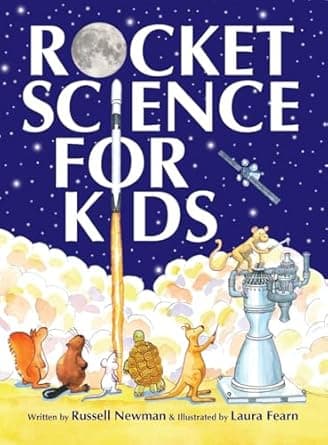
Rocket Science for Kids: An-Easy-to-Understand Guide (Engineering for Kids)
#1 in Engineering for Kids Series
illustrations by
What’s inside...
Rocket Science for Kids demystifies the basics of rocketry—thrust, lift, fuel, and orbital mechanics—through kid-friendly explanations, real-world stories from NASA history, and hands-on activities that can be done with household materials. Author Russell Newman blends clear technical writing with engaging anecdotes about space exploration, encouraging children to think like young engineers while discovering how rockets are designed, built, and launched.
Discussion points
Why is failure important in scientific discovery?
How do rockets overcome Earth’s gravity?
What qualities make a good engineer?
Which space mission inspires you the most?
Tip: Role play these questions
Build the straw rocket together and compare designs.
Watch a recorded launch and identify stages from the book.
Key lessons
Example Lesson: Perseverance leads to breakthroughs
Explanation: Stories of early rocket failures show persistence paying off.
Real-World Application: Keep trying when schoolwork or hobbies feel challenging.
Example Lesson: Teamwork amplifies success
Explanation: Mission control examples show specialists collaborating.
Real-World Application: Share tasks in group projects to achieve better results.
Example Lesson: Safety first in experimentation
Explanation: Every hands-on activity lists safety steps.
Real-World Application: Wear goggles and follow instructions when doing experiments.
Example Lesson: Curiosity fuels learning
Explanation: Open-ended questions invite readers to design their own spacecraft.
Real-World Application: Ask questions and explore topics that spark interest.