
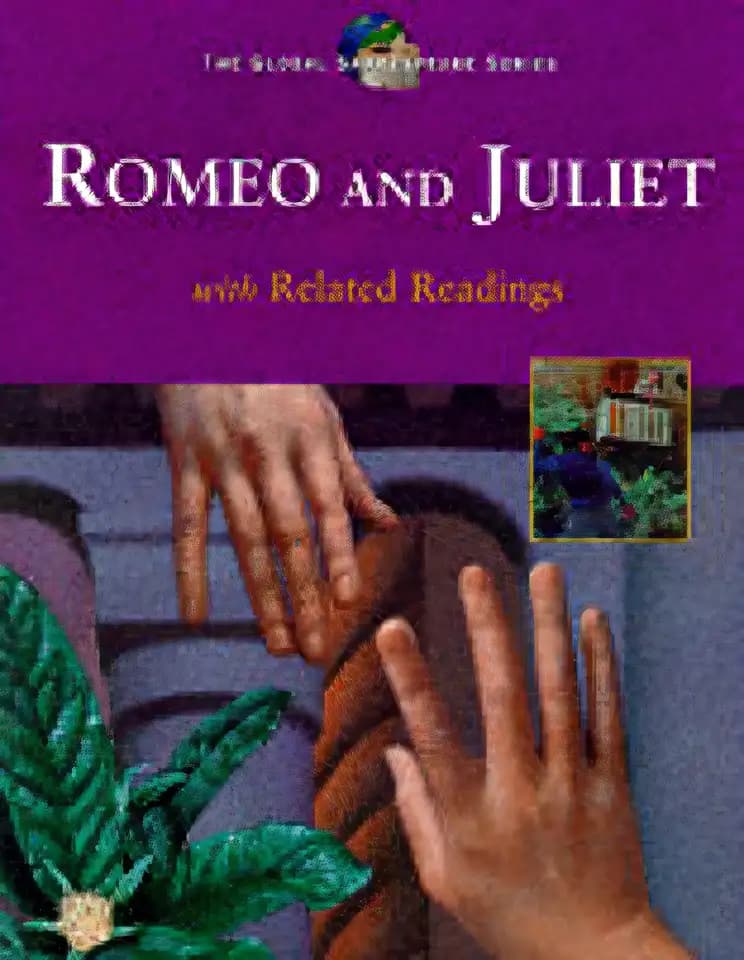
Romeo & Juliet
#18 in 20 Shakespeare Children's Stories (Easy Classics) Series
on Goodreads (2,728)
What’s inside...
A prose retelling of Shakespeare's drama in which young lovers attempt to defy fate. Let television's canine hero Wishbone be your tour guide! Meet gallant Romeo and beautiful Juliet, whose families have been enemies for generations. In spite of years of hatred, romance is in the air! Secretly, they decide to get married and hide the truth from their parents. Will Romeo and Juliet be able to find true happiness and stop the feud, or are they doomed to a tragic end?
Character compass
Romeo Montague
Juliet Capulet
Benvolio Montague
Mercutio
The Nurse
Prince Escalus
Friar Laurence
Count Paris
Montague
Lord Capulet
Tybalt Capulet
Lady Capulet
Discussion points
How do you think Romeo and Juliet felt when they first met each other?
What do you think could have been done differently to solve the disagreements between the two families?
Why do you think it's important to communicate and understand others' feelings?
How can misunderstandings affect relationships? Can you share an example from your own experience?
If you were a friend of Romeo or Juliet, what advice would you have given them?
Tip: Role play these questions
Encourage your child to express their feelings about the characters and their choices, promoting emotional intelligence.
Discuss the importance of communication and how it can prevent conflicts, drawing parallels to real-life situations.
Emphasize the consequences of actions and the role of forgiveness and understanding in relationships.
Encourage your child to think about alternative solutions to problems, enhancing their problem-solving skills.
Create a safe space for your child to discuss and question the actions and outcomes in the story, fostering critical thinking.
Key lessons
Example Lesson: The importance of communication
Explanation: In 'Romeo & Juliet', miscommunication and secrets contribute significantly to the tragedy. The lack of open conversation between characters leads to misunderstandings and poor decisions.
Real-World Application: Children can learn to express their feelings and thoughts clearly to avoid misunderstandings and build healthy relationships with friends and family.
Example Lesson: The consequences of hasty actions
Explanation: The impulsive decisions made by Romeo and Juliet, such as their quick marriage and drastic responses to problems, result in irreversible outcomes.
Real-World Application: This teaches children the importance of thinking decisions through and considering the potential consequences of their actions.
Example Lesson: Resolving conflicts peacefully
Explanation: The ongoing feud between the Montague and Capulet families shows how longstanding conflicts can lead to violence and tragedy.
Real-World Application: Children can learn to seek peaceful solutions in conflicts, emphasizing dialogue and understanding over hostility.
Example Lesson: Empathy and understanding
Explanation: Romeo and Juliet's love for each other, despite their families' feud, highlights the importance of looking beyond external differences and understanding others on a deeper level.
Real-World Application: This encourages children to empathize with others and respect people from different backgrounds and viewpoints.
Example Lesson: The impact of societal pressures
Explanation: The young lovers face immense pressure from their families and society, which shapes their fate.
Real-World Application: This can help children understand the influence of social expectations and encourage them to stay true to their values and beliefs.