
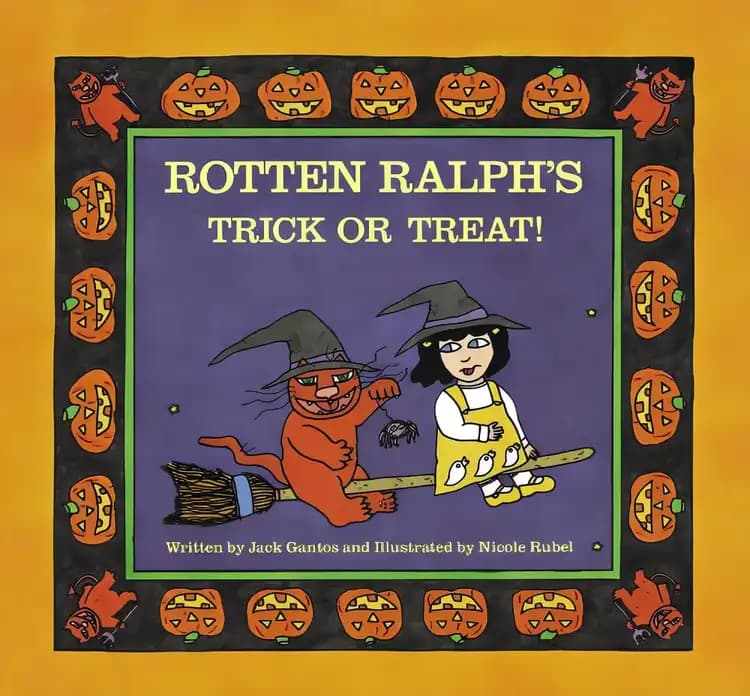
Rotten Ralph's Trick or Treat!
#3 of 19 in Rotten Ralph Series
What’s inside...
Sarah's rotten cat Ralph goes to a Halloween costume party dressed as her and creates horrible mischief under the protection of his disguise. FOR USE IN SCHOOLS AND LIBRARIES ONLY. Sarah's rotten cat Ralph goes to a Halloween costume party dressed as her and creates horrible mischief under the protection of his disguise.
Character compass
Rotten Ralph
Sarah
Discussion points
Why do you think Ralph made those choices during trick or treating?
How would you feel if a friend played tricks like Ralph did?
What are some kind ways we can treat our friends when we're playing?
How do you think the story would change if Ralph decided to be nice instead?
Tip: Role play these questions
Use different voices for each character to make the story more lively and engage your child's attention.
After reading a passage where Ralph plays a trick, pause and ask your child how they would handle the situation differently.
Discuss the emotions of different characters at various points in the book, asking your child to express how they might feel in similar situations.
Encourage your child to think of alternative endings to the story, fostering creativity and perspective-taking.
Key lessons
Example Lesson: Understanding consequences of actions
Explanation: Rotten Ralph learns that mischievous actions, like playing tricks, can lead to negative consequences.
Real-World Application: Children can understand the importance of thinking before acting and recognizing that their actions affect others.
Example Lesson: The value of forgiveness
Explanation: Despite Ralph's naughty behavior, his owner Sarah still shows him love and forgiveness.
Real-World Application: This helps children grasp the concept of unconditional love and the importance of forgiving others who may have wronged them.
Example Lesson: Responsibility
Explanation: Ralph's experience highlights the need for personal responsibility, as his actions have direct impacts on his and others' Halloween experience.
Real-World Application: Kids learn that being responsible is key to maintaining trust and harmony in relationships and community settings.
Example Lesson: Learning from mistakes
Explanation: Throughout the story, Ralph makes several mistakes but also learns from them, improving his behavior gradually.
Real-World Application: This teaches children that mistakes are opportunities for growth and learning, encouraging them to adopt a growth mindset.