
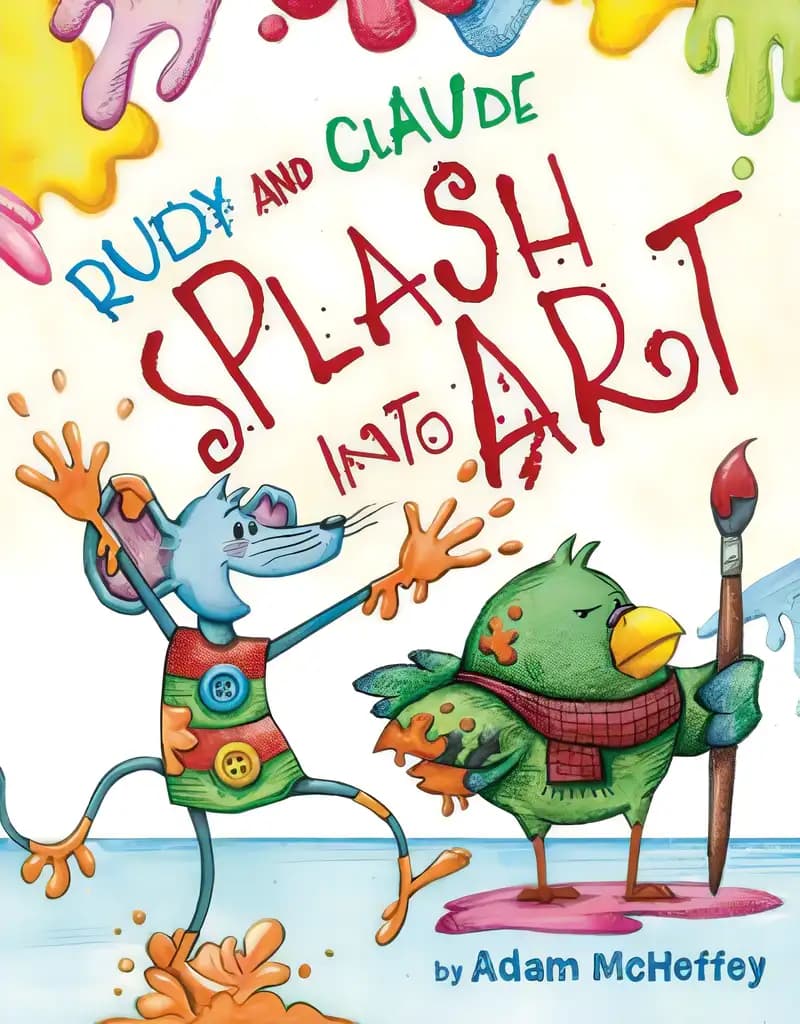
Rudy and Claude Splash Into Art
on Goodreads (198)
What’s inside...
Rudy is a curious mouse who wonders, 'What is art?' Claude, his feathered friend, tries to teach him. Rudy works on a self-portrait, a still life, a landscape, found art, a sculpture—all with disastrous results! Then he tries to create an artistic masterpiece, but...SPLAT! Has Rudy finally become an artist? Dynamic duo Rudy and Claude bring big personalities to this basic introduction to art.
Age
3-7
Length
32 pages
Text complexity
Discussion points
What did you think about the way Rudy and Claude created art together?
How did Rudy and Claude solve their problems when they disagreed? Can you think of a time when you solved a disagreement in a similar way?
What are some ways that you like to express yourself? Do you think art is a good way to do that?
Why do you think it's important to respect other people's styles and ideas, even if they're different from our own?
What was your favorite part of the book, and why?
Tip: Role play these questions
Ask your child to describe their favorite illustration in the book, encouraging them to think about colors, shapes, and what emotions the images evoke.
Relate the story to your child's personal experiences by discussing times they've worked on a project with others and how they felt.
Encourage your child to think about the value of collaboration and diversity in problem-solving, similar to how Rudy and Claude worked together to create art.
Offer to create art together with your child after reading the book, using different materials and styles, to reinforce the themes of creativity and collaboration shown in the story.
Discuss the importance of understanding and cooperation in friendships and how conflicts can be resolved with creativity and open-mindedness.
Key lessons
Example Lesson: Embracing Differences
Explanation: Rudy and Claude, despite having contrasting artistic styles, learn to appreciate and value each other's unique perspectives.
Real-World Application: Children can apply this by learning to appreciate diverse viewpoints among their peers, fostering a more inclusive environment.
Example Lesson: Creativity and Expression
Explanation: The story encourages children to express themselves through art, showing that there's no right or wrong way to create.
Real-World Application: Kids are inspired to explore various forms of artistic expression, enhancing their creative skills and emotional expression.
Example Lesson: Problem Solving
Explanation: Throughout the book, the characters face challenges that require creative solutions, highlighting the importance of thinking outside the box.
Real-World Application: This can help children approach problems in their everyday life with a creative perspective, improving their decision-making and critical thinking skills.
Example Lesson: Collaboration
Explanation: Rudy and Claude work together to combine their artistic styles, demonstrating the power of collaboration.
Real-World Application: This lesson teaches children the importance of teamwork and how combining different strengths can lead to greater achievements.
Example Lesson: Perseverance
Explanation: Despite initial setbacks and disagreements, Rudy and Claude continue working on their art, illustrating resilience and dedication.
Real-World Application: Children learn the value of persistence and dedication in achieving goals, applicable in school projects and personal endeavors.