
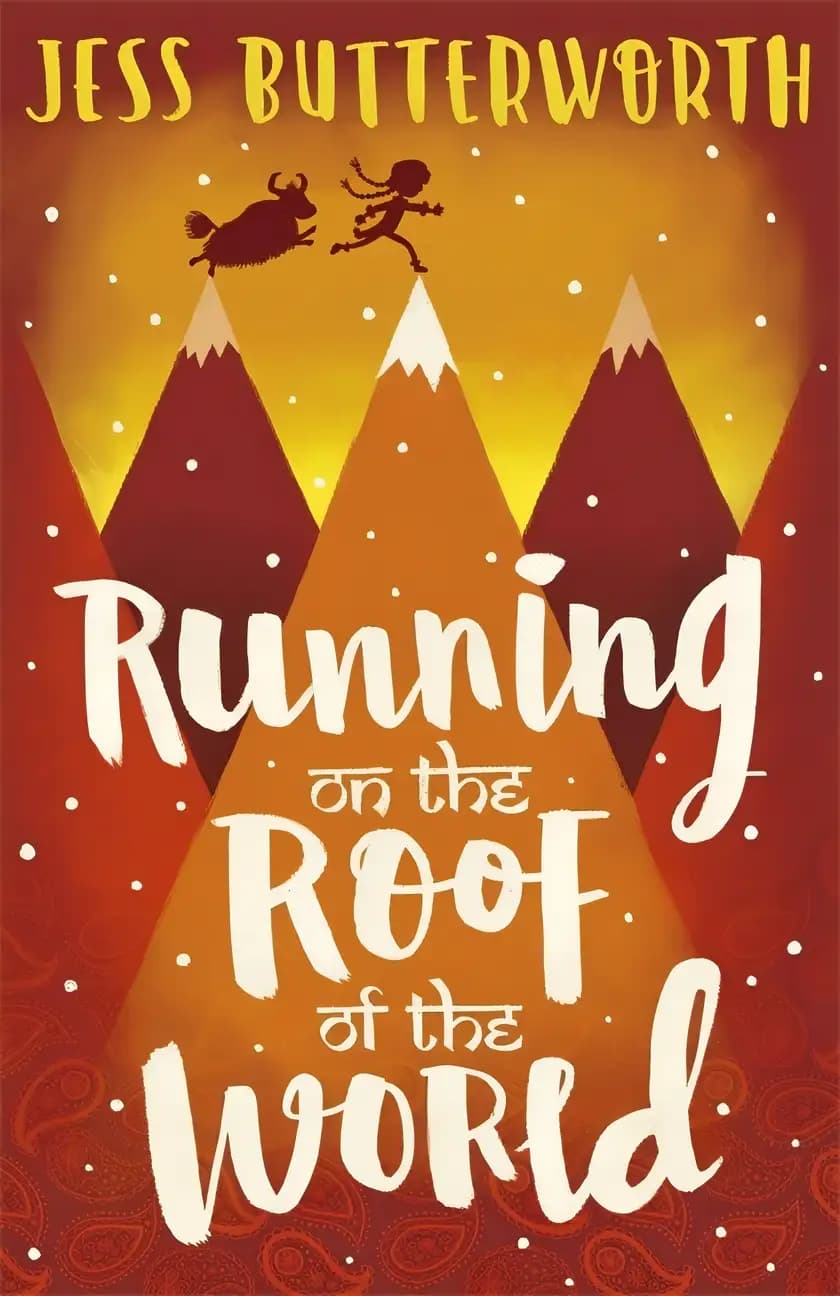
Running on the Roof of the World
on Goodreads (1,263)
What’s inside...
Join 12-year-old Tash and her best friend Sam in a story of adventure, survival and hope, set in the vivid Himalayan landscape of Tibet and India. Filled with friendship, love and courage, this young girl's thrilling journey to save her parents is an ideal read for children aged 9-12. There are two words that are banned in Tibet. Two words that can get you locked in prison without a second thought. I watch the soldiers tramping away and call the words after them. 'Dalai Lama.' Tash has to follow many rules to survive in Tibet, a country occupied by Chinese soldiers. But when a man sets himself on fire in protest and soldiers seize Tash's parents, she and her best friend Sam must break the rules. They are determined to escape Tibet - and seek the help of the Dalai Lama himself in India. And so, with a backpack of Tash's father's mysterious papers and two trusty yaks by their side, their extraordinary journey across the mountains begins.
Age
9-11
Length
280 pages
Text complexity
Character compass
Tash
Sam
Discussion points
How did Tash's journey make you feel and why do you think it's important to stand up for what you believe in?
What did you learn about the culture and environment of Tibet through Tash and Sam's adventure?
How do the characters demonstrate courage and friendship in challenging situations?
How did the presence of Eve affect Tash and Sam’s journey? What impact do you think teamwork had on their success?
Tip: Role play these questions
Start the conversation by asking your child to summarize the story. This helps them to reflect on what they've read and sets a foundation for deeper discussion.
Encourage your child to compare their own experiences with those of Tash and Sam, specifically focusing on moments where they had to make tough decisions or overcome fear.
Discuss the significance of the cultural setting by exploring more about Tibet and how it influences the characters and plot.
Acknowledge and validate your child's feelings and viewpoints as they discuss the story's themes. This not only enhances their understanding but also boosts their confidence in expressing their thoughts.
Key lessons
Example Lesson: Resilience in the face of adversity
Explanation: The protagonist, Tash, demonstrates resilience as she navigates dangerous situations to save her friend. Her courage and determination shine through despite the challenges.
Real-World Application: Children can learn to face difficult situations with courage, understanding that perseverance and resilience can help overcome obstacles in life.
Example Lesson: Importance of friendship and loyalty
Explanation: Throughout the journey, Tash and her companions stick together and support each other, emphasizing the value of strong bonds and teamwork.
Real-World Application: This teaches children the value of supporting friends and being reliable, which are essential traits in building lasting relationships.
Example Lesson: Awareness of different cultures and empathy
Explanation: The story introduces children to the culture of Tibet and the challenges faced by the people there, fostering a sense of empathy and global awareness.
Real-World Application: Children learn to respect and appreciate different cultures, promoting a more inclusive attitude and understanding of global diversity.
Example Lesson: The power of hope and positive thinking
Explanation: Despite the dangers and uncertainty in their journey, Tash and her friends are guided by hope, which keeps them moving forward.
Real-World Application: Children learn that maintaining a positive outlook can be powerful and help them navigate through their own challenges.
Example Lesson: The role of activism in promoting change
Explanation: Tash's actions in the story exemplify how standing up for what is right can lead to meaningful change, emphasizing the importance of activism.
Real-World Application: This encourages children to be aware of justice and fairness and teaches them that they can play a role in making a difference in society.