
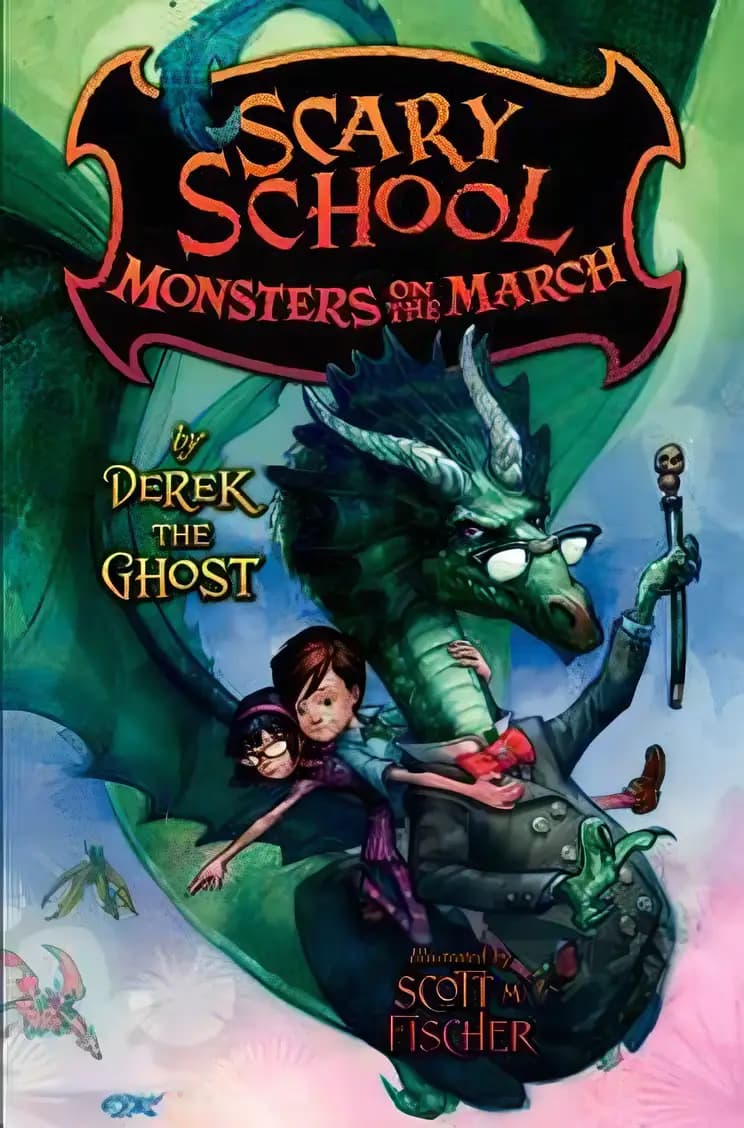
Scary School #2: Monsters on the March
#2 of 4 in Scary School Series
What’s inside...
In this second book in the Scary School series, the students of Scary School venture into Monster Forest where they encounter new frights, including bearodactyls and Captain Pigbeard, the leader of the Monster-Pirates. When Captain Pigbeard's fiancée, Princess Zogette, falls in love with Charles and follows him back to Scary School, Captain Pigbeard and his monster army give chase. However, they soon discover that the teachers and students of Scary School are far more terrifying than anything in the Monster Forest. This middle-grade series offers a blend of spooky scares and humor, appealing to fans of the Intergalactic Bed and Breakfast series and the Bailey School books.
Discussion points
What do you think is the most challenging part of attending Scary School for the characters? How would you handle it?
Which character did you find the most interesting and why?
How do the monsters in the story differ from typical scary creatures? What unique traits do they have?
What lessons do you think the students at Scary School learn about friendship and bravery?
If you could create your own monster to attend Scary School, what would it be like and why?
Tip: Role play these questions
Encourage your child to compare their school experiences with those depicted in the book to spark personal connections.
Discuss the importance of embracing differences, as exemplified by the diverse characters and monsters in the story.
Prompt your child to think creatively by asking them to invent their own monster and describe its special powers or traits.
Explore themes of courage and friendship in the book, asking your child how these elements play a role in their own life.
Utilize the quirky and imaginative elements of the story to engage your child’s sense of humor and creativity during the discussion.
Key lessons
Example Lesson: Courage in facing fears
Explanation: The students at Scary School face various monsters and challenges that teach them to confront and overcome their fears, rather than running from them.
Real-World Application: Children can learn to face their own fears, whether it's trying something new or standing up in class, knowing that bravery can lead to personal growth and confidence.
Example Lesson: Teamwork and cooperation
Explanation: The characters in the book often team up to solve problems, showing how working together can achieve goals that might seem impossible alone.
Real-World Application: This lesson encourages children to work cooperatively in group settings such as school projects, sports teams, or during play, reinforcing the idea that collaboration can lead to success.
Example Lesson: Acceptance of differences
Explanation: Scary School is filled with an array of creatures, each with unique abilities and quirks. The storyline promotes acceptance and celebration of these differences among the characters.
Real-World Application: Children are taught to embrace diversity among peers, understanding and valuing everyone's unique traits and backgrounds in their communities and schools.
Example Lesson: Resilience in adversity
Explanation: Throughout the adventures, the students encounter and navigate various obstacles, teaching them to persist and adapt in the face of adversity.
Real-World Application: This lesson equips children with the mindset to remain resilient during challenging times, whether dealing with academic difficulties, personal setbacks, or emotional struggles.
Example Lesson: Creativity and imagination
Explanation: The fantastical elements and unusual scenarios in 'Scary School' encourage creative thinking and imaginative play.
Real-World Application: Kids are inspired to use their imagination in play and learning activities, enhancing cognitive flexibility and creative problem-solving skills.