
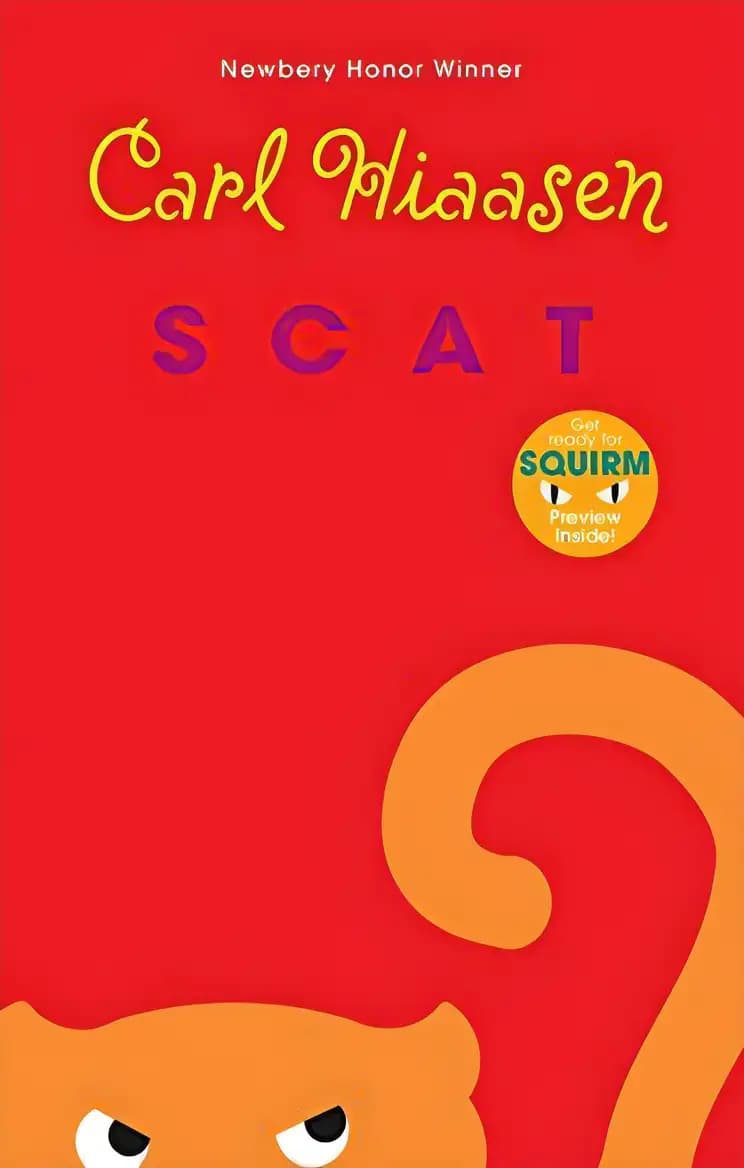
Scat
on Goodreads (21,132)
What’s inside...
Mrs. Bunny Starch, the most feared biology teacher ever, is missing after a school field trip to Black Vine Swamp. The students are relieved, but when the principal claims she's gone on a family emergency, Nick and Marta are skeptical. They suspect the class delinquent, Smoke, is involved in her disappearance. But there's more to the story than they realize. As they delve deeper, they encounter an eccentric eco-avenger, a stuffed rat named Chelsea, a wannabe Texas oilman, a singing substitute teacher, and a ticked-off Florida panther. They must navigate through these odd characters and unravel the mystery to see the big picture of what's really happening in Black Vine Swamp.
Age
9-12
Length
400 pages
Text complexity
Character compass
Nick Waters
Marta Gonzalez
Duane "Smoke" Scrod Jr.
Bunny Starch
Jimmy Lee Bayliss
Wendell Waxmo
Twilly Spree
Discussion points
How do you think the main character felt when they encountered the panther? What would you have done in their place?
What are some ways the characters in the book help protect the environment? Can you think of ways we might help our environment at home?
Why is it important to stand up for what you believe in, like some characters in the story do? Can you think of a time when you stood up for something you believed in?
How do the characters change from the beginning to the end of the book? What do you think caused those changes?
The setting of the Florida Everglades is almost like a character in the book. How does the setting influence the story?
Tip: Role play these questions
Start the conversation by sharing your own thoughts on the book's message about conservation and ask your child what they think.
Encourage your child to relate the characters' experiences to their own life, discussing any similar experiences they've had or emotions they've felt.
Use descriptive scenes from the book to visualize the events together, asking your child to imagine being part of the story.
Highlight the moral dilemmas faced by characters and ask your child how they would make decisions in similar circumstances.
After discussing the provided questions, encourage your child to ask their own questions about the book. This can lead to deeper understanding and engagement.
Key lessons
Example Lesson: Importance of Environmental Conservation
Explanation: In 'Scat,' the story revolves around the mystery of a missing teacher and a backdrop of an endangered Florida panther. The narrative brings attention to the impact of human activities on wildlife and habitats.
Real-World Application: Children can be encouraged to participate in local conservation efforts, learn about recycling, and understand the importance of preserving natural habitats for future generations.
Example Lesson: The Value of Teamwork and Cooperation
Explanation: The characters in the book, Nick and Marta, work together to solve the mystery. Their collaboration highlights how teamwork can lead to solving complex problems.
Real-World Application: This lesson can be applied in school projects, sports, and other group activities where cooperation is key to achieving common goals.
Example Lesson: Courage and Standing Up for What's Right
Explanation: Nick demonstrates courage throughout the book, particularly when he stands up against potential environmental wrongdoings. His actions teach the importance of bravery in the face of adversity.
Real-World Application: Children can learn to stand up for themselves and others, whether it involves speaking out against bullying or advocating for positive changes in their communities.
Example Lesson: Curiosity and Perseverance
Explanation: The protagonist’s quest to find their missing teacher and protect the panther illustrates the power of curiosity and perseverance in uncovering the truth.
Real-World Application: This encourages children to stay curious, ask questions, and persistently pursue their interests and education despite challenges.
Example Lesson: Respect for All Creatures
Explanation: Through the character of the endangered panther and other wildlife, 'Scat' teaches the importance of respecting all living beings, regardless of their size or species.
Real-World Application: Children can learn to treat animals with kindness and consider their roles in the ecosystem, promoting empathy and ethical behavior towards all creatures.