
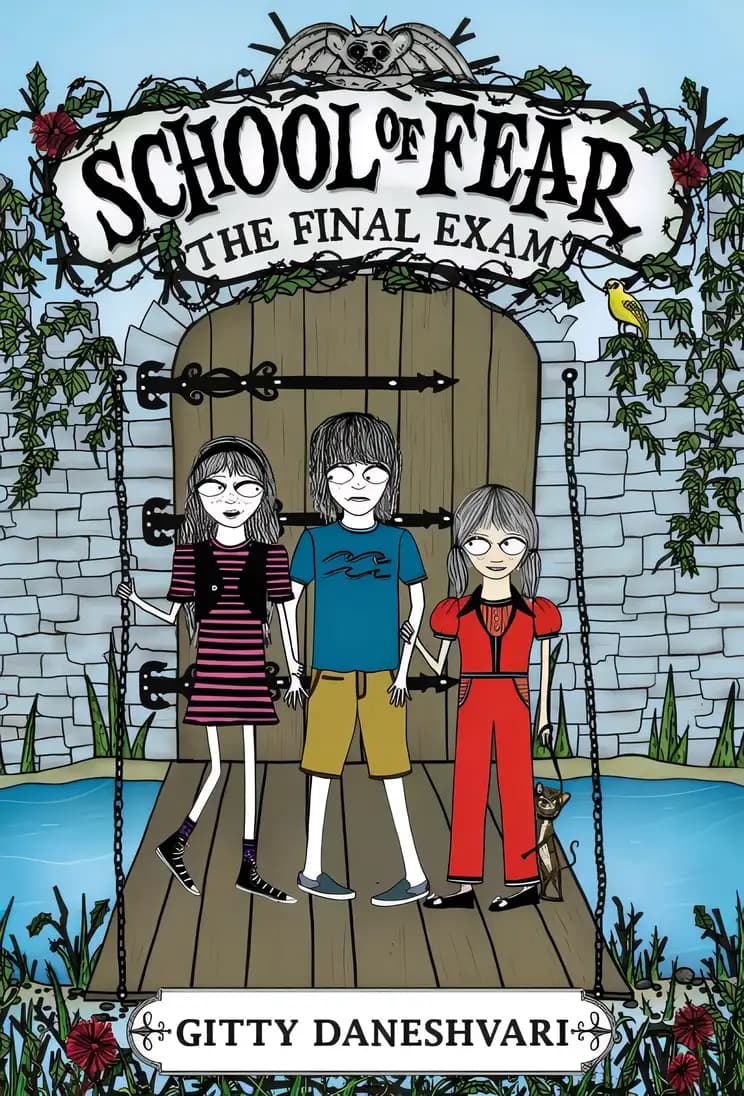
School of Fear: The Final Exam (School of Fear, 3)
#3 of 4 in Scary School Series
on Goodreads (2,106)
What’s inside...
Check out the laugh-inducing, phobia-reducing final book in the School of Fear trilogy! Is school out forever at the School of Fear? A nosy reporter is planning a scandalous expose on eccentric Mrs. Wellington and her unorthodox teaching methods, and the news is sure to put an end to the school. Madeleine, Theo, Lulu, Garrison, and the new student Hyacinth must convince Sylvie that their teacher and the school are perfectly normal. But how can they accomplish this when Mrs. Wellington is just so... odd? With the fate of their beloved school in their hands, the children now share a new fear--failure.
Character compass
Madeline Masterson
Hyacinth Hickle
Lulu Punchalower
Schmidty
Theo Bartholomew
Garrison Feldman
Mrs. Clarice Wellington
Discussion points
What do you think made the characters afraid, and how did they try to overcome their fears?
If you were a student at the School of Fear, what fear would you want to conquer?
Which character did you relate to the most and why?
How do you think teamwork helped the characters throughout their challenges?
What is one lesson you learned from the story that you can apply in your own life?
Tip: Role play these questions
Encourage your child to express their own fears and relate them to the characters in the book. Validate their feelings and discuss possible strategies to overcome these fears, just like the characters did. Use examples from the book to highlight the importance of perseverance and friendship in facing and conquering fears. Lastly, ask them to think about what they would do differently if they were in the same situations as the characters, fostering critical thinking and problem-solving skills.
Key lessons
Example Lesson: Overcoming Fears
Explanation: The characters in 'School of Fear: The Final Exam' face their deepest fears and work together to overcome them, showcasing bravery and resilience.
Real-World Application: Children can apply this by tackling their own fears, whether it’s speaking in front of the class or trying out for a sports team, demonstrating courage and growth.
Example Lesson: Teamwork and Friendship
Explanation: Throughout the book, the characters learn the importance of collaboration and supporting each other, which is vital in overcoming the challenges they face at the school.
Real-World Application: This lesson teaches children the value of working together and building friendships, which can be applied in group projects at school or in community activities.
Example Lesson: Importance of Self-Acceptance
Explanation: The students in the story learn to accept and embrace their unique qualities and imperfections, which is a critical step in overcoming their fears.
Real-World Application: Children can learn to appreciate their own uniqueness and be more accepting of themselves and others, promoting self-esteem and peer acceptance.
Example Lesson: Problem-Solving Skills
Explanation: The book displays how the characters use critical thinking and creativity to solve problems and face challenges, underlining the effectiveness of a thoughtful approach.
Real-World Application: Kids can be encouraged to use problem-solving skills in their daily decisions, from handling disputes with friends to completing homework assignments.