
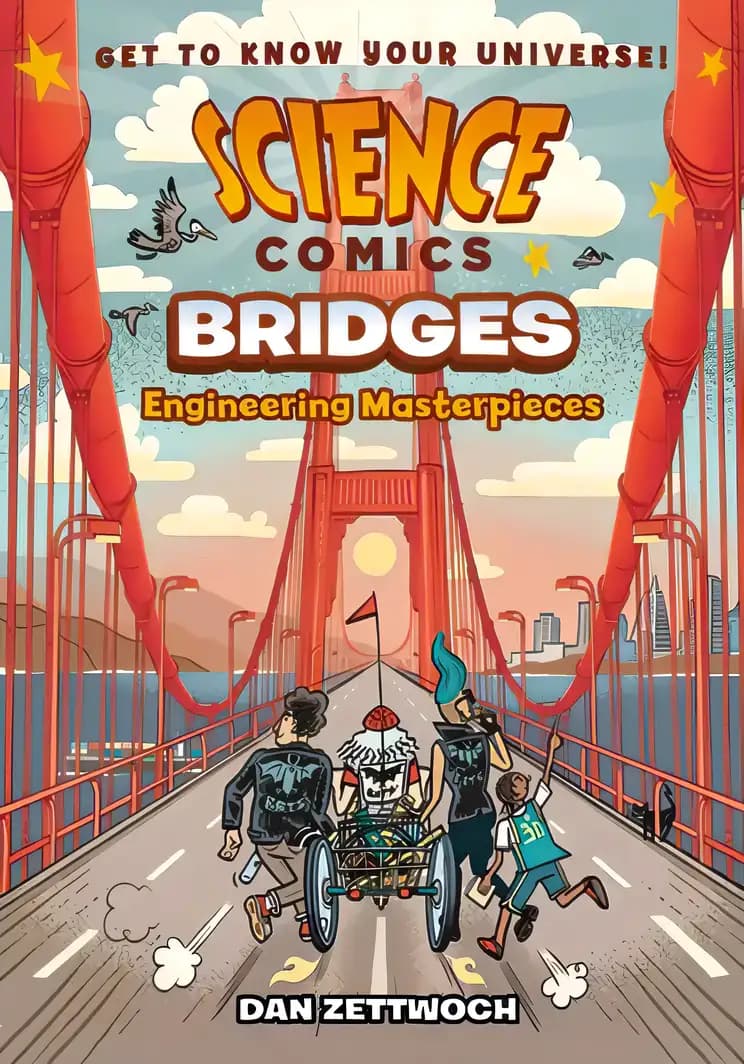
Science Comics: Bridges
#5 of 30 in Science Comics Series
on Goodreads (93)
What’s inside...
Suspend your disbelief with Science Comics: Bridges, a new volume of First Second's STEM graphic novel series! Follow Bea, Archie, Trudy, and Spencer (otherwise known as the BATS!) as they crisscross the globe using every type of bridge: beam, arch, truss, and suspension. From ancient low-slung rope bridges to modern hi-tech towers of steel, they’ll traverse them all. Their journey will take them through history and connect them with new ideas and different cultures. Along the way, they'll identify the dangerous forces trying to bring bridges crashing down, and how to defeat them… through engineering! This engaging and educational text has been recognized as a 2023 National Science Teachers Association Best STEM Book.
Discussion points
Why do you think bridges are important for connecting people and places?
What types of bridges did you learn about in the book, and which one intrigued you the most?
How do you think engineers decide where and how to build a bridge?
Can you think of any problems that might occur when building a bridge and how they could be solved?
If you could design your own bridge, what would it look like and where would it be?
Tip: Role play these questions
Encourage your child to express their thoughts by asking them what they found most interesting about each type of bridge.
Relate the bridge concepts to everyday life, perhaps discussing a local bridge and its importance to your community.
Prompt your child to use building blocks or drawing materials to recreate their favorite bridge from the book, enhancing understanding through hands-on activity.
Discuss the problem-solving aspects of engineering by asking how different bridges in the book address specific challenges.
Key lessons
Example Lesson: The importance of innovation and creativity
Explanation: The book showcases various types of bridges and the creative engineering behind each one, promoting a deeper understanding of how unique solutions can be developed for different problems.
Real-World Application: Children can learn to think creatively in their problem-solving processes, whether in academic projects or daily challenges.
Example Lesson: Teamwork and collaboration
Explanation: Building bridges often requires the effort of many individuals from different fields, which emphasizes the value of teamwork and diverse perspectives in achieving a common goal.
Real-World Application: This encourages children to value cooperative work and understand that significant accomplishments often involve collaboration.
Example Lesson: Resilience and perseverance
Explanation: The book discusses the challenges faced during bridge construction and the perseverance needed to overcome them, offering examples of determination in the face of obstacles.
Real-World Application: Children learn the importance of persistence in their endeavors, be it in completing a difficult school project or resolving personal conflicts.
Example Lesson: History and cultural significance
Explanation: By exploring different bridges around the world and their historical contexts, the book provides insights into how these structures have influenced cultures and societies.
Real-World Application: This lesson can spark an interest in history and encourage respect and appreciation for diverse cultural heritages among children.
Example Lesson: Environmental impact awareness
Explanation: Discussion about the materials used in bridges and their impacts on the environment encourages awareness about sustainability.
Real-World Application: Children can become more conscious of the environmental impacts of human activities and consider sustainability in their daily actions, such as recycling or conserving energy.