
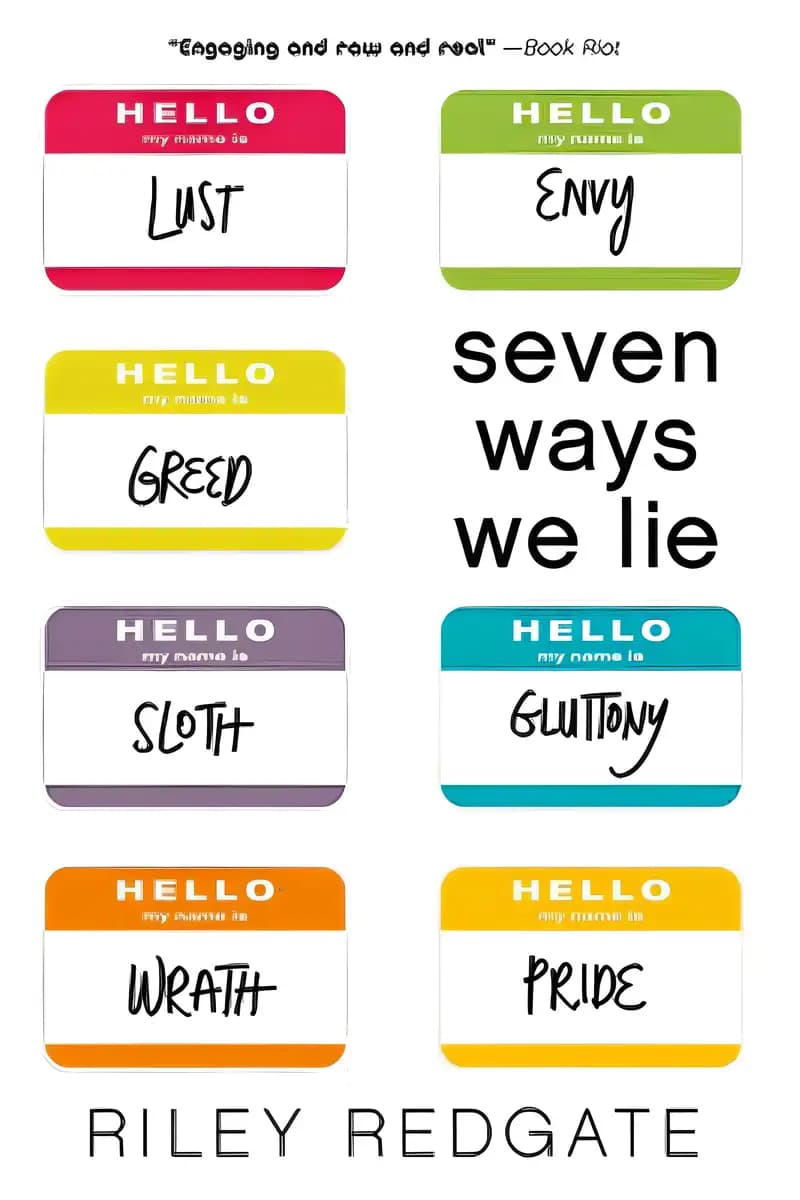
Seven Ways We Lie
on Goodreads (6,950)
What’s inside...
Paloma High School is a seemingly ordinary school with the usual cliques, prejudices, and questionable cafeteria food. However, each student has secrets to hide. When rumors of a teacher-student affair emerge, the lives of seven students intertwine and result in unexpected changes. Told from seven perspectives, Riley Redgate's YA debut mixes humor and heartbreak in a compelling high school drama.
Age
12-13
Length
343 pages
Text complexity
Character compass
Juniper Kipling
Lucas
Matt Jackson
Valentine Simmons
Claire Lombardi
Kat Scott
Olivia Scott
Discussion points
How do you think the different characters' secrets affect their relationships with others?
Why do you think honesty is important in friendships and other relationships?
Can you relate to any of the characters' struggles or emotions? How?
What do you think the characters learned about themselves by the end of the story?
How might the story have changed if the characters chose to tell the truth earlier?
Tip: Role play these questions
Encourage your child to express their opinions and feelings about the book's themes without judgment. Ask them to consider different perspectives by asking what they might do in a similar situation as the characters. Link discussions to real-life scenarios to help them apply the book’s lessons to their own experiences. Finally, reassure them that it’s okay to have complex feelings and that discussing them can lead to greater understanding and personal growth.
Key lessons
Example Lesson: Honesty and integrity
Explanation: The narrative unfolds through the viewpoints of seven high school students, each representing one of the seven deadly sins. Their intertwined stories highlight the consequences of deceit and the importance of honesty.
Real-World Application: Children learn the value of telling the truth and how being honest strengthens relationships and builds trust in both school and family settings.
Example Lesson: Empathy and understanding
Explanation: As readers explore the diverse perspectives of the characters, they see how understanding different backgrounds and experiences can lead to empathy.
Real-World Application: This can encourage children to be more empathetic towards their classmates or peers who may come from different cultural or personal backgrounds.
Example Lesson: Resilience in adversity
Explanation: Characters in the book face various challenges, including personal and family issues. Their journeys towards overcoming these adversities underscore the importance of resilience.
Real-World Application: This lesson can help children understand that perseverance is key in facing their own difficulties, whether in academics, sports, or personal relationships.
Example Lesson: Accountability for actions
Explanation: The story demonstrates how each character's actions, based on the seven deadly sins, have consequences that affect not only themselves but also others around them.
Real-World Application: It teaches children the importance of taking responsibility for their actions and understanding how their decisions impact others in their community.