
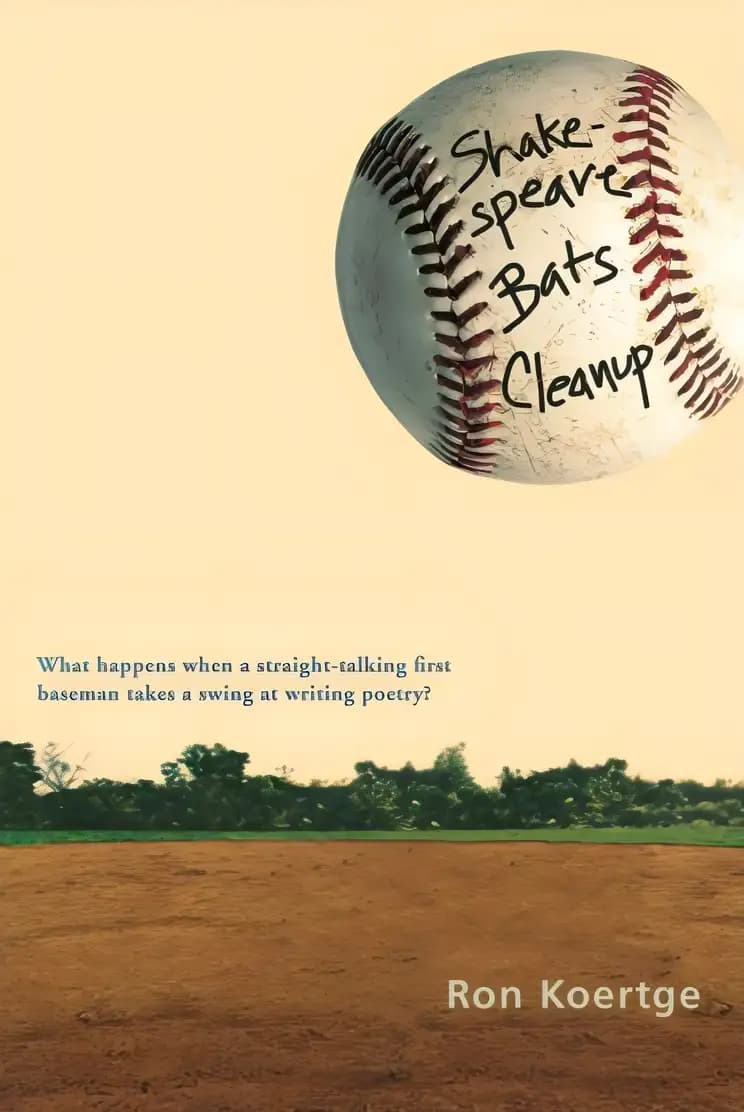
Shakespeare Bats Cleanup
#1 in Shakespeare Bats Cleanup Series
on Goodreads (1,182)
What’s inside...
This novel follows MVP Kevin Boland, who turns to poetry as a creative outlet while recovering from mono and missing baseball. As he explores different poetic forms, he reflects on friendships, relationships, and personal loss. The story highlights the therapeutic power of writing and its ability to help young people confront and understand their emotions.
Character compass
Kevin Boland
Mira
Dad
Discussion points
How do you think Kevin feels about using poetry to express himself? Can you relate to his experiences?
What did you learn about different types of poems from this book? Do you have a favorite style?
How does Kevin's relationship with his father influence his journey in the book?
What role do you think friendship plays in Kevin's recovery and love for poetry?
How do you think the book would be different if it was written in prose instead of verse?
Tip: Role play these questions
Encourage your child to express their thoughts and emotions about the book by drawing parallels to their own experiences.
Discuss the different poetic forms presented in the book, and perhaps try writing a short poem together in a style that interests your child.
Explore the themes of coping with illness and finding new passions by asking open-ended questions that foster empathy and understanding.
Talk about the role of friendships in personal growth and overcoming challenges, highlighting examples from Kevin’s experiences.
Prompt your child to think critically about how the unique format of the book—written in verse—affects their understanding and enjoyment of the story.
Key lessons
Example Lesson: Resilience through adversity
Explanation: The protagonist, dealing with his mother's death and his own illness, turns to writing poetry to cope with his feelings, demonstrating the power of creative expression in overcoming personal challenges.
Real-World Application: Children can learn to use creative outlets like writing, drawing, or music to process their emotions and navigate difficult times in their lives.
Example Lesson: Understanding and expressing emotions
Explanation: Throughout the book, the main character explores various forms of poetry to express his grief and frustration. This showcases the importance of recognizing and articulating one's feelings.
Real-World Application: This lesson teaches children the importance of identifying their emotions and expressing them constructively, which is crucial for emotional development.
Example Lesson: Empathy and compassion
Explanation: The character's journey includes learning about other people’s lives and struggles through the poetry club at school, which fosters a sense of empathy and community.
Real-World Application: Children can apply this lesson by engaging with peers, listening to their stories, and offering support, helping to build stronger, empathetic relationships.
Example Lesson: The value of perseverance
Explanation: Despite his illness and emotional setbacks, the protagonist continues to pursue his passion for poetry, showing that perseverance can lead to emotional and personal growth.
Real-World Application: Children can learn to persist in their endeavors, be it academic or personal, despite challenges, fostering a sense of accomplishment and confidence.
Example Lesson: Appreciation for literature
Explanation: The book introduces various forms of poetry and legendary poets, which can ignite a love for reading and appreciation for literary arts among young readers.
Real-World Application: Encouraging children to explore different genres of literature can enhance their reading skills, creativity, and cultural understanding.