
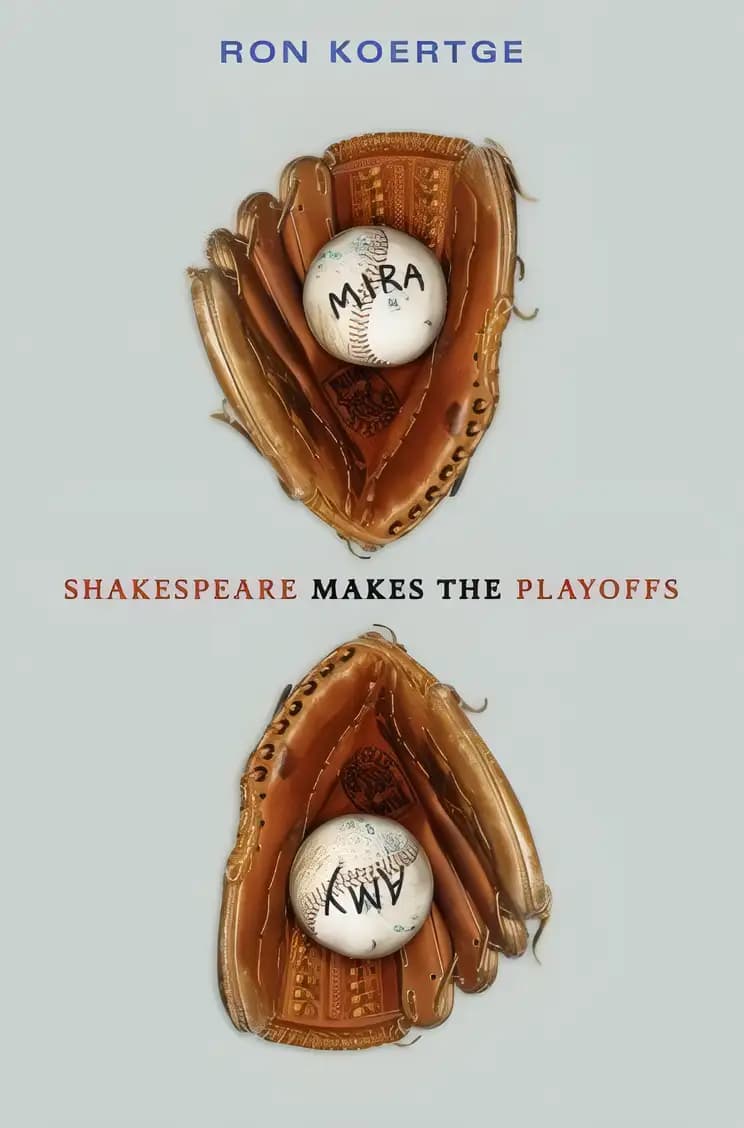
Shakespeare Makes the Playoffs
#2 in Shakespeare Bats Cleanup Series
on Goodreads (421)
What’s inside...
In Ron Koertge’s sequel to Shakespeare Bats Cleanup, fourteen-year-old Kevin Boland navigates the complexities of his social life while juggling his passion for baseball and poetry. Kevin's relationship with his environmentally-conscious girlfriend, Mira, is challenged when he meets Amy, a fellow poetry enthusiast, at an open mike night. As Kevin grapples with his feelings and the dynamics of his relationships, the story unfolds with humor, warmth, and a variety of verse forms that complement the characters and story.
Character compass
Kevin Boland
Amy
Mira
Mr. Boland
Discussion points
How do you think Kevin feels about balancing his love for baseball and poetry? What would you do in his shoes?
Why do you think the author chose to mix two contrasting themes like sports and poetry in the story?
What did you learn about friendship and teamwork from Kevin's interactions with his friends and teammates?
How do the poems in the book help you understand the characters better?
Can you see any similarities between playing a sport and writing poetry?
Tip: Role play these questions
Start the conversation by sharing your own thoughts on how sports and arts can complement each other, setting a personal example of open-mindedness. Encourage your child to express their feelings about the book’s events and characters, reinforcing the importance of empathy and understanding. Highlight the role of teamwork in both sports and creative projects, prompting your child to think about cooperation in various aspects of life. Use specific poems from the book to focus discussions on particular themes or character developments, helping your child connect deeper with the material.
Key lessons
Example Lesson: The importance of expressing emotions
Explanation: The protagonist of 'Shakespeare Makes the Playoffs', through writing poetry, learns to express his emotions and navigate complex personal relationships.
Real-World Application: Children can be encouraged to use creative outlets such as writing, drawing, or music to manage and communicate their feelings.
Example Lesson: Understanding empathy and perspective
Explanation: The book showcases different characters with diverse views and emotions, helping the reader see multiple perspectives.
Real-World Application: This lesson aids children in developing empathy, teaching them to understand and respect different viewpoints in their interactions.
Example Lesson: Dealing with change and uncertainty
Explanation: As characters in the book experience changes in relationships and personal growth, they learn to adapt.
Real-World Application: Children learn that change is a natural part of life and developing resilience can help them face new challenges positively.
Example Lesson: The value of teamwork and collaboration
Explanation: In the storyline, the protagonist learns the importance of teamwork both in sports and in relationships.
Real-World Application: This can encourage children to value and contribute to teamwork in school projects or sports, understanding that collective efforts often achieve more.
Example Lesson: Exploring passions and interests
Explanation: The book’s main character explores his passion for poetry while balancing other aspects of his teenage life.
Real-World Application: It teaches children the importance of exploring and nurturing their own interests, even when juggling various responsibilities and social roles.