
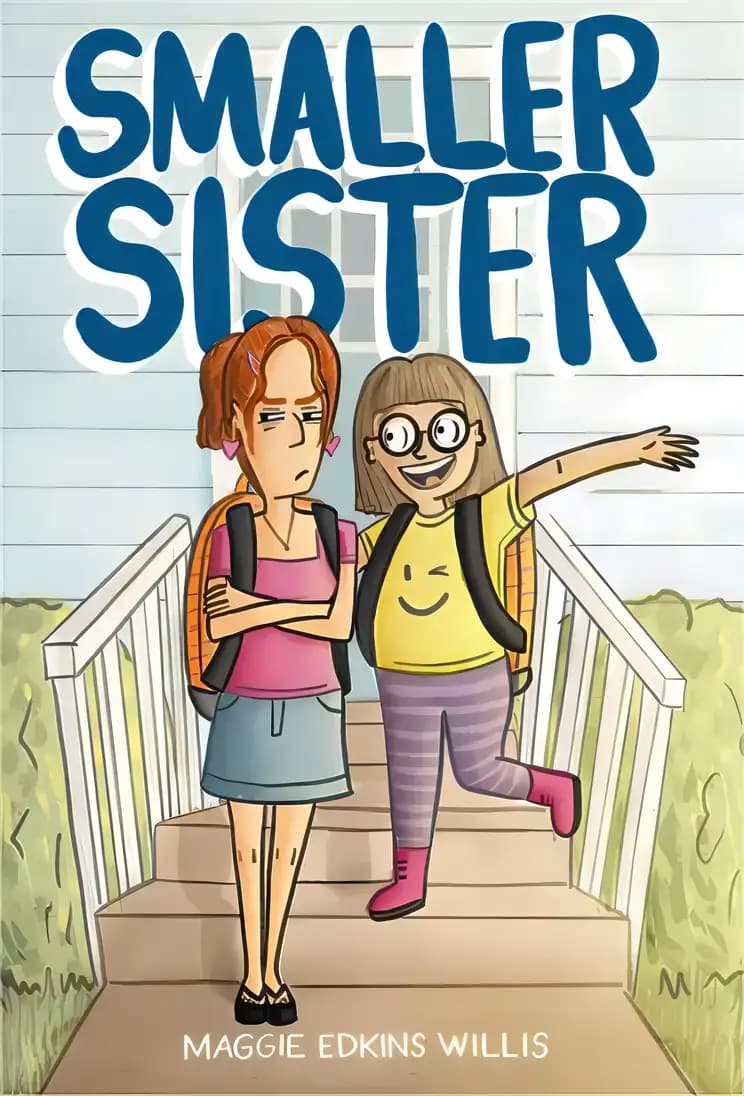
Smaller Sister
on Goodreads (2,143)
What’s inside...
Maggie Edkins Willis's Smaller Sister is a debut middle grade graphic novel about body image, confidence, and the everlasting bond of sisterhood. Lucy always looked up to her big sister, Olivia, despite their differences. However, Lucy notices changes in Olivia, who stops wanting to play and becomes unhappy with her appearance, ultimately struggling with an eating disorder. As the family focuses on Olivia’s recovery, Lucy feels neglected and starts facing similar issues. With time, effort, and self-love, both sisters start to heal and rediscover their strong bond, reminding readers that sisterhood is an unbreakable connection.
Age
8-12
Length
320 pages
Text complexity
Character compass
Lucy
Olivia
Discussion points
How do you think Lucy felt when she realized her sister Olivia was struggling, and why?
What are some ways Lucy tried to help Olivia? Do you think these were effective?
Why is it important to be supportive to family and friends who might be facing challenges?
What did you learn about body image and self-esteem from the story?
How would you help a friend or sibling who is feeling bad about themselves?
Tip: Role play these questions
Encourage your child to express their thoughts and feelings about the book, relating it to their own experiences. Listen actively and validate their feelings. Discuss the importance of empathy and support within a family, and explore together ways they can be supportive to others. Highlight how the characters in the book deal with complex emotions, using it as an opportunity to talk about healthy emotional expression and self-esteem.
Key lessons
Example Lesson: Empathy and Understanding
Explanation: In 'Smaller Sister,' the protagonist learns to empathize with her sister who is battling an eating disorder. Through her eyes, readers explore the complexities of understanding someone's struggles.
Real-World Application: Children can apply this lesson by learning to be more considerate and understanding towards friends and family members who may be experiencing difficulties, fostering a supportive environment.
Example Lesson: Importance of Family Support
Explanation: The story highlights the role that family support plays in helping a loved one through recovery. The protagonist and her family come together to support her sister, illustrating the strength of familial bonds.
Real-World Application: This teaches children the value of being there for family members during tough times, strengthening their role within the family and encouraging a supportive household.
Example Lesson: Self-Acceptance
Explanation: Throughout the book, the protagonist also grapples with her own feelings of self-worth and identity. Her journey towards self-acceptance is a crucial subplot that resonates deeply.
Real-World Application: Children can learn to appreciate and accept themselves for who they are, regardless of external pressures or comparisons, which is vital for their confidence and self-esteem.
Example Lesson: Communication is Key
Explanation: The characters in the story learn to communicate their feelings and fears, which is pivotal to understanding and supporting each other better.
Real-World Application: This lesson can be applied in a child’s life by encouraging open communication about their feelings with parents, teachers, and peers, building stronger relationships and emotional intelligence.
Example Lesson: Resilience in Adversity
Explanation: The protagonist's sister shows resilience in her recovery journey, an important theme that demonstrates the power of perseverance.
Real-World Application: Children learn the importance of not giving up despite challenges and setbacks. This can be mirrored in their personal challenges, whether in academics, sports, or personal goals.