
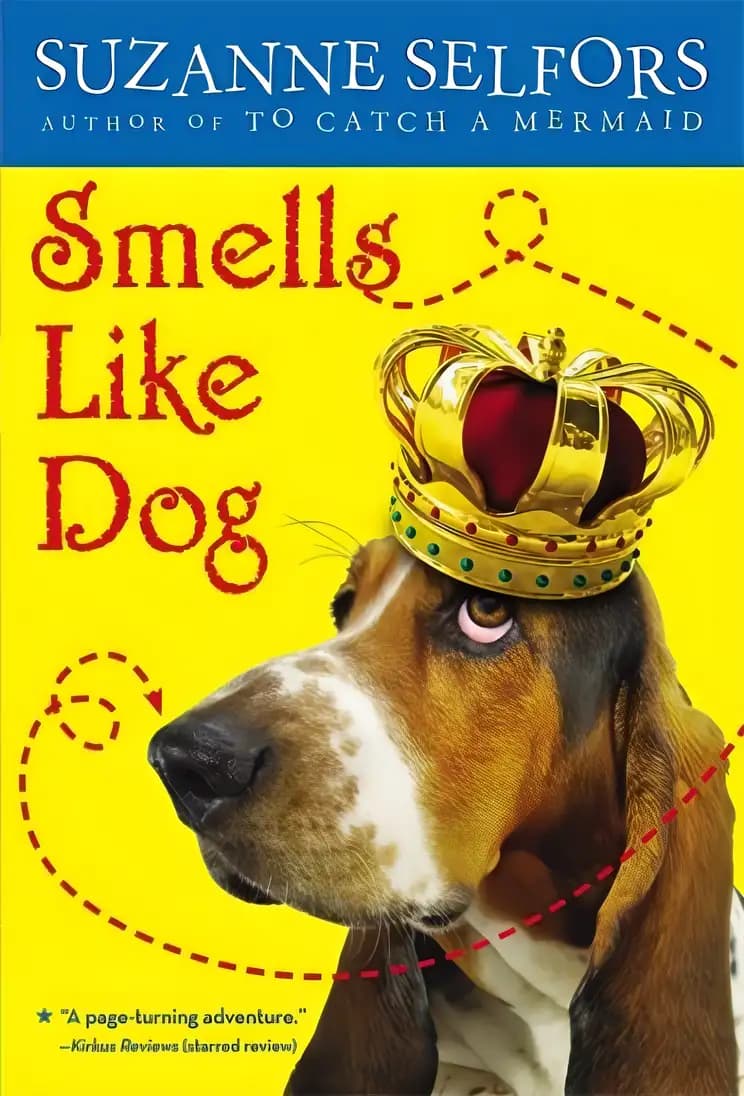
Smells Like Dog (Smells Like Dog, 1)
#1 of 3 in Smells Like Dog Series
on Goodreads (2,107)
What’s inside...
Meet Homer Pudding, an ordinary farm boy who dreams of following in the footsteps of his famous treasure-hunting uncle. When his uncle mysteriously disappears, Homer inherits a lazy, droopy dog with no sense of smell and a mystery surrounding his uncle's most treasured possession, a dog with a gold coin on its collar. As Homer, his sister Gwendolyn, and Dog embark on an adventure to continue Uncle Drake's quest for pirate treasure, they face ruthless treasure hunters and discover Dog's hidden talent, realizing that the treasure might be closer than they ever imagined.
Character compass
Homer Pudding
Dog
Madame La Directeur
Discussion points
What do you think motivates Dog to go on his adventures? How do his motivations compare to what drives us in our real-life adventures?
How do the characters in the book show loyalty and friendship? Can you share an example from your own life where you experienced something similar?
What lessons do you think Dog learns throughout his journey? How can we apply these lessons to our own challenges?
How do you think the story would change if you were one of the characters in the book? What role would you choose?
If you had a special talent like Dog, what would it be and why?
Tip: Role play these questions
Allow your child to express their thoughts and feelings about the story and characters without interruption, showing genuine interest in their viewpoints.
Compare situations in the book with real-life scenarios to make the discussion more relatable and impactful for your child.
Encourage your child to imagine alternative endings or plot twists, which fosters creativity and deeper understanding of the narrative structure.
Acknowledge your child’s responses, and offer your own thoughts and interpretations to stimulate an enriching conversation.
Use the discussion as an opportunity to bond, ensuring the conversation is enjoyable and not just educational.
Key lessons
Example Lesson: The importance of perseverance
Explanation: In 'Smells Like Dog,' the protagonist, Homer, faces numerous challenges in his quest but remains determined throughout. His perseverance is a key factor in his eventual success.
Real-World Application: Children learn that sticking with difficult tasks, even when they seem impossible, can lead to success. This encourages them to not give up easily in their own pursuits, be it in academics, sports, or personal goals.
Example Lesson: The value of curiosity
Explanation: Homer's journey begins because of his curiosity about his uncle's legacy and the mystery surrounding it. His inquisitive nature leads to a thrilling adventure.
Real-World Application: This can inspire children to ask questions and explore their world, understanding that learning can be a rewarding adventure.
Example Lesson: The significance of friendship
Explanation: Throughout his adventure, Homer builds friendships with characters who help him in his mission. These relationships are crucial to overcoming the obstacles he faces.
Real-World Application: This emphasizes the importance of building and maintaining friendships and how working together can help solve problems, teaching children to value and nurture relationships.
Example Lesson: Courage to face the unknown
Explanation: Homer often steps into the unknown, facing his fears to continue his quest, showing bravery and courage.
Real-World Application: Encourages children to be brave and face their fears, understanding that overcoming fear is part of growth and can lead to new discoveries and personal development.
Example Lesson: Problem-solving skills
Explanation: Throughout the book, Homer and his companions must think creatively to navigate challenges and puzzles they encounter.
Real-World Application: Children learn the importance of thinking critically and creatively to solve problems, a skill that is valuable in both academic settings and daily life.