
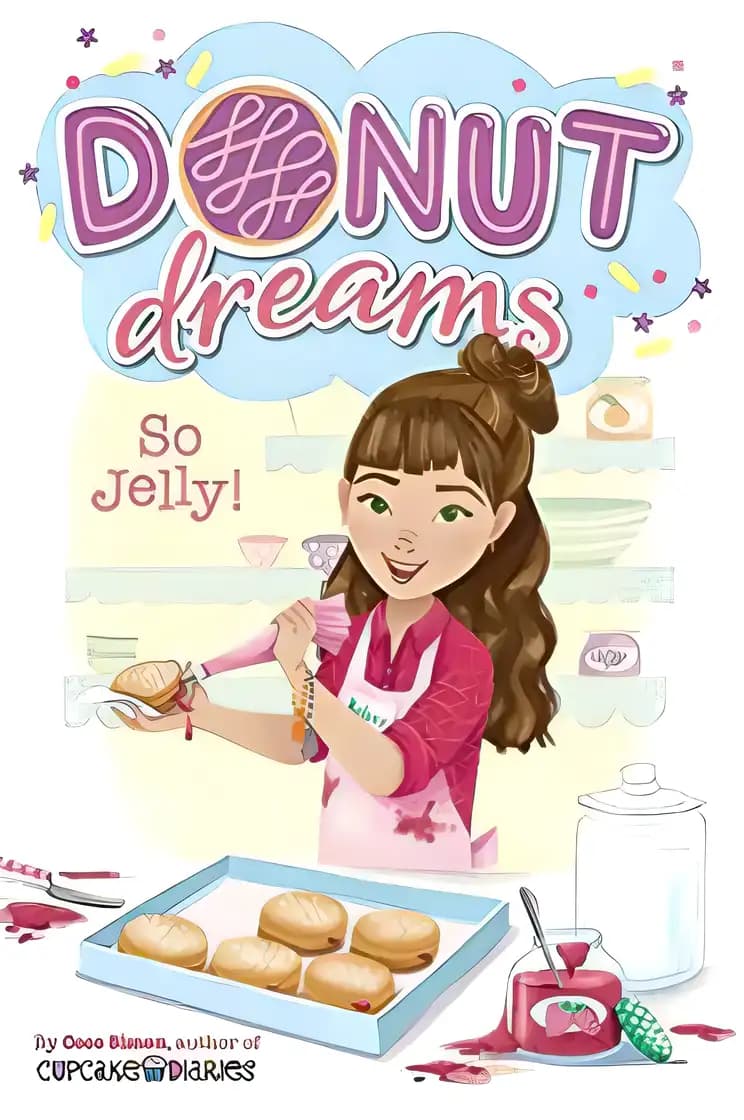
So Jelly! (2) (Donut Dreams)
#2 of 8 in Donut Dreams Series
on Goodreads (96)
What’s inside...
Kelsey learns to deal with jealousy in this second delicious book in the Donut Dreams series from the author of the Cupcake Diaries and Sprinkle Sundays series! Everything's better with a donut. Happy-go-lucky Kelsey hasn't been so happy-go-lucky lately. She's starting to feel pretty jealous of her cousin Lindsay and all the extra time Lindsay is spending with her aunt, who just happens to be Kelsey's mom. The worst part is it seems like Kelsey's mom wants to spend time with Lindsay instead of her! But once Kelsey adds a pinch of patience to the batter, and Lindsay stirs in her own special brand of silly fun to the mix, Kelsey realizes she's come up with the perfect recipe for spending time with her cousin and her mom. Kelsey discovers that the love she and her family have for one another is like a box of donuts—there's always enough to share!
Character compass
Lindsay Cooper
Casey
Kimmie
Discussion points
How do you think Tammy felt when she was trying to fit in with the new group at school? What would you do in a similar situation?
What does friendship mean to you, and how do you choose your friends? How does this compare to Tammy’s experiences?
Why do you think being honest is important in friendships, as shown in Tammy's interactions with her friends?
Can you think of a time when you felt jealous, like Tammy did? How did you handle those feelings?
How do the characters in the story show kindness or understanding to each other? How can you apply these behaviors in your own life?
Tip: Role play these questions
Be open about sharing similar situations you've faced in your life where you felt like Tammy, and how you dealt with them. This will make your child feel more comfortable and understood.
Encourage your child to express their feelings and thoughts about the story. Listen actively without interrupting, showing them that their viewpoints are valued.
Connect the story’s themes to real-life events in your child's world, such as school or friendships, to deepen their understanding and empathy.
Discuss the choices the characters make and ask your child what they might have done differently, fostering critical thinking and decision-making skills.
Praise your child for their insights and contributions to the discussion to boost their confidence and encourage a love for reading and analysis.
Key lessons
Example Lesson: Empathy and Understanding
Explanation: In 'So Jelly! (2) (Donut Dreams)', the protagonist deals with feelings of jealousy but learns to understand others' perspectives. This journey highlights the importance of empathy.
Real-World Application: Children can apply this lesson by recognizing their emotions and learning to see situations from their friends' or siblings' points of view, fostering better relationships.
Example Lesson: Importance of Communication
Explanation: The characters in the book face challenges that they overcome by talking openly about their feelings and thoughts, demonstrating effective communication.
Real-World Application: This teaches children the value of discussing their problems and feelings with others, which can help in resolving conflicts and expressing themselves clearly.
Example Lesson: Resilience in the Face of Challenges
Explanation: Throughout 'So Jelly!', the characters encounter personal and interpersonal challenges, but they learn to persist and adapt, showcasing resilience.
Real-World Application: Children learn that setbacks are a part of life and that persistence and adaptability are key to overcoming difficulties.
Example Lesson: Value of Friendship
Explanation: The book portrays strong friendships that help the characters grow and thrive, emphasizing the importance of supportive relationships.
Real-World Application: This encourages children to nurture their friendships and be supportive friends themselves, which is crucial for social development.
Example Lesson: Self-awareness and Personal Growth
Explanation: The protagonist's journey involves self-reflection, leading to personal growth and a better understanding of her own emotions and actions.
Real-World Application: Children can learn to reflect on their own actions and feelings, which is a stepping stone to personal development and emotional intelligence.