
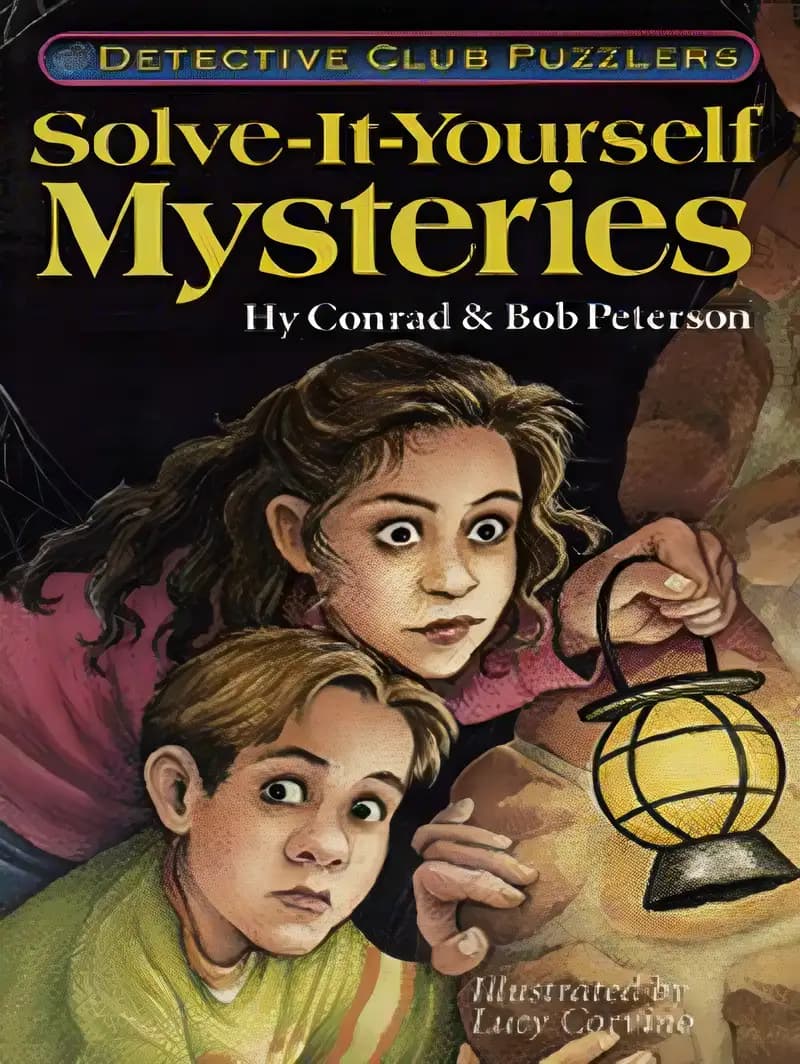
Solve-It-Yourself Mysteries: Detective Club Puzzlers
#1 in Detective Club Puzzlers Series
What’s inside...
This collection of twenty-five solve-it-yourself mysteries lets children learn detective skills such as taking fingerprints, analyzing blood samples, and making invisible ink. They join junior detectives Greg Rydell and Carrie Ingram in solving crimes in their neighborhood. As they read through each mystery, readers are invited to help solve the cases using tips from The Crime Solver’s Handbook. Along the way, they catch jewel thieves, stop con artists, and even solve a murder. Hints and solutions are provided to aid budding detectives in training.
Discussion points
What would you do if you were the detective in the story?
How did you feel when the mystery was solved?
What clues did you find most intriguing or helpful?
Can you think of a different ending to one of the mysteries?
What skills do you think a good detective should have?
Tip: Role play these questions
Encourage your child to think like a detective by asking them to predict the outcomes before they are revealed. Discuss the importance of paying attention to detail and being observant. Bring the book’s themes into real-life situations by creating small mystery games or scavenger hunts at home. This will not only deepen their understanding but also allow them to apply critical thinking skills. Praise their reasoning and thoughts to build their confidence in problem-solving.
Key lessons
Example Lesson: Critical Thinking and Problem Solving
Explanation: Through interactive mysteries, children are tasked with analyzing clues and deducing solutions, developing their critical thinking skills.
Real-World Application: These skills are applicable in real life as they help children approach problems logically and make informed decisions.
Example Lesson: Attention to Detail
Explanation: Each puzzle in the book requires children to pay close attention to the details provided to solve the mysteries successfully.
Real-World Application: Improving observation skills can help children in their academic work and daily activities, enhancing their overall mindfulness and presence.
Example Lesson: Teamwork and Collaboration
Explanation: The 'Detective Club' aspect encourages children to work together, discussing possible solutions and sharing ideas to solve the puzzles.
Real-World Application: This encourages collaborative skills, which are vital in school projects, family tasks, and later in professional environments.
Example Lesson: Ethical Decision-Making
Explanation: By choosing between different suspects and motives, children learn to weigh ethical considerations and determine what is right or wrong.
Real-World Application: This helps children develop a moral compass that guides their choices in interactions with family, friends, and in their community.
Example Lesson: Persistence and Resilience
Explanation: Some mysteries may be more challenging than others, encouraging children to keep trying and not give up easily.
Real-World Application: Fostering resilience helps children face academic challenges and personal setbacks with a positive attitude and determination to overcome them.