
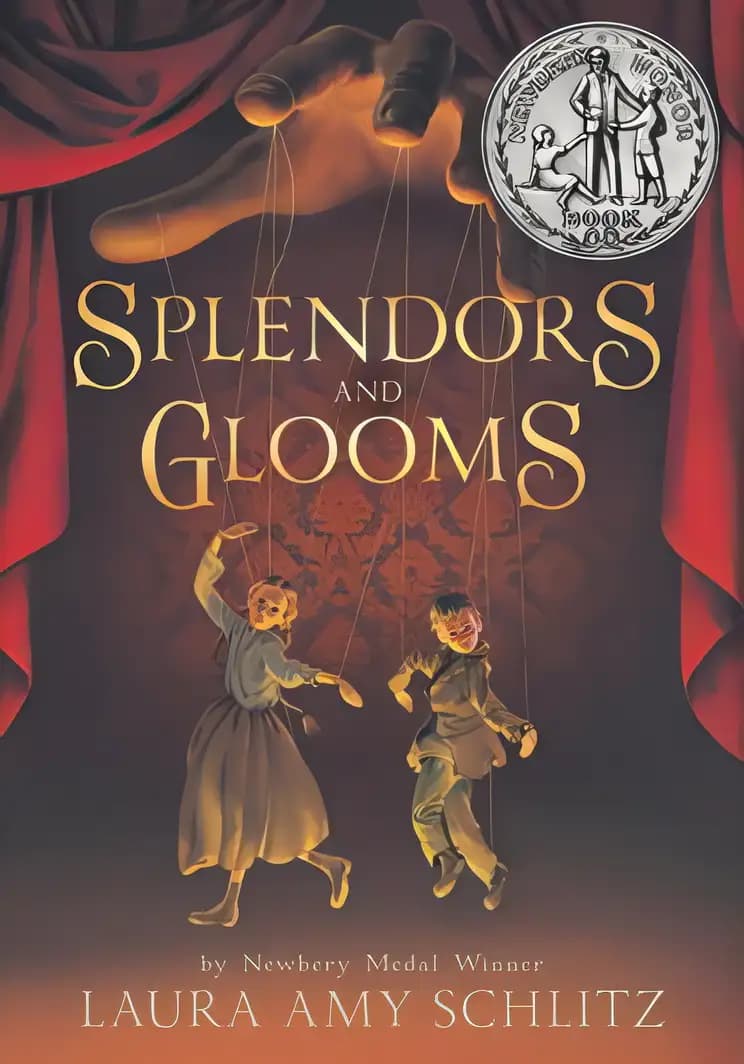
Splendors and Glooms
on Goodreads (9,622)
What’s inside...
The master puppeteer, Gaspare Grisini, is so expert at manipulating his stringed puppets that they appear alive. Clara Wintermute, the only child of a wealthy doctor, is spellbound by Grisini’s act and invites him to entertain at her birthday party. Seeing his chance to make a fortune, Grisini accepts and makes a splendidly gaudy entrance with caravan, puppets, and his two orphaned assistants. Lizzie Rose and Parsefall are dazzled by the Wintermute home. Clara seems to have everything they lack — adoring parents, warmth, and plenty to eat. In fact, Clara’s life is shadowed by grief, guilt, and secrets. When Clara vanishes that night, suspicion of kidnapping falls upon the puppeteer and, by association, Lizzie Rose and Parsefall. As they seek to puzzle out Clara’s whereabouts, Lizzie and Parse uncover Grisini’s criminal past and wake up to his evil intentions. Fleeing London, they find themselves caught in a trap set by Grisini’s ancient rival, a witch with a deadly inheritance to shed before it’s too late.
Age
10-14
Length
384 pages
Text complexity
Character compass
Lizzie Rose
Parsefall
Clara Wintermute
Dr. Wintermute
Gaspare Grisini
Cassandra
Discussion points
How do the different settings in 'Splendors and Glooms' affect the mood of the story? Which setting did you find the most intriguing?
Each character in the book has their own struggles and triumphs. Which character's journey resonated with you the most and why?
Magic plays a crucial role in the story. What do you think the author is trying to tell us about the use of power and magic?
The themes of freedom and entrapment are woven throughout the book. Can you point out a scene where these themes particularly stood out to you?
How do the interactions between characters develop over the course of the book? What can we learn from their relationships?
Tip: Role play these questions
Encourage your child to imagine themselves in the various settings of the book, and ask them how they would feel and react in those environments.
Discuss the moral choices characters make in the story and relate them to real-life situations your child might face.
If your child is intrigued by the magic in the story, explore together how the author uses magic as a metaphor for larger life lessons.
Prompt your child to think about the ending of the book and ask them how they would have liked it to end, fostering creative thinking.
Help your child identify and express the emotions experienced by characters at various points in the story, enhancing their emotional intelligence.
Key lessons
Example Lesson: Compassion and empathy
Explanation: Throughout the book, characters demonstrate compassion and empathy towards others, especially in how Clara befriends Lizzie Rose and Parsefall despite their different social standings.
Real-World Application: Children can learn the importance of treating everyone with kindness and understanding, regardless of their background or current circumstances.
Example Lesson: Resilience in adversity
Explanation: The characters frequently face difficult, even dire, situations but continue to demonstrate resilience and resourcefulness.
Real-World Application: This can inspire children to stay strong and resourceful in the face of their own challenges, whether at school, in sports, or in their social lives.
Example Lesson: Consequences of choices
Explanation: The narrative shows how the choices made by characters, like the sinister puppeteer Grisini’s deceitful actions, have significant impacts on their lives and the lives of others.
Real-World Application: Children can learn that their actions have consequences and that making thoughtful, honest decisions is crucial.
Example Lesson: Importance of friendship
Explanation: The support and loyalty between Lizzie Rose, Parsefall, and Clara play a crucial role in overcoming the challenges they face.
Real-World Application: This lesson highlights the value of having and being a good friend, which is vital for personal development and dealing with life’s ups and downs.
Example Lesson: Justice and integrity
Explanation: By the story's conclusion, characters who commit wrongs are held accountable, reinforcing themes of justice and integrity.
Real-World Application: It underscores the importance of standing up for what is right and teaches children that integrity matters and leads to fair outcomes.