
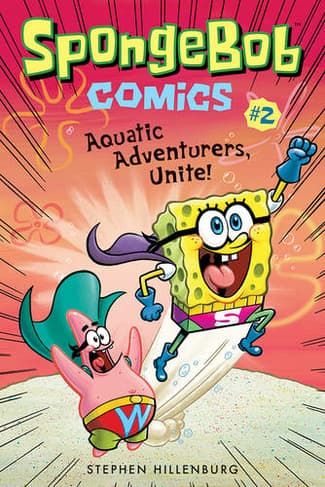
SpongeBob Comics: Book 2: Aquatic Adventurers, Unite!
#2 of 4 in SpongeBob Comics Series
What’s inside...
In this exciting second installment of the SpongeBob Comics series, titled 'Aquatic Adventurers, Unite!', readers follow SpongeBob SquarePants and his friends on a series of underwater escapades. This collection, curated by SpongeBob creator Stephen Hillenburg and prominent comic book artists, features stories with a superhero theme, bringing together beloved characters in action-packed adventures that will entertain fans of all ages.
Character compass
Spongebob Squarepants
Discussion points
What qualities make SpongeBob a good friend and how can you apply those qualities in your own friendships?
How do SpongeBob and his friends solve problems together under the sea? What can we learn from their teamwork?
Which adventure in the book was your favorite and why?
If you could create your own underwater adventure, what would it look like and who would be your companions?
Tip: Role play these questions
Start by asking your child to summarize the story, to gauge their understanding and recall of the book.
Encourage your child to describe their favorite characters and what makes them interesting, helping them develop descriptive and critical thinking skills.
Connect the themes of the book to real-life situations, such as teamwork and problem-solving, to help your child apply the lessons learned.
After discussing the book, engage in a creative activity such as drawing scenes or characters from the book, to make the reading experience interactive and enjoyable.
Key lessons
Example Lesson: Teamwork and cooperation
Explanation: Throughout 'SpongeBob Comics: Book 2: Aquatic Adventurers, Unite!' the characters often work together to solve problems, showcasing the power of teamwork.
Real-World Application: Children can apply this lesson by participating in group activities at school or in sports, learning to value each person's contribution and working collectively towards a common goal.
Example Lesson: Creative problem solving
Explanation: The characters in the book frequently use their creativity to navigate difficult situations, demonstrating that thinking outside the box can be very effective.
Real-World Application: This lesson encourages children to approach challenges in their daily life with creativity—whether it's finding a new way to share toys or coming up with a unique solution during a family game night.
Example Lesson: Respect for diversity
Explanation: SpongeBob and his friends meet various creatures from different parts of the ocean, teaching readers about respecting and celebrating differences.
Real-World Application: Children learn to appreciate diversity and show respect towards classmates and neighbors who may come from different backgrounds or have different opinions.
Example Lesson: Importance of persistence
Explanation: Characters face many challenges but they do not give up. Their persistence is often rewarded, highlighting the value of determination and perseverance.
Real-World Application: This encourages children to keep trying in the face of difficulties, whether it be learning a new skill, such as riding a bike, or improving in a subject at school.