
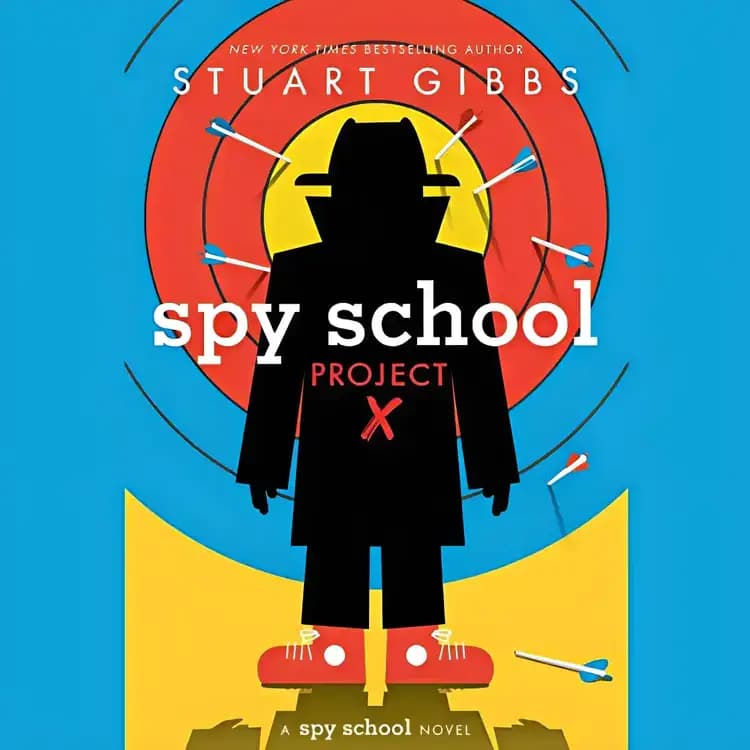
Spy School Project X
#10 in Spy School Graphic Novels Series
on Goodreads (3,797)
What’s inside...
Follow the exciting adventures of Ben Ripley, a middle-school student who is recruited into a secret spy organization. Ben is sent on an action-packed mission to stop Project X, a weapon that could be used for evil purposes. In the tenth book in the series, Ben faces new challenges and makes surprising discoveries about the organization he works for.
Character compass
Ben Ripley
Zoe Zibbell
Erica Hale
Mike Brzezinski
Discussion points
What do you think motivated Ben Ripley to join the secret spy school? How would you feel if you were in his shoes?
If you could have any spy gadget from the book, which one would you choose and why?
Discuss how teamwork played a role in the characters' adventures. Can you share an example when teamwork helped you?
What lessons did the characters learn about trust and friendship throughout their mission?
How do you think the story would change if it was set in your school? Which character would you like to be friends with?
Tip: Role play these questions
Start the conversation by sharing your favorite part of the book to make it a two-way dialogue.
Encourage your child to express their thoughts and opinions about the story without interrupting, demonstrating active listening.
Ask your child to draw a scene from the book or create a new spy gadget. Discuss their creation to deepen understanding of the book’s themes.
Connect the story to real-life situations by discussing everyday examples of teamwork and problem-solving.
If possible, make connections to other books or movies about spies and discuss similarities and differences.
Key lessons
Example Lesson: Teamwork and Collaboration
Explanation: In 'Spy School Project X', the protagonist works with peers to solve complex problems and missions, demonstrating the importance of teamwork.
Real-World Application: Children learn to cooperate with others, contributing their unique skills to group projects at school or in other social settings.
Example Lesson: Problem-Solving Skills
Explanation: Throughout the book, characters face various challenges that require critical thinking and creativity to navigate, emphasizing the value of problem-solving abilities.
Real-World Application: This teaches children how to approach and resolve obstacles in their daily activities, enhancing their decision-making skills.
Example Lesson: Resilience and Perseverance
Explanation: The young spies encounter setbacks during their missions, yet they persist and overcome adversity, highlighting the virtues of resilience.
Real-World Application: Kids are encouraged to remain steadfast and persistent in their personal goals and educational pursuits despite difficulties.
Example Lesson: Integrity and Honesty
Explanation: Characters in the story learn the importance of being truthful and maintaining ethical standards even in complex situations.
Real-World Application: This lesson helps children understand the importance of honesty in forging trust and building strong relationships.
Example Lesson: Curiosity and Learning
Explanation: The spy school setting fosters a culture of continuous learning and curiosity, as students are pushed to acquire new skills and knowledge.
Real-World Application: Children are inspired to be curious and enthusiastic learners in their studies and explorations of new interests.