
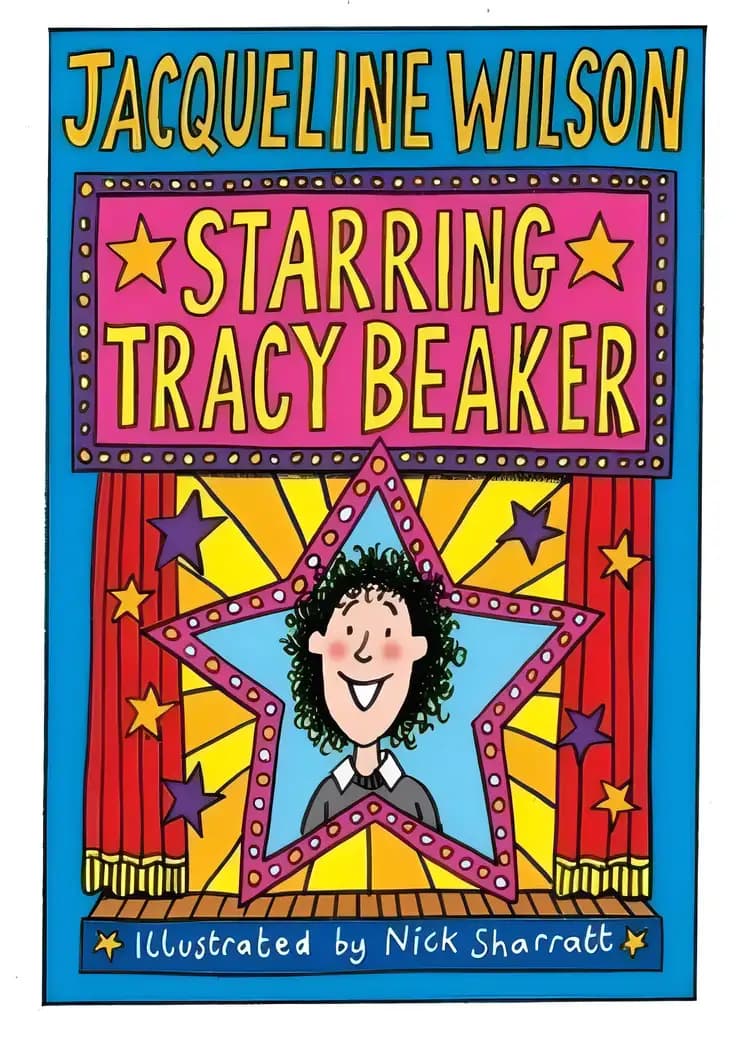
Starring Tracy Beaker
#3 of 4 in Tracy Beaker Series
What’s inside...
Tracy Beaker returns in this story as she eagerly anticipates playing a role in her school's production of A Christmas Carol. Initially worried she might not even be cast as an unnamed street urchin, Tracy lands the main role of Ebeneezer Scrooge. With her natural flair for being grumpy and sulky, aided by her nemesis Justine Littlewood, Tracy prepares for her performance. As she learns her lines with the help of Cam, Tracy is anxious to know if her film-star mother will return from Hollywood in time to see her on stage. This new tale of laughter, challenges, and emotions revisits Jacqueline Wilson’s most famous character, Tracy Beaker, as lively and compelling as ever, fifteen years after her debut.
Character compass
Tracy Beaker
Camilla 'Cam' Lawson
Discussion points
How do you think Tracy Beaker feels about living in a children's home, and why do you think she feels that way?
Tracy often uses her imagination to escape her reality. Can you think of a time when you used your imagination to feel better?
What do you think about Tracy's relationship with her mother? How does it affect her actions and feelings?
Tracy sometimes makes decisions that get her into trouble. Why do you think she acts out, and what could she do differently?
How do the friendships in the book change Tracy’s life? Do you think friendships are important?
Tip: Role play these questions
Start the conversation with your child by discussing Tracy’s character. Encourage them to express their thoughts on her feelings and actions.
Compare and contrast real-life situations with those in the book. This can help your child relate to Tracy and understand her better.
Discuss the importance of relationships depicted in the book, like friendships and family ties, and encourage your child to talk about their own experiences.
Encourage your child to think about alternative choices Tracy could have made in different situations, promoting problem-solving and empathy skills.
Use the book’s themes to discuss broader life lessons, such as resilience, imagination, and the impact of one's actions on others.
Key lessons
Example Lesson: Resilience in the face of adversity
Explanation: Tracy Beaker consistently demonstrates resilience despite her challenging circumstances in a foster home.
Real-World Application: Children can learn to maintain a positive outlook and persevere through their own challenges, whether at school or in social settings.
Example Lesson: Importance of imagination
Explanation: Tracy uses her vivid imagination to escape and cope with her reality, creating stories where she is the heroine.
Real-World Application: Encourages children to use their imagination as a tool for creativity and emotional expression.
Example Lesson: Value of friendship
Explanation: Throughout the book, Tracy learns about the ups and downs of friendships and the significance of supportive relationships.
Real-World Application: Teaches children the importance of building and maintaining friendships, and how to be a good friend in return.
Example Lesson: Understanding and empathy
Explanation: Tracy's interactions invite readers to see the world through the eyes of someone in a foster care situation, fostering empathy and understanding.
Real-World Application: Helps children develop empathy towards others who may have different life experiences and encourages inclusive behavior.
Example Lesson: Self-expression
Explanation: Tracy Beaker often expresses herself through drawing and storytelling, showing the importance of expressing one’s feelings and thoughts.
Real-World Application: Inspires children to explore different forms of self-expression such as art or writing, aiding emotional and cognitive development.