
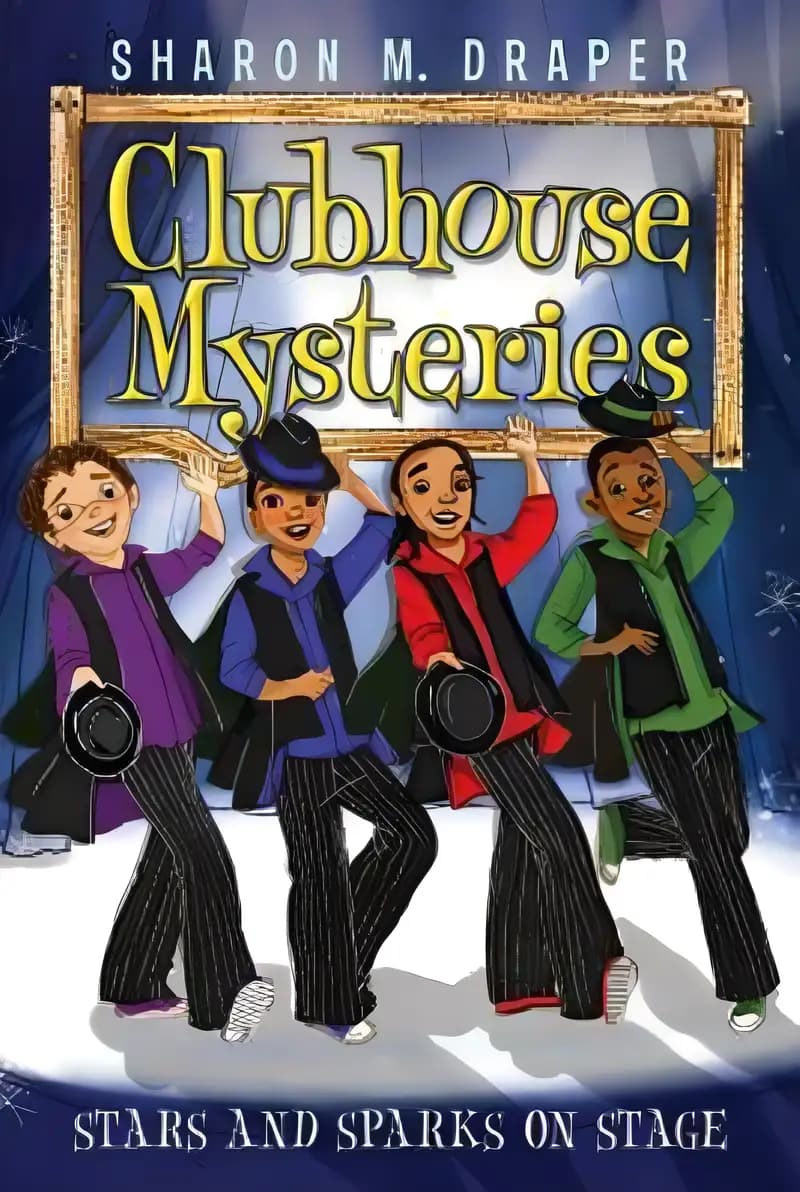
Stars and Sparks on Stage (6) (Clubhouse Mysteries)
#6 of 6 in Clubhouse Mysteries Series
What’s inside...
Ziggy, Jerome, Rashawn, and Rico, known as the Clubhouse kids, are confident in their abilities to win the talent show and use the prize money to repair their clubhouse. However, they face a moral dilemma when they discover that another contestant might be in greater need of the prize money. This story delves into themes of empathy, competition, and ethical decision-making.
Character compass
Ziggy
Rashawn
Rico
Jerome
Discussion points
What was your favorite part of the mystery and why?
How do Ziggy and his friends show teamwork throughout their adventure?
What did you learn about handling disagreements or conflicts from the characters?
If you were to create a secret club, what would its purpose be?
How do the characters in the book show courage and creativity when solving problems?
Tip: Role play these questions
Encourage your child to express their thoughts by asking them to elaborate on their answers, promoting deeper thinking.
Connect the themes of the book to real-life situations your child may encounter to help them relate to the characters and their experiences.
Highlight the importance of teamwork and friendship discussed in the book, and ask your child about their personal experiences with friends.
After discussing the questions, engage in a creative activity such as drawing scenes or characters from the book to enhance comprehension and enjoyment.
Key lessons
Example Lesson: Teamwork and collaboration
Explanation: The characters in 'Stars and Sparks on Stage' work together to solve a mystery, demonstrating the importance of collaborating and valuing each other’s ideas.
Real-World Application: Children can apply this lesson by participating in group activities at school or in their community, learning to listen to others, and contributing constructively.
Example Lesson: Cultural appreciation
Explanation: The story highlights a diversity of cultures through the multicultural cast and community events, teaching respect and appreciation for different backgrounds.
Real-World Application: Children are encouraged to explore and celebrate different cultures in their own communities, promoting inclusivity and respect.
Example Lesson: Problem-solving skills
Explanation: Throughout the book, the young protagonists face challenges that they must think critically to resolve, highlighting the process of problem solving.
Real-World Application: This encourages children to approach obstacles in their lives with a critical thinking mindset, helping them to navigate challenges more effectively.
Example Lesson: Importance of the arts
Explanation: The book centers around a community play, showcasing how the arts can bring people together and serve as a tool for expression.
Real-World Application: Children learn to appreciate and perhaps participate in the arts, whether through school activities, local theater, or art classes, enhancing their creative expression and emotional intelligence.
Example Lesson: Integrity and honesty
Explanation: As the characters solve the mystery, they learn the value of being truthful and the consequences of dishonesty.
Real-World Application: This lesson reinforces the importance of honesty in a child's interactions with peers and adults, fostering trust and strong relationships.