
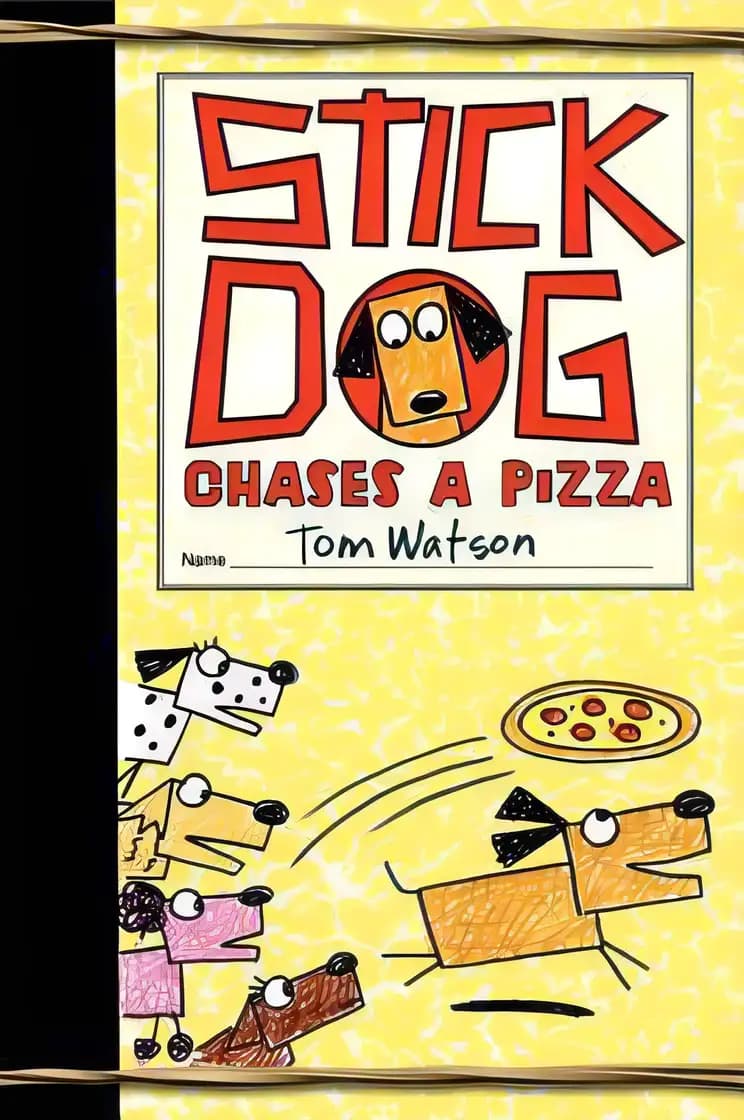
Stick Dog Chases a Pizza
#3 of 12 in Stick Dog Series
on Goodreads (1,013)
What’s inside...
Perfect for fans of Big Nate, Diary of a Wimpy Kid, and the previous Stick Dog books, Tom Watson’s hilarious series continues, and Stick Dog and his friends are on a funny quest for pizza! In the follow-up to Stick Dog and Stick Dog Wants a Hot Dog, Stick Dog returns with the same crazy crew. This time these canine friends have discovered a newfangled flavor—and it's even more delicious than hamburgers and hot dogs. It's pizza! They won't be satisfied until they get some slices of their own. But it won't be that easy. There's a kitten to rescue, a plan to make, and the messiest—and most dangerous—game of catch they've ever played. Pizza is on the menu, but only if their mission succeeds. With hilarious text and stick-figure drawings, reluctant readers will eat this one up! Other favorites in the series include Stick Dog Dreams of Ice Cream, Stick Dog Crashes a Party, and many more!
Character compass
Stick Dog
Karen
Stripes
Poo-Poo
Mutt
Discussion points
How do you think Stick Dog and his friends felt when they were trying to get the pizza? Can you relate to their feelings?
What are some of the strategies Stick Dog and his pals used to solve their problems? Which one was your favorite and why?
If you were one of the characters in the book, what would you have done differently?
What do you think is the importance of teamwork as shown in the book?
How do you think the story would change if it was a different food they were chasing? What food would you like them to chase?
Tip: Role play these questions
While discussing the book, relate the scenarios to real-life situations your child might face, such as working together with friends or solving simple problems. This helps them connect with the story on a personal level.
Encourage your child to imagine alternate endings or different scenarios in the book, fostering creative thinking and personal interpretation.
Ask your child to draw their favorite scene from the book. This will help them recall details and engage more deeply with the story.
Use expressions and tones to mimic the characters while reading out loud or discussing. This makes the conversation more lively and enjoyable.
Key lessons
Example Lesson: Teamwork and Cooperation
Explanation: Stick Dog and his friends work together to accomplish the goal of fetching a pizza. Their collaborative efforts despite different viewpoints demonstrate the power of teamwork.
Real-World Application: Children learn to cooperate with others in group settings such as school projects or sports, understanding that collective effort can lead to success.
Example Lesson: Problem Solving
Explanation: Throughout the book, Stick Dog and his companions face various challenges and obstacles but use creative thinking and strategic planning to solve them.
Real-World Application: Kids are encouraged to think critically and creatively when faced with obstacles, whether in academic tasks or personal challenges.
Example Lesson: Perseverance
Explanation: Despite several setbacks, Stick Dog and his crew do not give up on their quest for pizza, showcasing the importance of persistence in achieving goals.
Real-World Application: This teaches children the value of persistence and determination in achieving objectives, be it in learning new skills or pursuing their interests.
Example Lesson: Humor and Joy
Explanation: The lighthearted and humorous tone of the book demonstrates how humor can be used to deal with difficulties and enjoy the journey regardless of the outcome.
Real-World Application: Children learn to approach life with a sense of humor and positivity, which can help manage stress and build social bonds.
Example Lesson: Making Ethical Choices
Explanation: As Stick Dog and his friends embark on their adventure, they are faced with decisions that test their morals, such as whether or not to steal the pizza.
Real-World Application: This can help children understand the importance of considering ethical implications of their actions and choosing what is right over what is easy.