
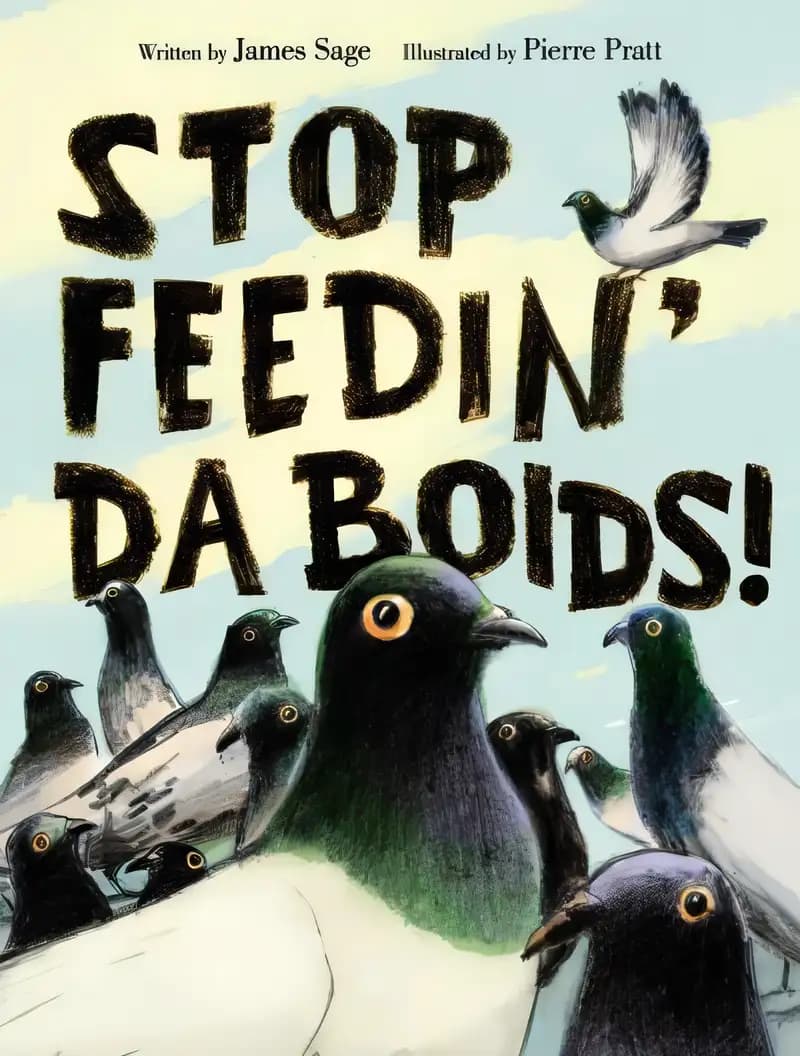
Stop Feedin’ da Boids!
What’s inside...
When Swanda first moves to Brooklyn from the country, she misses the wildlife she left behind. But not for long. 'Oh, look! What dear little birds!' Swanda says to her dog when she notices all the pigeons outside her apartment. 'Come, Waldo, we'll get them a bird feeder all their own.' It's fun to watch the pigeons flock to the feeder, at first. But then more arrive ... and more ... and more. And before she knows it, there are too many pigeons! Swanda seeks some 'Sound Practical Advice' from a few experts—a pest control officer, the keeper of birds at the city zoo, and an exotic bird fancier from Peru—but that gets her nowhere. So her neighbors step in with their own Brooklynese solution: 'SWANDA, YOU GOTTA STOP FEEDIN' DA BOIDS!' Author James Sage's funny picture book explores what happens when a nature-loving girl meets city birds. The playful, vibrant artwork by award-winning illustrator Pierre Pratt offers its own comic narrative. Readers are in on the havoc below the bird feeder that Swanda doesn't see. This book makes a terrific choice for a humorous, entertaining read-aloud. It would also work as an introduction to social studies lessons on urban versus rural communities, and on accents and dialects. It would easily launch a life sciences discussion on how species adapt and survive in urban habitats as well.
Age
3-7
Length
32 pages
Text complexity
Character compass
Swanilda
Discussion points
What do you think Swanda learned about city life and nature from her experiences?
How did the neighbors' reactions change throughout the story, and why do you think they changed?
Why was it important for Swanda to understand the consequences of her actions on the birds?
What would you have done if you were in Swanda’s place when she first discovered the birds?
How can we help animals in our own neighborhood while respecting their natural habits?
Tip: Role play these questions
Start by asking your child what they liked about the story or if there’s anything they found funny. This can ease them into discussing deeper themes. Encourage them to think about the cause and effect in the story, like how Swanda’s actions influenced her neighbors and the birds. Connect the story to personal experiences, asking if they’ve ever had a similar misunderstanding about animals or nature. Finally, emphasize the importance of community and taking responsibility for our actions, guiding them to consider how their decisions can affect others around them.
Key lessons
Example Lesson: Empathy and kindness
Explanation: The protagonist's actions toward the birds illustrate the importance of caring for other creatures.
Real-World Application: Children learn the value of being kind and considerate to animals and people alike, fostering a nurturing attitude.
Example Lesson: Responsibility
Explanation: As the girl feeds and takes care of the birds, she learns about the responsibilities involved in caring for others.
Real-World Application: This teaches children about the duties involved in caring for pets or helping around the home.
Example Lesson: Consequences of actions
Explanation: The story shows that the girl’s actions of feeding the birds have consequences as more birds come to her window.
Real-World Application: Children learn that their actions have effects, teaching them to think about the outcomes before acting.
Example Lesson: Community involvement
Explanation: The bird feeding leads to interactions with neighbors, demonstrating the importance of community engagement.
Real-World Application: Encourages children to participate in community activities and understand the role of each person in a community.
Example Lesson: Problem-solving
Explanation: The protagonist finds creative solutions to deal with the overwhelming number of birds.
Real-World Application: Children learn to think critically and creatively when faced with challenges.