
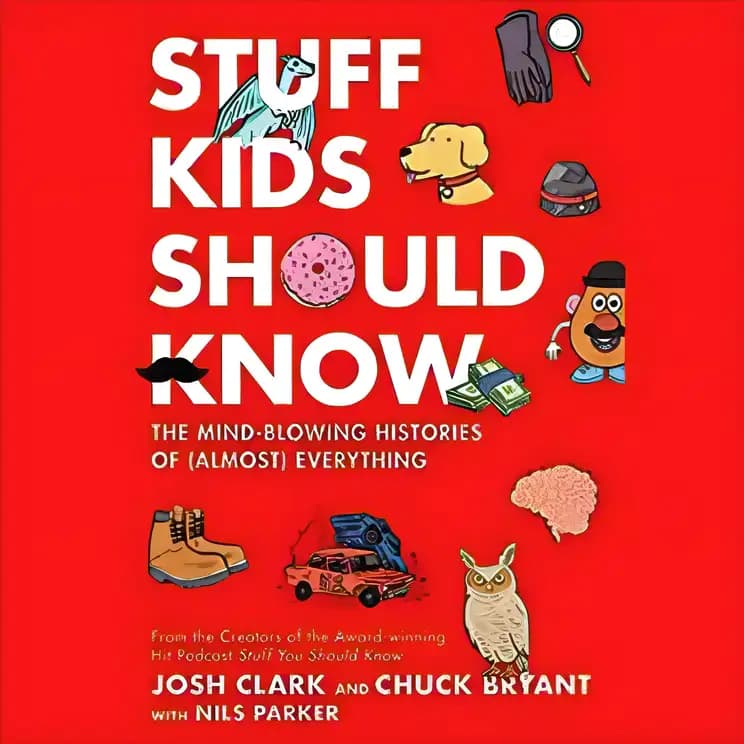
Stuff Kids Should Know: The Mind-Blowing Histories of (Almost) Everything
Stuff Kids Should Know Series
illustrations by
on Goodreads (101)
What’s inside...
From the creators of the hit podcast 'Stuff You Should Know', comes 'Stuff Kids Should Know', a nonfiction book filled with captivating stories and fascinating facts for young readers. Covering a range of topics from demolition derbies to Mr. Potato Head, this book is designed to spark curiosity and reveal the wonders of learning. With engaging illustrations, clever insights, and an array of intriguing subjects, authors Josh Clark and Chuck Bryant turn the everyday into the extraordinary, encouraging a deeper understanding of the world around us. WARNING: Contents of this book are cooler than they appear.
Series reading
Non-Sequential
Age
8-12
Length
208 pages
Text complexity
Discussion points
What was the most surprising fact you learned from the book and why did it stand out to you?
How do you think knowing the history of everyday things might change the way you think about them?
If you could add a chapter to the book, what topic would you choose and why?
Why do you think it's important to learn about the history of things we use every day?
How do you think inventors and discoverers felt when they realized they created or found something special?
Tip: Role play these questions
Encourage your child to think critically about the information by asking them to draw parallels between historical events and modern times. Use examples from the book to connect their everyday experiences with historical facts. Promote creativity by asking your child how they would have approached challenges encountered by inventors and explorers mentioned in the book. Lastly, express genuine interest and excitement in the topics your child is most fascinated with to keep the conversation lively and engaging.
Key lessons
Example Lesson: Curiosity and lifelong learning
Explanation: The book delves into the fascinating histories of various common and uncommon things, igniting curiosity in young minds.
Real-World Application: Children can cultivate a habit of exploring and learning about the world around them, enhancing their knowledge and intellectual growth.
Example Lesson: Critical thinking
Explanation: Through exploring the 'how' and 'why' behind historical facts, children are encouraged to think critically about the information presented.
Real-World Application: This skill helps children analyze information in their academic subjects and everyday decision-making.
Example Lesson: Appreciation of diversity
Explanation: The book covers a wide range of topics from different cultures and eras, showing the diverse ways people have contributed to human knowledge.
Real-World Application: Children learn to value different perspectives and cultural histories, which fosters empathy and inclusivity in their interactions.
Example Lesson: Perseverance and resilience
Explanation: Many historical accounts involve individuals overcoming challenges, showcasing the virtues of perseverance.
Real-World Application: Kids can be inspired to persist in the face of their own challenges, whether in learning new skills or dealing with personal setbacks.
Example Lesson: Importance of innovation
Explanation: The book highlights numerous inventions and discoveries, demonstrating how innovation has shaped human history.
Real-World Application: Encourages children to think creatively and recognize the role of innovation in solving everyday problems and advancing society.